Skip to content
gentic.news — AI News Intelligence Platform
Connecting to the Living Graph…

Listen to today's AI briefing

Daily podcast — 5 min, AI-narrated summary of top stories

TSMC's 1.4nm Fab Slips to Mid-2028 as AI Chip Demand Tightens
Big TechBreakthroughScore: 87

TSMC's 1.4nm Fab Slips to Mid-2028 as AI Chip Demand Tightens

TSMC's 1.4nm fab is ahead of schedule, with mass production by mid-2028, driven by AI chip demand from Google and Nvidia.

·2d ago·2 min read··4 views·AI-Generated·Report error
Share:
Source: news.google.comvia trendforce_gnCorroborated
When will TSMC's 1.4nm fab be built and start mass production?

TSMC's first 1.4nm fab building is expected before April 2027, ahead of schedule, with mass production seen by mid-2028, according to TrendForce. The accelerated timeline reflects surging AI chip demand from customers like Google and Nvidia.

TL;DR

TSMC's 1.4nm fab building due before Apr 2027 · Mass production now seen by mid-2028 · Schedule ahead of prior estimates, TrendForce reports

TSMC's first 1.4nm fab building is expected before April 2027, ahead of schedule, TrendForce reports. Mass production is now seen by mid-2028, a timeline that tightens the race for AI chip supremacy.

Key facts

  • First 1.4nm fab building expected before April 2027
  • Mass production targeted for mid-2028
  • TSMC held 64% foundry market share as of Feb 2026
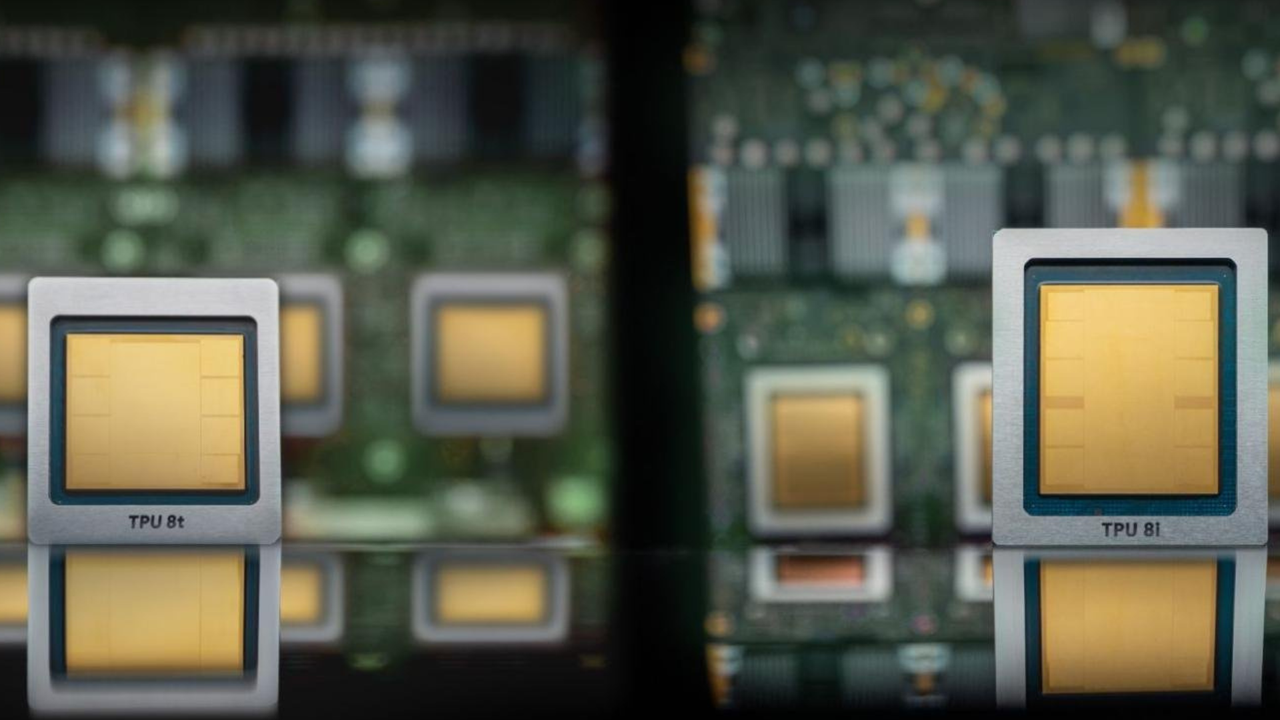
  • Google booked Intel to package 3M TPUs by 2028
  • 1.4nm expected to improve perf/watt 15-20% over 2nm

TSMC's 1.4nm fab is moving faster than expected. The first building should be complete before April 2027, with mass production targeted for mid-2028, according to TrendForce. The company did not disclose capex figures for this specific fab, but the accelerated schedule signals confidence in both construction execution and demand certainty.

What's driving the pace

The pull is coming from AI accelerators. Google, a TSMC customer, has booked Intel to package 3 million TPUs by 2028, per the knowledge graph. Nvidia's next-gen architectures will also need the node. The 1.4nm process is expected to deliver roughly a 15-20% performance-per-watt improvement over the current 2nm generation, though TSMC has not officially published these numbers.

The competitive landscape

TSMC's dominance is the backdrop. The foundry held a 64% global market share as of February 2026, per the knowledge graph. Samsung and Intel are both chasing, but neither has announced a comparable 1.4nm timeline. The mid-2028 mass production target would put TSMC roughly a year ahead of its nearest rival, assuming Samsung's 1.4nm plans hold to their stated 2027-2028 window.

The risk factor
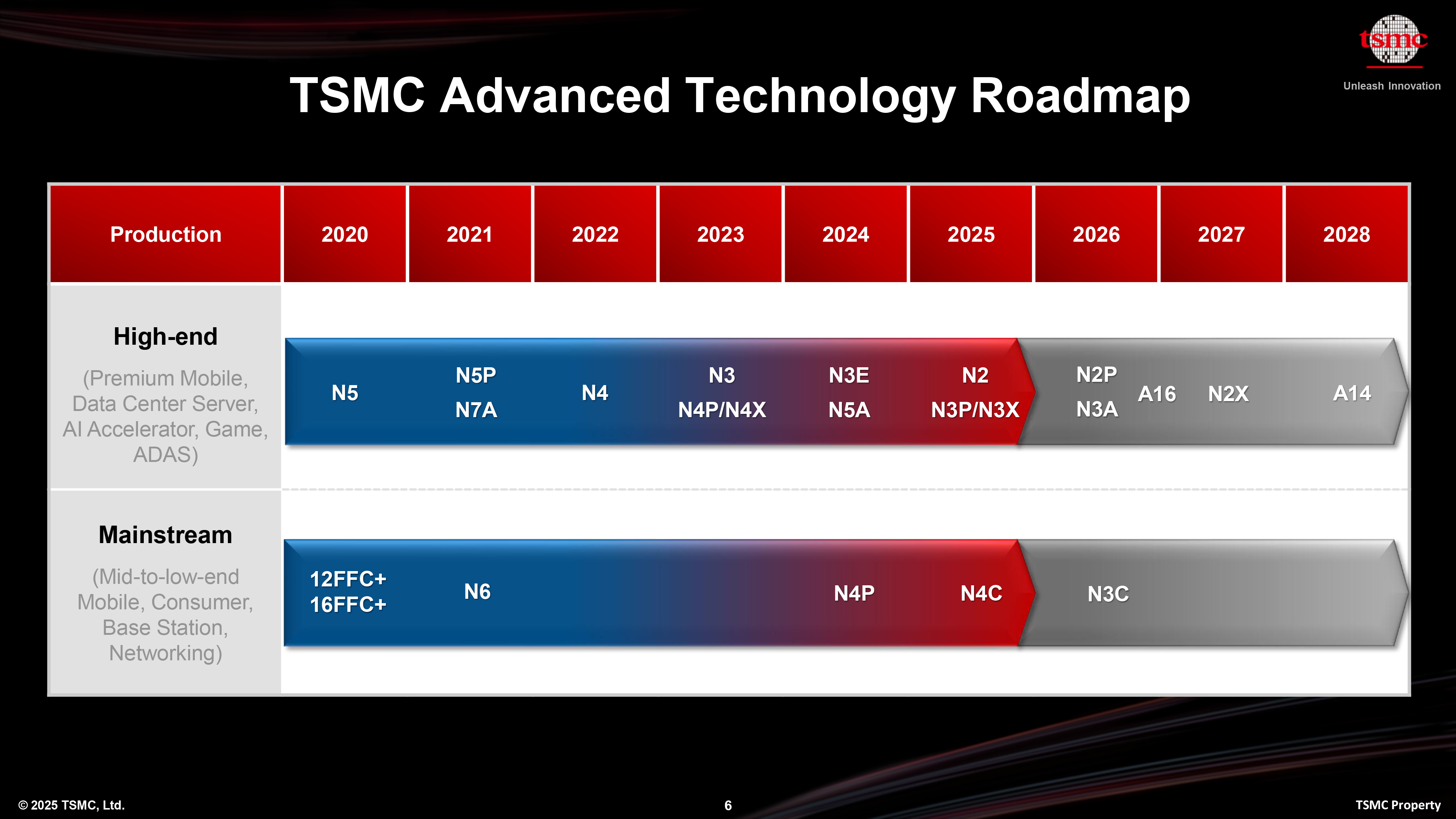
TSMC to begin 1.4nm A14 chip production in 2028, expands 3nm famil…

Ahead of schedule is not the same as on time. TSMC has a history of pushing nodes out; the 3nm node faced multiple delays before ramping. The 1.4nm node introduces new materials and EUV lithography challenges that could still slip the mid-2028 date. The company's own guidance has been conservative, and TrendForce's report reflects construction progress, not yield milestones.

What to watch

Watch for TSMC's Q4 2026 earnings call, where management may update 1.4nm yield data and capex guidance. A confirmed customer commitment from Nvidia or Google for 1.4nm wafers would validate the mid-2028 mass production date.


Source: news.google.com


Sources cited in this article

  1. TrendForce
  2. TrendForce's
Source: gentic.news · · author= · citation.json

AI-assisted reporting. Generated by gentic.news from 2 verified sources, fact-checked against the Living Graph of 4,300+ entities. Edited by Ala SMITH.

Following this story?

Get a weekly digest with AI predictions, trends, and analysis — free.

AI Analysis

The accelerated 1.4nm timeline is a direct response to the AI compute crunch, but it carries a structural tension. TSMC is effectively compressing its node cadence while simultaneously expanding CoWoS packaging capacity. The company is betting that demand certainty from hyperscalers justifies the construction risk. Google's 3 million TPU packaging order with Intel is a telling signal: even TSMC's own capacity can't fully absorb the AI demand curve, forcing customers to diversify packaging partners. What's notable here is the shift from process node leadership to packaging and supply chain orchestration as the true competitive moat. A mid-2028 1.4nm mass production date is aggressive, but the real bottleneck isn't the fab — it's the advanced packaging line. TSMC's ability to deliver both will determine whether it holds that 64% share against Samsung and Intel's counter-moves. The contrarian read: the 'ahead of schedule' framing may be more about signaling to customers than operational reality. TSMC has historically over-promised and under-delivered on node timing. The mid-2028 date should be treated as a best case, not a baseline.
This story is part of
The AI Infrastructure War Shifts from Chips to Developer Tools
Nvidia's enterprise pivot and AWS's OpenAI bet collide with Cursor's quiet ascent
Compare side-by-side
Google vs TSMC
Enjoyed this article?
Share:

AI Toolslive

Five one-click lenses on this article. Cached for 24h.

Pick a tool above to generate an instant lens on this article.

Related Articles

From the lab

The framework underneath this story

Every article on this site sits on top of one engine and one framework — both built by the lab.

More in Big Tech

View all