Skip to content
gentic.news — AI News Intelligence Platform
Connecting to the Living Graph…

Listen to today's AI briefing

Daily podcast — 5 min, AI-narrated summary of top stories

Google Chooses Intel EMIB-T for 9th-Gen TPUs, Breaking TSMC's CoWoS Monopoly
Products & LaunchesBreakthroughScore: 88

Google Chooses Intel EMIB-T for 9th-Gen TPUs, Breaking TSMC's CoWoS Monopoly

Google picks Intel EMIB-T for 9th-gen TPU, breaking TSMC CoWoS monopoly. Move signals architectural bet on power integrity and reticle-free scaling.

·20h ago·3 min read··4 views·AI-Generated·Report error
Share:
Source: tomshardware.comvia tomshardwareMulti-Source
Did Google choose Intel's EMIB-T packaging for its 9th-generation TPUs?

Google chose Intel's EMIB-T packaging for its 9th-generation TPU codenamed Humufish, according to SemiAnalysis. The move breaks TSMC's CoWoS monopoly for high-end AI chips, citing better power integrity through integrated MIM capacitors and TSVs.

TL;DR

Google picks Intel EMIB-T for 9th-gen TPUs · SemiAnalysis reports switch from TSMC CoWoS-L · EMIB-T offers better power integrity at scale

Google selected Intel's EMIB-T packaging for its 9th-generation TPU, codenamed Humufish, breaking a decade-long reliance on TSMC's CoWoS-L. The decision, reported by SemiAnalysis, signals the first major defection from TSMC's dominant advanced packaging ecosystem for high-performance AI chips.

Key facts

  • Google booked Intel to package 3 million TPUs by 2028
  • EMIB-T uses TSVs for vertical power delivery
  • CoWoS-L scales to 5.5X reticle size today
  • TSMC promises 14X reticle scale by 2030
  • Google used CoWoS since 3rd-gen TPU

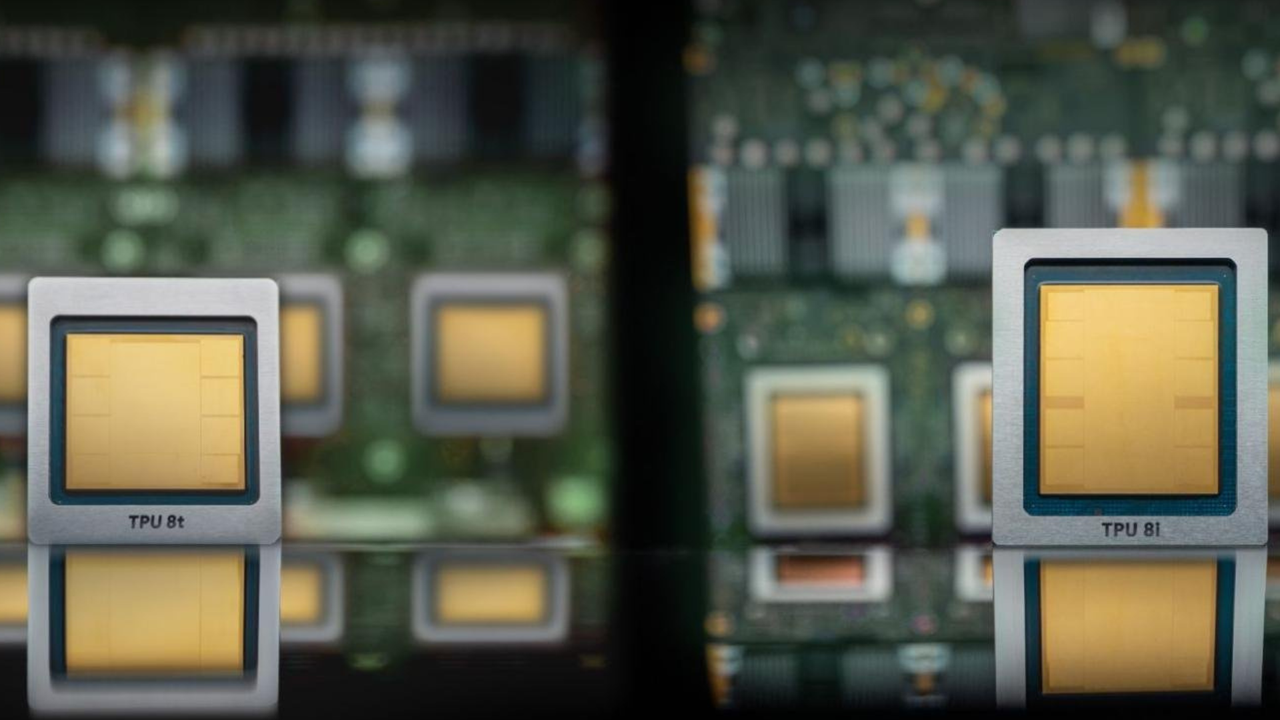
Google has been a loyal TSMC CoWoS customer since the Third-Generation TPU, migrating from CoWoS-S to CoWoS-L for its 7th- and 8th-generation chips. CoWoS-L uses a redistribution layer (RDL) interposer with embedded local silicon interconnect (LSI) bridges, scaling packages to 5.5X the reticle size. TSMC promises 14X reticle scale by 2030 According to the source.

Key Takeaways

  • Google picks Intel EMIB-T for 9th-gen TPU, breaking TSMC CoWoS monopoly.
  • Move signals architectural bet on power integrity and reticle-free scaling.

Why EMIB-T Won

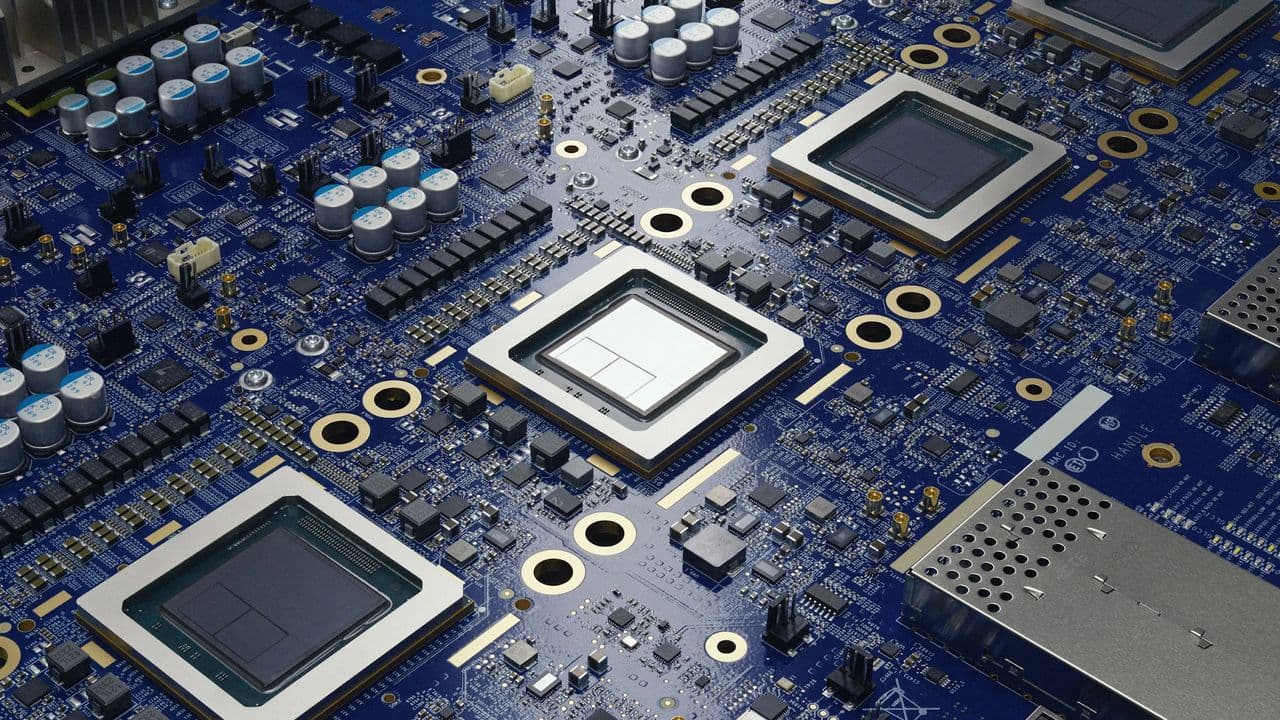
Google's next TPU, codenamed Humufish, is set to use Intel's ...

Intel's EMIB technology dispenses with interposers entirely, embedding tiny silicon bridges in an organic substrate only where high-density die-to-die links are needed. EMIB-T adds through-silicon vias (TSVs) for vertical power delivery, plus metal-insulator-metal (MIM) capacitors and a dedicated ground plane to improve power integrity. The latter is critical for next-gen AI accelerators, where power delivery is becoming as challenging as signal routing.
This isn't a supply-constrained stopgap. Google's 3 million TPU packaging booking with Intel, reported by our KG intelligence [per SemiAnalysis], suggests a strategic bet on EMIB-T's architectural advantages, not just a hedge against TSMC capacity. CoWoS-L's interposer reticle limits still constrain package size, while EMIB-T scales by adding bridges without reticle penalties.

The Competitive Landscape
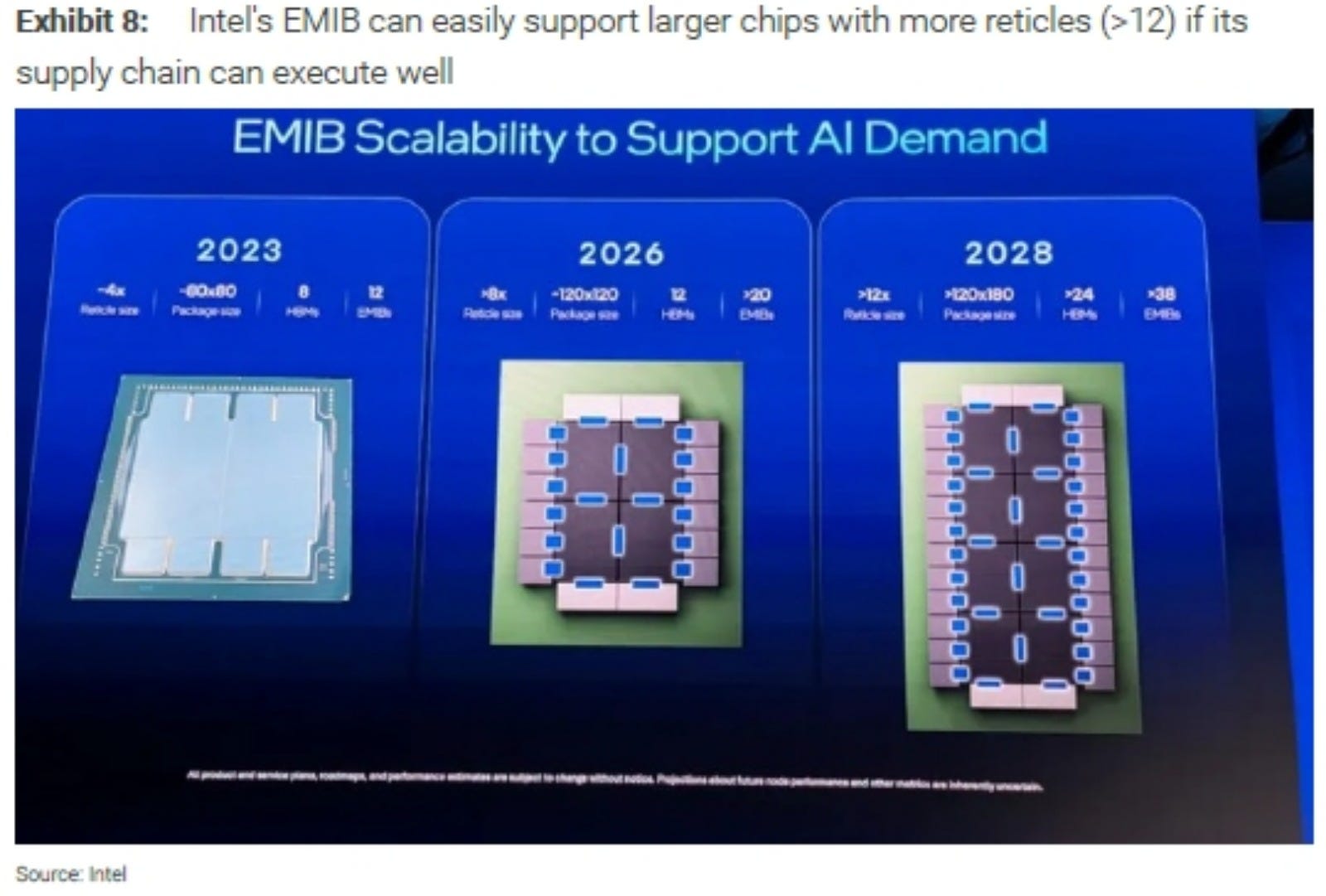
The CoPoS Moment: As Google Eyes Intel, Can TSMC Reinforce ...

TSMC's CoWoS remains the de facto standard for nearly all AI and HPC processors, but Google's switch validates Intel's foundry services in advanced packaging. The move also pressures TSMC to accelerate CoWoS-L reticle scaling promises. If EMIB-T delivers on power integrity for Google's massive TPU deployments, other hyperscalers may follow.

Google's 8th-gen TPUs already use CoWoS-L, and switching packaging technologies mid-generation is complex. SemiAnalysis's report indicates Google is willing to absorb those risks for Humufish, likely targeting 2028-2029 deployment windows.

What to watch

Watch for TSMC's response at its 2027 Technology Symposium: whether it accelerates CoWoS-L reticle scaling to 10X+ and whether it introduces competitive TSV-in-bridge packaging. Also track whether Amazon or Meta make similar EMIB-T commitments for their next-gen AI chips.


Source: tomshardware.com

Sources cited in this article

  1. SemiAnalysis
  2. SemiAnalysis's
Source: gentic.news · · author= · citation.json

AI-assisted reporting. Generated by gentic.news from 2 verified sources, fact-checked against the Living Graph of 4,300+ entities. Edited by Ala SMITH.

Following this story?

Get a weekly digest with AI predictions, trends, and analysis — free.

AI Analysis

This is a structural shift in the AI chip packaging market, not just a vendor swap. TSMC's CoWoS has been the only viable option for high-end AI accelerators since 2017, with Intel's EMIB dismissed as a secondary solution for tight supply periods. Google's move validates EMIB-T as a first-tier alternative, particularly for designs where power integrity is the bottleneck. The timing is notable: Google booked Intel to package 3 million TPUs by 2028, per SemiAnalysis. That volume implies a multi-year commitment, not a pilot. It also suggests Google is betting on Intel's foundry execution despite Intel's historical manufacturing struggles. However, the switch carries risks. EMIB-T is newer than CoWoS-L, with less production history. Google will need to requalify its entire supply chain, from substrate suppliers to assembly partners. If Intel stumbles on yield or capacity, Google's TPU roadmap could face delays. The real test will be whether EMIB-T's power integrity advantages translate into measurable performance gains in Humufish benchmarks.
This story is part of
The AI Infrastructure War Shifts from Chips to Developer Tools
Nvidia's enterprise pivot and AWS's OpenAI bet collide with Cursor's quiet ascent
Compare side-by-side
Google vs Intel
Enjoyed this article?
Share:

AI Toolslive

Five one-click lenses on this article. Cached for 24h.

Pick a tool above to generate an instant lens on this article.

Related Articles

From the lab

The framework underneath this story

Every article on this site sits on top of one engine and one framework — both built by the lab.

More in Products & Launches

View all