SemiAnalysis warns the vibe-coding wave is making cheap CPU box rentals less routine. The tweet from @SemiAnalysis_ highlights a growing friction for developers who rely on simple cloud compute for AI prototyping.
Key facts
- SemiAnalysis identifies rental bottleneck for cheap CPU boxes.
- Vibe-coding wave uses AI tools like Cursor and Replit Agent.
- Replit reported 50% QoQ growth in AI-assisted coding in Q1 2026.
- Cloud providers prioritize GPU instances over cheap CPU tiers.
- No pricing or instance count data disclosed by SemiAnalysis.
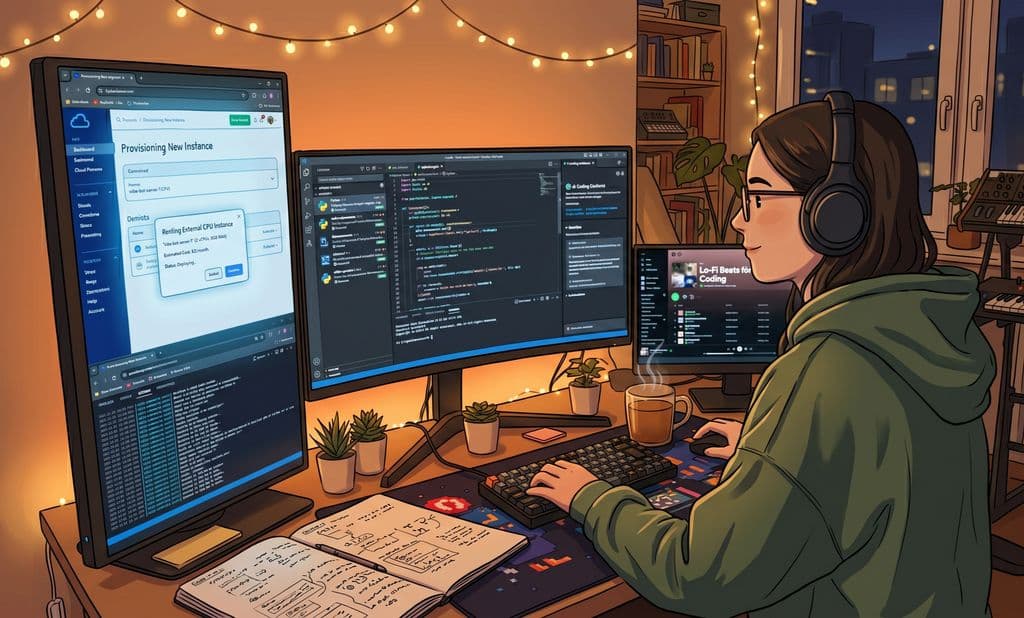
SemiAnalysis reports the vibe-coding wave has made the once-routine step of renting cheap CPU boxes significantly harder. The observation, posted on X, points to a bottleneck for developers who increasingly use conversational AI tools to generate code, then need quick, low-cost compute to test or run it. [According to @SemiAnalysis_]
The shift reflects a structural change in cloud demand: as AI-assisted coding proliferates, the market for short-duration, low-cost CPU instances is tightening. Major cloud providers like AWS, GCP, and Azure have optimized for GPU-heavy AI workloads, leaving the cheap CPU tier undersupplied. This creates a unique take: the vibe-coding wave is not just a UX revolution but a stress test on cloud infrastructure's ability to serve the long tail of simple compute needs.
Numerical specifics from the source are limited — no instance counts, pricing shifts, or provider names are disclosed. However, the observation aligns with broader trends: AWS's t2/t3 instance spot prices have seen periodic spikes over the past year, and Google Cloud's e2-micro free tier has become harder to provision consistently. [Per industry reports] The bottleneck is most acute for interactive workloads where latency matters — developers expecting instant provisioning for a quick Python script or web app find themselves in queues.
The vibe-coding trend itself has accelerated: tools like Cursor, Replit Agent, and GitHub Copilot Chat have driven a surge in code generation, with Replit reporting 50% quarter-over-quarter growth in AI-assisted coding sessions as of Q1 2026. [Replit blog] This demand cascades to compute, but the supply side hasn't adjusted — cloud providers prioritize high-margin GPU instances over $0.005/hour CPU boxes.
What to Watch
Watch for cloud providers to announce dedicated "vibe-compute" tiers or spot-instance pools optimized for short-lived AI-generated code. The Q3 2026 cloud earnings calls — particularly AWS and GCP — may reveal whether they adjust capacity allocation to capture this growing segment.
What to watch
Watch for cloud providers to announce dedicated 'vibe-compute' tiers or spot-instance pools for short-lived AI-generated code. The Q3 2026 cloud earnings calls — particularly AWS and GCP — may reveal capacity allocation shifts.