What Happened
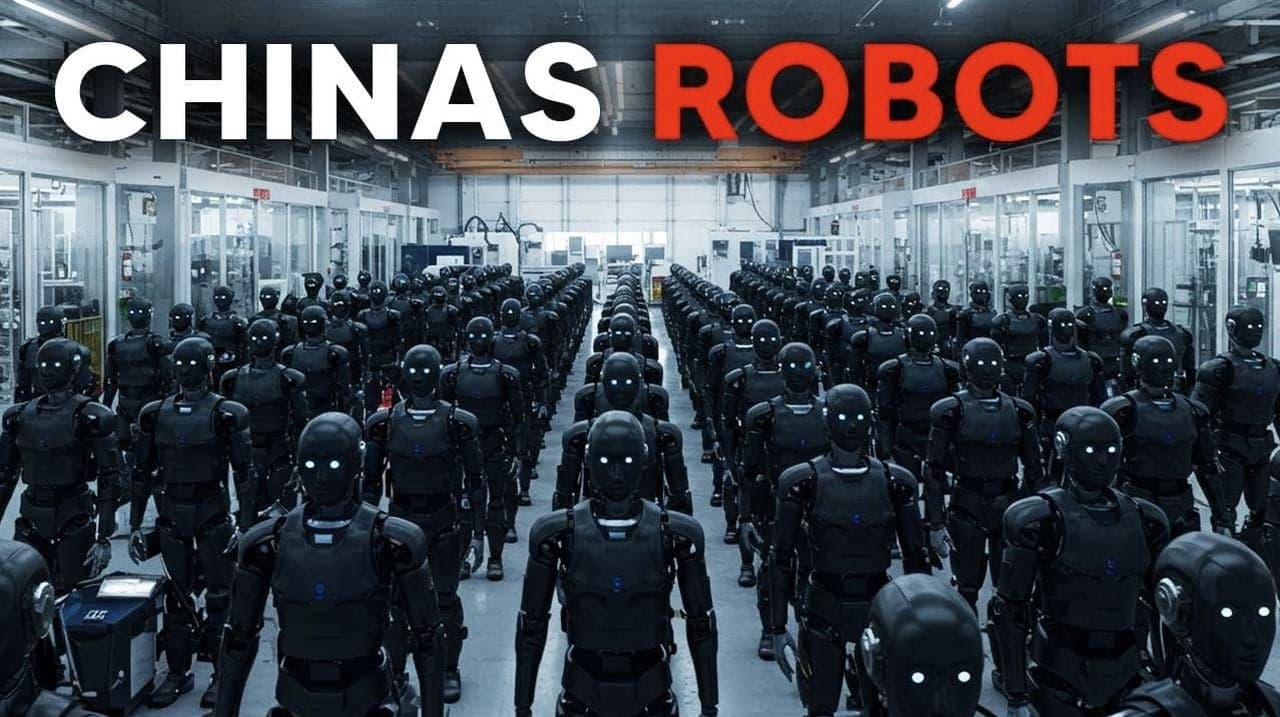
A video posted on X (formerly Twitter) by user @kimmonismus has gone viral, offering a brief, dramatic glimpse inside what appears to be a massive AI training data center in China. The clip shows a cavernous industrial space filled with row upon row of server racks, illuminated by the distinctive glow of GPU activity. The accompanying caption frames the scale as a direct threat to job security: "One of China’s massive training labs. And people still think their jobs are safe. The next revolution is already being trained."
The video, while not naming the specific company or location, visually underscores the industrial-scale compute infrastructure being deployed to train frontier AI models. This physical manifestation of the AI "arms race"—often discussed in abstract terms of parameters and flops—provides a concrete image of the capital and resources required.
Context
The viral nature of this clip taps into a growing public and professional anxiety about AI-driven automation. While large-scale data centers are not new, their explicit association with training the next generation of generative AI and autonomous systems makes them potent symbols. The post implies that the sheer physical footprint of these facilities correlates directly with the pace and disruptive potential of the technology being developed within them.
This comes amid a global surge in investment for AI compute. NVIDIA's data center revenue, driven by GPU sales for such labs, has seen record growth. Chinese tech giants like Alibaba, Tencent, and Baidu, as well as specialized AI firms like Zhipu AI and DeepSeek, have been aggressively expanding their compute clusters to train ever-larger models, competing with U.S. leaders like OpenAI, Anthropic, and Meta.
The video serves as a visceral reminder that the "AI revolution" is not merely a software update but is built on a foundation of staggering hardware investment, energy consumption, and centralized industrial capability.
gentic.news Analysis
The viral video, while light on technical specifics, is significant for what it represents: the demystification of AI's physical backbone. For our technical audience, the discussion often centers on LoRA configurations, transformer variants, and benchmark scores. This clip drags the conversation back to the foundational layer—compute sovereignty. The scale on display is a direct competitive signal. As we covered in our analysis of the U.S. CHIPS Act and its implications for AI hardware supply chains, control over advanced compute is a primary geopolitical and economic battleground. This Chinese facility is a tile in that larger mosaic.
This aligns with a trend we've been tracking: the industrialization of AI training. It's no longer just about clever algorithms running in a university lab; it's about who can assemble and power the largest, most efficient fleet of H100 or H200 equivalents. The entity relationship here is clear: massive training labs feed directly into the capability jumps of frontier models. When we reported on DeepSeek-R1's performance matching Claude 3.5 Sonnet, that achievement was predicated on access to facilities like the one hinted at in this video. The physical infrastructure is the unspoken prerequisite for every SOTA result.
Furthermore, the public reaction focusing on job displacement is predictable but arguably misses the more immediate strategic point. For AI engineers and researchers, the takeaway shouldn't be fear but a recognition of resource centralization. The barrier to entry for training frontier models is now a multi-billion-dollar hardware barrier. This continues to solidify the position of a handful of well-funded entities—both state-linked and private—as the gatekeepers of the next generation of AI capabilities. The real "job" at risk might be that of the independent research lab hoping to compete at the very top tier without such monumental resources.
Frequently Asked Questions
Where is this AI training lab located?
The original post does not specify the exact location or the company operating the facility. Based on the poster's context and the scale, it is likely associated with one of China's major tech conglomerates (like Alibaba Cloud, Tencent Cloud, or Baidu) or a dedicated AI research entity with significant state or private backing. These organizations have been publicly developing large-scale data centers across China to support their AI ambitions.
How does this scale compare to US AI training facilities?
The scale appears comparable to the largest AI supercomputers operated by U.S. tech giants. For example, Meta has publicly discussed its AI Research SuperCluster (RSC), which is built with thousands of NVIDIA A100 and H100 GPUs. Microsoft and OpenAI are also known to have constructed massive, dedicated clusters for training models like GPT-4 and beyond. The video suggests China is deploying infrastructure at a similar industrial tier, highlighting a global race for compute dominance.
Does a bigger data center directly mean better AI models?
Not directly, but it is a critical enabling factor. Larger, more efficient compute clusters allow researchers to train larger models (more parameters) on more data for longer periods of time, which is a proven path to increased capability and emergent behaviors. However, the quality of the data, the novelty of the training algorithms (like Mixture of Experts), and the overall research talent are equally important. A massive lab provides the potential, but it must be paired with top-tier research to produce state-of-the-art models.
What kind of jobs are most at risk from AI trained in these labs?
The automation threat is multi-faceted. The most immediate impact from the generative AI models trained in such facilities is on roles centered around content creation and manipulation (writing, coding, graphic design, media production). However, the "next revolution" hinted at likely involves multi-modal and agentic AI that could eventually impact more complex tasks in analysis, customer service, and even certain engineering and scientific functions. The scale of investment suggests a broad targeting of cognitive labor, not just routine tasks.