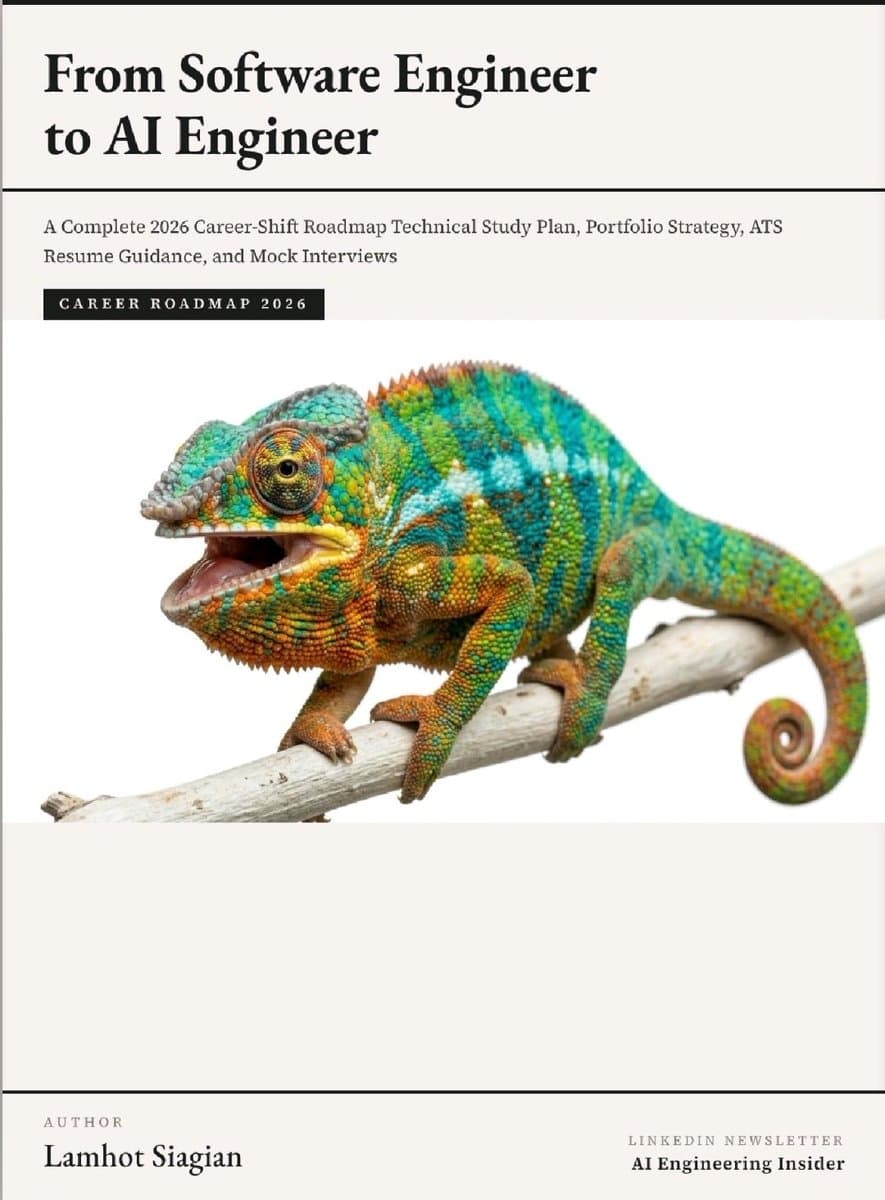
VMLOps, a prominent community and resource hub focused on machine learning operations, has published a detailed roadmap titled "A Complete 2026 Roadmap From Software Engineer to AI Engineer." The guide is designed to provide a structured learning path for traditional software developers aiming to pivot into the high-demand field of AI engineering.
The roadmap is hosted on GitHub and outlines the progressive stages of skill acquisition, moving from foundational concepts to advanced production-level deployment. It serves as a curated index of essential topics, tools, and best practices relevant for 2026.
Key Takeaways
- VMLOps published a comprehensive 2026 roadmap detailing the skills and knowledge software engineers need to transition into AI engineering.
- The guide reflects the current industry demand for engineers who can build and deploy production AI systems.
What the Roadmap Covers
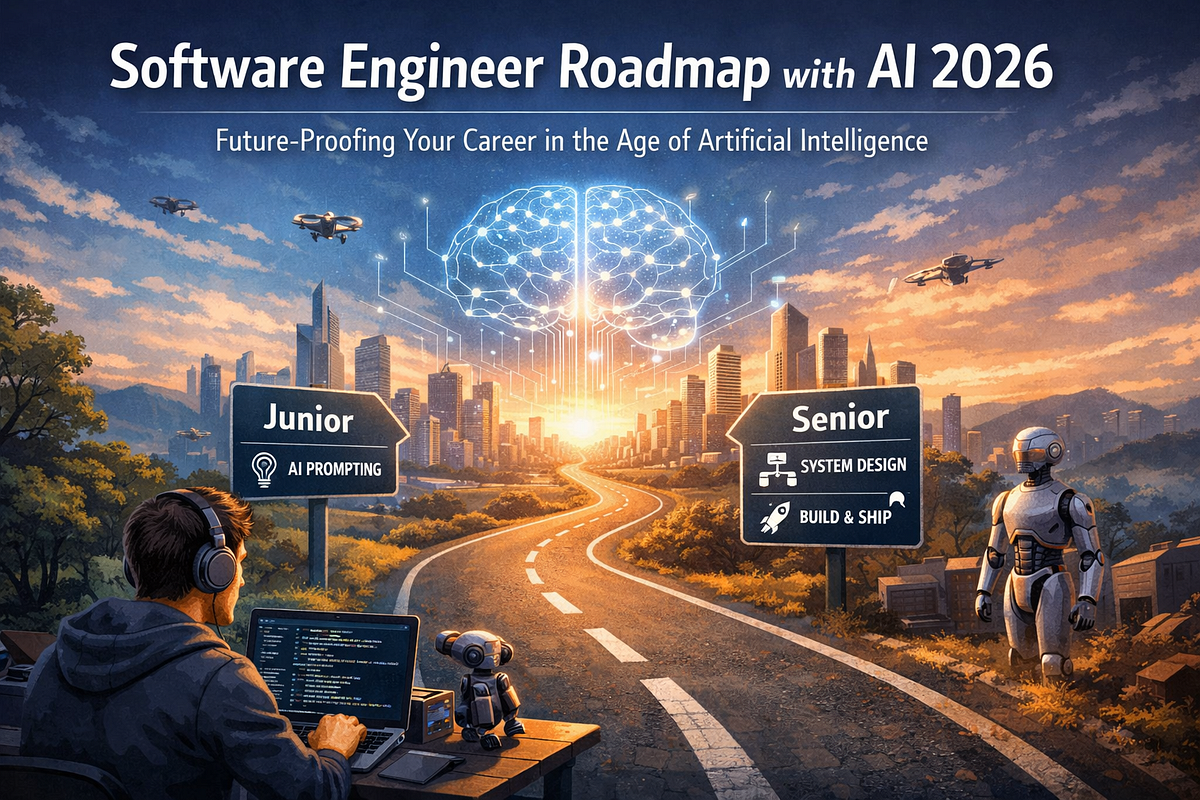
The guide is structured as a sequential learning path. It begins by reinforcing core software engineering fundamentals—data structures, algorithms, and system design—emphasizing that these remain critical for building scalable AI systems.
The subsequent phases build upon this foundation:
- Core Machine Learning & Mathematics: This stage covers essential theory, including linear algebra, calculus, probability, and statistics, before diving into classical machine learning algorithms (supervised/unsupervised learning) and introductory deep learning concepts.
- Deep Learning Specialization: Learners are guided through modern neural network architectures (CNNs, RNNs, Transformers), frameworks like PyTorch and TensorFlow, and the practicalities of training and fine-tuning models.
- MLOps & Production Engineering: This is a central pillar of the roadmap, reflecting the industry shift from research to deployment. It covers version control for data and models (DVC, LakeFS), experiment tracking (MLflow, Weights & Biases), model packaging, and orchestration.
- Cloud & DevOps for AI: The path includes containerization with Docker, orchestration with Kubernetes, infrastructure-as-code (Terraform), and cloud-specific AI services (AWS SageMaker, GCP Vertex AI, Azure ML).
- Advanced Topics & Specialization: The final stages point toward emerging areas such as LLMOps for managing large language models, vector databases for retrieval-augmented generation (RAG) systems, and ethical AI/ML safety considerations.
The Implicit "Why": Market Context
The roadmap's existence and structure are a direct response to a persistent market signal: a severe shortage of engineers who can bridge the gap between experimental AI models and reliable, maintainable production services. While creating a novel model architecture is a research skill, deploying it cost-effectively, monitoring its performance, and ensuring its robustness is an engineering discipline.
This guide consolidates the scattered knowledge required for this role into a single, community-vetted sequence. It effectively defines the emerging "AI Engineer" role as a hybrid of data scientist, software engineer, and DevOps specialist.
gentic.news Analysis
This roadmap publication is a significant marker of the AI industry's maturation. It moves beyond the hype of model capabilities to address the foundational engineering challenges that determine whether AI projects succeed or fail in the real world. The heavy emphasis on MLOps and cloud deployment mirrors the trend we've covered extensively, such as in our analysis of the Databricks acquisition of MosaicML and the rising valuation of Weights & Biases. These moves highlight the immense commercial value being placed on the tooling and platform layer that supports AI engineering.
The roadmap also implicitly validates the trajectory of companies like Replit, which has been integrating AI-assisted coding directly into the developer environment, and Cognition Labs, whose Devin AI agent aims to automate aspects of software engineering. For a human engineer, the competitive advantage is shifting from basic coding to orchestrating these AI tools and managing the complex systems they inhabit.
Furthermore, this guide serves as a canonical response to the frequent question from our readership: "How do I practically enter this field?" By providing a concrete, technical sequence, it reduces the noise and focuses on the stack that leading tech companies are actually using today. It acknowledges that while research breakthroughs like GPT-5 or Gemini 2.0 capture headlines, the sustainable value is created by the engineers who integrate these models into products.
Frequently Asked Questions
What is the difference between an AI Engineer and a Data Scientist?
While there is overlap, the roadmap clarifies the distinction. A Data Scientist is often focused on statistical analysis, experimentation, and model development to derive insights. An AI Engineer, as framed by this guide, is primarily a software engineer who specializes in building, deploying, scaling, and maintaining AI-powered applications in production. Their core competency is systems design and engineering, applied to AI models.
How long does it take to complete this roadmap?
The roadmap is not a short course but a career transition guide. For a proficient software engineer, gaining working competency in the core areas could take 12-18 months of dedicated part-time study and practical project work. Mastery, especially in advanced MLOps and specialization areas, is an ongoing process that aligns with industry evolution.
Is a background in software engineering mandatory for this path?
The roadmap is explicitly titled for software engineers, and that foundation is non-negotiable for the role it describes. Attempting to build production AI systems without strong software engineering principles in system design, testing, and maintainability leads to fragile, unreliable applications. Individuals from other backgrounds would need to first acquire those core software engineering skills.
Does this roadmap cover hardware or chip-level optimization?
The published guide focuses on the software and systems layer. While it may touch on efficient model inference, it does not delve deeply into hardware-specific optimizations (e.g., writing kernels for GPUs or NPUs). That area remains a more specialized niche within AI engineering.