What Happened
The article from Towards AI presents a comprehensive analysis of how AI agents are beginning to displace traditional Software-as-a-Service (SaaS) models. The SaaS market reached $315.68 billion in 2025, but a fundamental architectural shift is underway. AI agents—systems that can plan, act, and iterate autonomously rather than waiting for user input—represent a different value proposition from seat-by-seat subscription software.
Key projections cited in the article:
- 40% of enterprise apps will feature task-specific AI agents by 2026 (up from under 5% in 2025), according to Gartner
- 35% of point-product SaaS tools will be replaced or absorbed into agent ecosystems by 2030, per Gartner and Deloitte projections
- The AI agents market was valued at $7.84 billion in 2025 and is projected to reach $52.62 billion by 2030 at a 46.3% CAGR
Technical Details: What Makes AI Agents Different
AI agents differ fundamentally from traditional SaaS in several key ways:
1. Autonomous Operation vs. Tool Usage
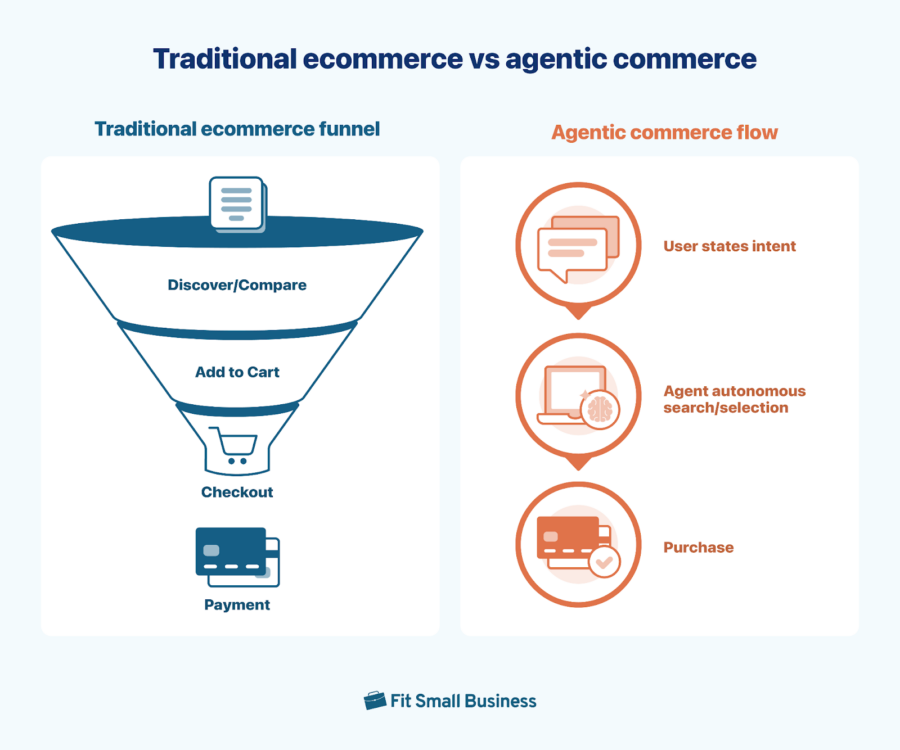
Traditional SaaS requires users to navigate interfaces, click buttons, and manually execute workflows. AI agents operate autonomously—they receive high-level goals and determine the sequence of actions needed to achieve them. This represents a shift from software as a tool to software as an employee.
2. Outcome-Oriented vs. Feature-Oriented
SaaS products compete on feature lists and integrations. AI agents compete on outcomes—what they can accomplish rather than what buttons they provide. This changes the competitive landscape from feature comparisons to capability comparisons.
3. Integrated Ecosystems vs. Point Solutions
AI agents naturally create ecosystems where multiple specialized agents work together. This contrasts with the SaaS model where companies purchase dozens of disconnected point solutions that require manual integration.
4. Reliability Threshold Crossed
Recent developments (as noted in the knowledge graph) indicate that AI agents have crossed a critical reliability threshold that fundamentally transforms programming capabilities. This isn't just incremental improvement—it's a phase change in what's possible.
Retail & Luxury Implications
The Coming Disruption in Retail Software Stacks
Luxury and retail companies currently rely on extensive SaaS portfolios: CRM systems, inventory management, e-commerce platforms, customer service tools, marketing automation, and analytics suites. Each requires licenses, training, and manual operation. AI agents threaten this entire model.
Concrete Scenarios for Luxury Retail
1. Customer Relationship Management Reimagined
Instead of Salesforce or HubSpot as tools that sales associates must learn and use, imagine an AI agent that:
- Monitors customer interactions across all channels
- Identifies VIP customers showing purchase intent
- Schedules personalized outreach at optimal times
- Coordinates with inventory agents to ensure product availability
- Follows up post-purchase without human intervention
The value shifts from "how many seats of CRM software" to "how many high-value customer relationships are being managed effectively."
2. Inventory and Supply Chain Optimization
Current systems require buyers and planners to analyze data and make decisions. An AI agent ecosystem could:
- Continuously monitor global demand signals
- Automatically adjust production orders with manufacturers
- Optimize inventory distribution across stores and regions
- Predict and prevent stockouts of key products
- Negotiate with suppliers autonomously within defined parameters
3. Personalized Customer Experience at Scale
Luxury brands pride themselves on personalized service, but scaling this is challenging. AI agents could:
- Analyze individual customer preferences, purchase history, and browsing behavior
- Generate personalized product recommendations and styling advice
- Coordinate in-store and online experiences seamlessly
- Provide 24/7 concierge-level service without human limitations
4. Creative and Marketing Workflows
Instead of separate tools for design, content creation, and campaign management, creative agents could:
- Generate on-brand visual content for campaigns
- Adapt messaging for different markets and customer segments
- Optimize ad spend in real-time across channels
- Measure campaign effectiveness and iterate autonomously
Business Impact Assessment
Cost Structure Transformation
SaaS costs are largely linear: more users = higher costs. Agent economics are different—initial development and integration costs may be higher, but marginal costs per additional task or customer served are minimal. This could fundamentally change how retail companies budget for technology.
Competitive Advantage Dynamics
Early adopters of effective agent systems could develop significant advantages:
- Faster decision cycles (agents operate 24/7)
- Lower operational costs (reduced manual work)
- Superior customer experiences (truly personalized at scale)
- Better inventory management (real-time optimization)
Workforce Implications
This isn't about replacing human workers but augmenting them differently than current software does. Instead of training staff on software interfaces, companies will train staff to manage and supervise AI agents—a fundamentally different skill set.
Implementation Approach
Phased Adoption Strategy
Given the projections (40% penetration by 2026, not overnight replacement), luxury retailers should consider:
Phase 1: Pilot Specific Use Cases (2024-2025)
- Identify high-volume, repetitive tasks suitable for automation
- Start with internal operations before customer-facing applications
- Build internal expertise in agent development and management
Phase 2: Integrate into Core Operations (2025-2026)
- Begin replacing point solutions where agent alternatives prove reliable
- Develop agent ecosystems that connect previously siloed functions
- Establish governance frameworks for autonomous decision-making
Phase 3: Transform Business Models (2026-2030)
- Reimagine customer experiences around agent capabilities
- Develop new revenue streams enabled by agent ecosystems
- Potentially license successful agent systems to other retailers
Technical Requirements
- Integration capabilities: Agents need access to multiple data sources and systems
- Security and compliance: Particularly important for luxury brands handling sensitive customer data
- Explainability: Ability to understand why agents made specific decisions
- Human oversight: Systems for human intervention when needed
Governance & Risk Assessment
Privacy and Data Security
Luxury brands handle extremely sensitive customer data. Autonomous agents accessing this data require:
- Robust access controls and audit trails
- Data minimization principles (agents should only access necessary data)
- Compliance with global regulations (GDPR, CCPA, etc.)
Brand Integrity Risks
Autonomous agents making customer-facing decisions could potentially damage brand reputation if they:
- Make inappropriate recommendations
- Fail to recognize cultural nuances
- Appear impersonal or "cheap" for luxury contexts
Maturity Assessment
While projections are aggressive, current agent technology has limitations:
- Reliability: Even after crossing "critical thresholds," agents will make errors
- Context understanding: Luxury requires nuanced understanding of status, taste, and subtlety
- Integration complexity: Connecting agents to legacy systems is non-trivial
The Bottom Line for Luxury Retail Leaders
The shift from SaaS to AI agents represents more than just a technology change—it's a fundamental rethinking of how software creates value. For luxury retailers, the implications are profound:
- This is real but phased: The 2026 projections suggest meaningful penetration within two years, not science fiction.
- Start learning now: Even if full implementation is years away, understanding agent capabilities and limitations is urgent.
- Focus on outcomes, not features: When evaluating AI solutions, ask what outcomes they can achieve, not what features they include.
- Prepare your organization: The skills needed to work with autonomous agents differ from those needed for traditional software.
The luxury retailers who navigate this transition successfully won't just be buying different software—they'll be building fundamentally different kinds of organizations.