Anthropic has disabled a key feature for developers building autonomous agents. According to a social media report from a user, the company "pulled the plug" on Claude Max for continuous, unattended agent operation.
The change appears to specifically impact users running 24/7 coding and automation workflows. The feature, which was reportedly accessible on higher-tier plans, allowed Claude models to operate in a persistent, stateful manner suitable for autonomous agents that require long-running contexts and continuous interaction loops.
What Happened

Based on user reports, Anthropic has disabled the technical capability that enabled "Claude Max" to function as a platform for autonomous agents. This feature allowed the model to maintain context and operate continuously without manual intervention—a requirement for many automated coding, monitoring, and task-execution systems.
The change affects users who were building agentic systems on top of Claude's API, particularly those running workflows that required persistent operation. The timing and official reasoning from Anthropic have not been publicly detailed in the source material.
Context
Autonomous agents represent a significant use case for large language models, enabling systems that can plan, execute, and adapt tasks over extended periods. Features that support 24/7 operation are particularly valuable for:
- Automated code generation and review systems
- Continuous testing and deployment pipelines
- Customer support and monitoring bots
- Research assistance with long-running experiments
Claude's architecture, with its extended context windows (reportedly up to 200K tokens in some configurations), made it particularly suitable for such applications where maintaining coherence over long interactions is critical.
Impact on Developers
For developers who had built systems assuming continuous Claude Max availability, this change represents a significant disruption. The report specifically mentions "24/7 coding workflows," suggesting affected users include software teams using Claude for:
- Round-the-clock code assistance
- Automated bug detection and fixing
- Continuous integration/development automation
- Documentation generation and maintenance
The financial implication mentioned in the report ("your $200/…") suggests this affected paid tier users, potentially those on business or enterprise plans where such features were expected to be stable.
What This Means for Agent Development
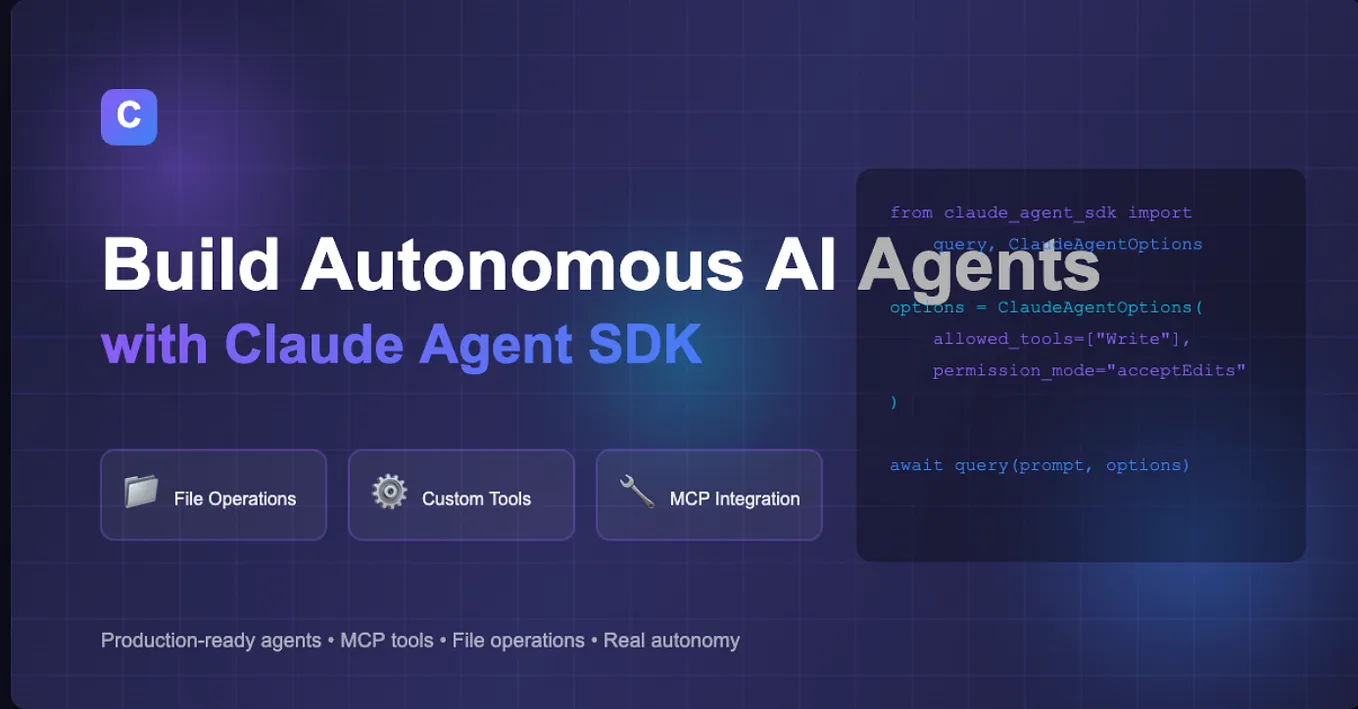
This development highlights the challenges of building production systems on top of rapidly evolving AI platforms. Key considerations for developers include:
- Platform Risk: API features critical to system architecture can change without warning
- Architecture Flexibility: Systems should be designed to switch between models or approaches
- Cost Implications: Changes to usage patterns can significantly affect operational expenses
- Redundancy Planning: Critical automation systems may require fallback mechanisms
Frequently Asked Questions
What was Claude Max?
Claude Max appears to have been a feature or configuration that allowed Anthropic's Claude models to operate in a continuous, stateful mode suitable for autonomous agents. It likely involved extended session management, persistent context, and possibly different rate limits or pricing compared to standard API usage.
Why would Anthropic disable this feature?
While not officially stated, possible reasons include: excessive computational costs from continuous operation, concerns about unsupervised agent behavior, API abuse prevention, or re-architecting the feature for future release. Autonomous agents can generate high volumes of requests and maintain long-running contexts that are resource-intensive.
What alternatives exist for autonomous agent development?
Developers can consider: building with open-source models that offer more control (though with less capability), using other commercial APIs with explicit agent support, implementing hybrid systems that combine multiple approaches, or designing agents with periodic checkpointing rather than true 24/7 operation.
How can developers future-proof their AI systems?
Key strategies include: abstracting model dependencies behind interfaces, maintaining the ability to switch between providers, implementing graceful degradation when features change, monitoring API announcements closely, and considering self-hosted options for critical workflows.
gentic.news Analysis
This move by Anthropic follows a broader industry pattern of AI providers adjusting access to high-intensity features. In February 2026, we covered OpenAI's introduction of stricter rate limits on GPT-4 Turbo for extended reasoning tasks, citing similar infrastructure concerns. The parallel suggests a growing tension between developer demand for persistent agent capabilities and provider concerns about cost, reliability, and responsible use.
Anthropic's decision particularly impacts the competitive landscape for agent development platforms. This creates an opening for specialized providers like LangChain and LlamaIndex, which have been building abstraction layers that mitigate such platform risks. It also advantages competitors like Google's Gemini and xAI's Grok, which may see increased adoption from developers seeking stable agent platforms.
From a technical perspective, this highlights the fundamental challenge of scaling stateful LLM interactions. Maintaining context across extended sessions requires significant memory and computational resources—costs that may become prohibitive at scale. Anthropic's move suggests they're prioritizing reliability and cost control over niche use cases, a sensible business decision that nonetheless disrupts early adopters.
Looking forward, we expect to see clearer delineation between "chat" and "agent" API tiers across providers, with appropriate pricing and limits for each. The autonomous agent market remains nascent but growing rapidly, and platform stability will become increasingly critical as more enterprises build mission-critical systems on these foundations.