In a move that caught many developers off guard, Anthropic has announced a permanent increase to its API rate limits for all paying subscribers. The change, confirmed via a developer announcement, is effective immediately and applies across all subscription tiers.
Key Takeaways
- Anthropic has permanently increased API rate limits for all subscribers, a move that expands developer capacity without a price hike.
- This follows a period of high demand and frequent limit adjustments.
What Happened

Anthropic has increased the number of API requests per minute (RPM) and tokens per minute (TPM) that subscribers can send to its Claude models. While the company has not yet published the exact new limits for each tier, the increase is described as significant and permanent. This is a departure from the temporary limit adjustments that have been common during periods of high demand or model launches.
The announcement was met with surprise by the developer community, with one prominent AI developer noting, "That was not on my bingo card!" The sentiment reflects the industry's expectation that rate limits typically tighten or remain stable as models become more popular, not expand permanently.
Context: The API Rate Limit Landscape
API rate limits are a critical constraint for developers building applications on top of large language models. They determine how many requests an application can make in a given timeframe, directly impacting scalability, user experience, and throughput. Until now, Anthropic, like its competitors, has carefully managed these limits to control infrastructure costs, prevent abuse, and ensure service stability during peak loads.
Historically, rate limit increases have often been temporary, tied to specific events like new model releases (Claude 3.5 Sonnet, Haiku) or offered as limited-time promotions. A permanent, across-the-board increase suggests a fundamental improvement in Anthropic's backend infrastructure and capacity planning.
What This Means in Practice
For developers and companies building with Claude's API, this change translates to:
- Increased Application Throughput: Applications can handle more concurrent users or process larger volumes of data without hitting quota walls.
- Reduced Engineering Overhead: Less need for complex queuing systems, batch processing, or workarounds to manage rate limit errors.
- Cost-Effective Scaling: The ability to scale usage without necessarily upgrading to a higher, more expensive subscription tier immediately.
- Improved Reliability: Fewer
429 Too Many Requestserrors during traffic spikes.
This is particularly impactful for startups and scale-ups whose growth was previously gated by API quotas rather than their own product-market fit.
The Competitive Signal
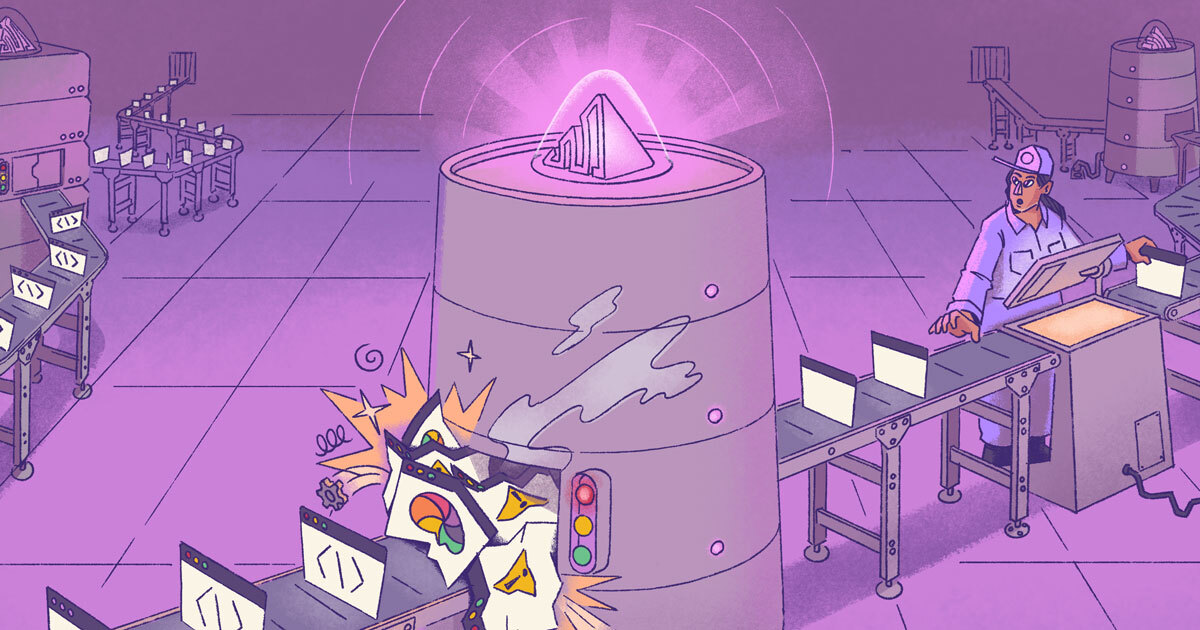
This move is also a clear competitive signal in the crowded foundation model API market. Anthropic's primary competitors—OpenAI, Google (Gemini), and Meta (Llama API)—all maintain their own rate limit policies. A generous, permanent limit increase can be a powerful differentiator for developers choosing which platform to build on, especially for data-intensive or real-time applications.
It suggests Anthropic is confident in its infrastructure's ability to handle sustained higher loads and is prioritizing developer experience and platform adoption as key growth levers.
gentic.news Analysis
This permanent rate limit increase is a strategic infrastructure play that reflects Anthropic's maturation from a research-focused entity to a robust platform company. It follows a pattern of increased commercial activity we've tracked throughout 2025 and early 2026, including the expansion of its enterprise offering, Claude for Teams, and more aggressive benchmarking against OpenAI's GPT-4o.
The move directly addresses a persistent pain point for developers. In our coverage of the Claude 3.5 Sonnet launch, we noted that surging demand led to immediate rate limit constraints, frustrating developers trying to experiment with the new model. This permanent increase suggests Anthropic has made substantial investments in scaling its inference infrastructure, likely leveraging optimized serving systems and expanded GPU capacity.
Furthermore, this aligns with a broader, subtle trend we're observing: a shift from model capability being the sole battleground to platform reliability and scalability becoming equally important. As enterprises move from pilot projects to production deployments, predictable performance and high quotas become non-negotiable. Anthropic's decision preemptively meets this demand and positions Claude as a viable backbone for large-scale, business-critical applications. It's a bet that developer loyalty will be won not just by benchmark scores, but by a frictionless scaling experience.
Frequently Asked Questions
What are the new Anthropic API rate limits?
As of this announcement, Anthropic has not published a detailed table of the new RPM (Requests Per Minute) and TPM (Tokens Per Minute) limits for each subscription tier (Pay-As-You-Go, Team, Enterprise). Developers are advised to check their Anthropic Console dashboard or API settings to see their updated personal limits. The increase is reported to be significant across the board.
Is this rate limit increase really permanent?
Yes, according to the announcement, this is a permanent increase to the baseline rate limits for subscribers. While Anthropic, like all API providers, reserves the right to adjust limits for operational reasons, this change is framed as a new, stable baseline for the service, not a temporary promotion or test.
Does this mean Anthropic's API is now cheaper?
Not directly. The price per million input/output tokens has not changed. However, the effective "cost" of development has decreased because developers can now build more scalable applications on the same subscription tier. You get more capacity for your existing dollar, which can delay or prevent the need to upgrade to a more expensive plan.
How does this compare to OpenAI's GPT-4o rate limits?
Direct comparison is complex as limits vary by tier and model. Historically, OpenAI has offered relatively high default limits for its higher-tier customers. Anthropic's move appears designed to close any perceived gap in developer-friendly quotas. The real test will be in sustained reliability under the new, higher loads. For developers choosing between platforms, the new limits make Anthropic a more compelling option for high-throughput applications.