Key Takeaways
- Boston Consulting Group (BCG) reports agentic AI can break down 'friction silos' between CPG companies and retailers, enabling step-change collaboration through autonomous planning and execution.
- The analysis targets the consumer goods value chain, where fragmented data and manual handoffs currently limit joint efficiency.
What Happened
Boston Consulting Group (BCG) has published an analysis arguing that agentic AI — AI systems capable of autonomous planning and execution — can deliver a 'step-change' in how consumer packaged goods (CPG) companies collaborate with retailers. The core thesis: operational 'friction silos' between these two sides of the value chain have long limited joint efficiency, and agentic AI is uniquely positioned to break them down.
The piece, titled "Breaking Friction Silos: Agentic AI Can Step-Change CPG–Retail Collaboration," frames the opportunity around replacing reactive, manual, and often adversarial processes with proactive, automated, and collaborative ones. BCG's argument is that the same technology class now being deployed for internal automation can be extended to the inter-company boundary — the point where brand plans meet retail execution.
Technical Details
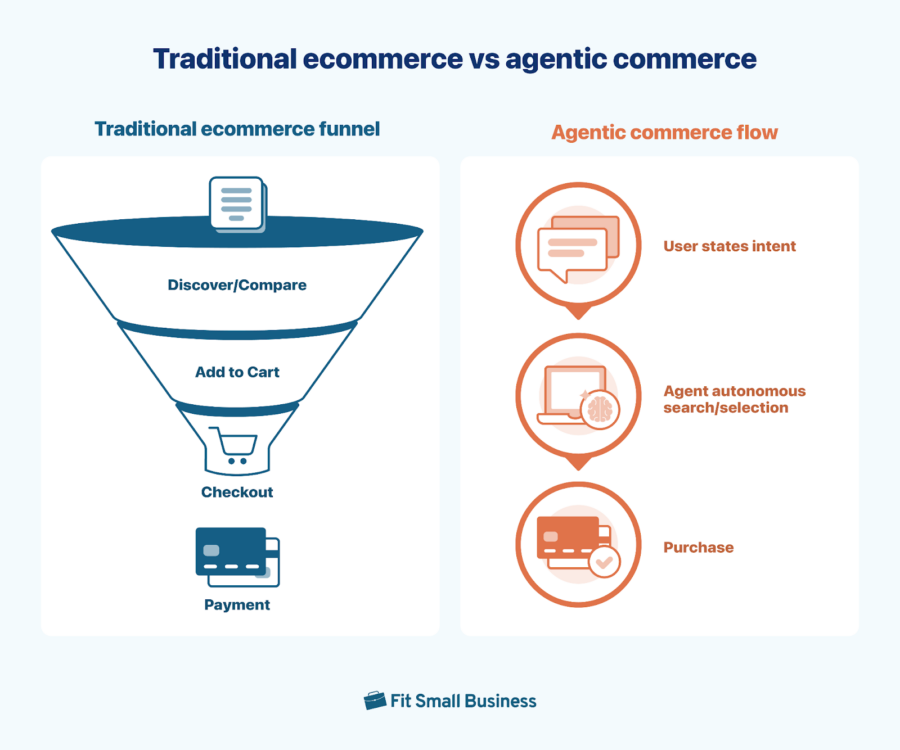
Agentic AI differs from earlier generations of automation in a critical way: it doesn't just execute a predefined workflow; it can plan, adapt, and execute multi-step tasks with minimal human intervention. In the CPG–retail context, this means AI systems could:
- Monitor inventory and sales data across both parties' systems
- Identify replenishment or promotion opportunities autonomously
- Propose joint trade promotion plans that optimize for both brand and retailer objectives
- Execute routine coordination tasks (e.g., order management, invoice reconciliation) without human handoffs
This is distinct from traditional EDI (Electronic Data Interchange) or API-based integrations, which connect systems but don't reason about the business context. Agentic AI adds a reasoning layer on top of the data plumbing — one that can negotiate, optimize, and act within agreed guardrails.
Retail & Luxury Implications
For the retail side of the value chain — including the premium and luxury segments — the BCG thesis has direct relevance, though with important caveats.
Where it applies: The most immediate opportunities are in high-volume, data-rich categories where CPG-style collaboration already exists: beauty, fragrances, premium food and beverage, and luxury-adjacent consumer goods. In these categories, joint business planning (JBP) between brand and retailer is already a core process, and it remains heavily manual — spreadsheets, email chains, and quarterly review meetings. Agentic AI could automate the monitoring, alerting, and proposal generation layers of JBP, freeing human teams to focus on strategy and exceptions.
Where it's harder: For true luxury (couture, fine jewelry, high-end watches), the CPG–retail dynamic is different. Distribution is more controlled, volumes are lower, and the relationship is often less transactional. The 'friction silos' BCG describes are less about supply-chain efficiency and more about brand control and clienteling. Agentic AI's role there is more likely to be in demand sensing and clienteling support than in trade promotion optimization.
The honest assessment: BCG's piece is a strategic argument, not a case study. It doesn't cite specific deployments or quantified ROI. Readers should treat it as a directionally useful thesis — the technology is real, the use cases are plausible, but production-grade implementations at the CPG–retail boundary are still early.
Business Impact
BCG does not provide quantified impact figures in the source material. The argument is qualitative: 'step-change' collaboration, reduced friction, faster joint decision-making. For practitioners, the realistic impact areas are:
- Reduced manual coordination overhead in joint business planning, trade promotion management, and supply chain alignment
- Faster cycle times for decisions that currently require multi-party human review
- Better joint forecasting by continuously reconciling brand and retailer data rather than doing it quarterly
None of these are guaranteed; they depend on data quality, integration maturity, and organizational willingness to trust AI agents with inter-company processes.
Implementation Approach
For retail and CPG organizations considering this direction, the practical roadmap looks like:
- Identify the highest-friction process — typically joint business planning or trade promotion management
- Ensure data foundations — both parties must have clean, accessible, and agreed-upon data (product master, inventory, sales, promotion history)
- Define guardrails — what can the agent do autonomously vs. what requires human approval (e.g., financial commitments)
- Start with a bounded pilot — e.g., automate replenishment proposals for one category with one retail partner
- Measure and expand — track cycle time, manual effort, and joint forecast accuracy before scaling
Governance & Risk Assessment
- Data sharing: CPG–retail collaboration requires sharing commercially sensitive data. Governance around what's shared, with whom, and for what purpose is essential.
- Autonomy boundaries: Clear rules on what agents can commit to (orders, pricing, promotions) are critical. Human-in-the-loop for financial decisions is recommended.
- Maturity level: This is an emerging use case. BCG's piece is strategic guidance; expect 12–24 months before mature, referenceable deployments are common.
- Vendor landscape: Google Cloud (Vertex AI, Gemini), Microsoft (Azure AI), and AWS all offer agentic AI platforms that could support these use cases. The differentiation will be in domain-specific templates and integrations with retail/CPG systems.
Source: news.google.com