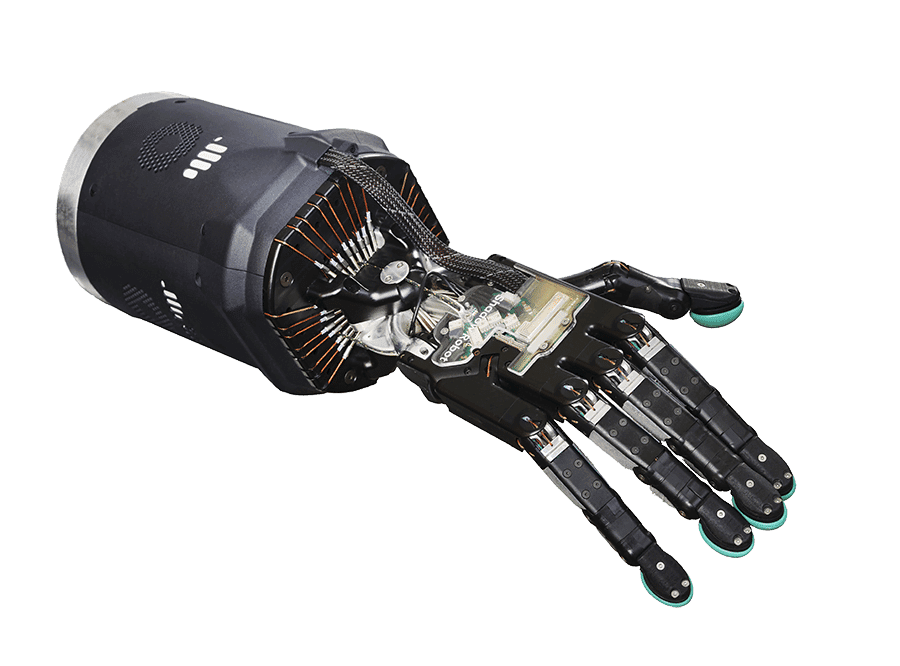
Robotics demonstrations are often a tale of two realities: flawless performance in controlled settings, followed by fragility and failure in unpredictable environments. BrainCo is targeting this deployment gap with its newly announced Revo 3, a high-degree-of-freedom dexterous hand engineered explicitly for real-world robustness and integration.
Key Takeaways
- BrainCo announced the Revo 3 dexterous robotic hand, engineered to bridge the gap between lab demos and real-world deployment.
- It features 21 active degrees of freedom, a 5kg per-finger load capacity, and one-click sim-to-real transfer.
What's New: A Hand Built for the Real World
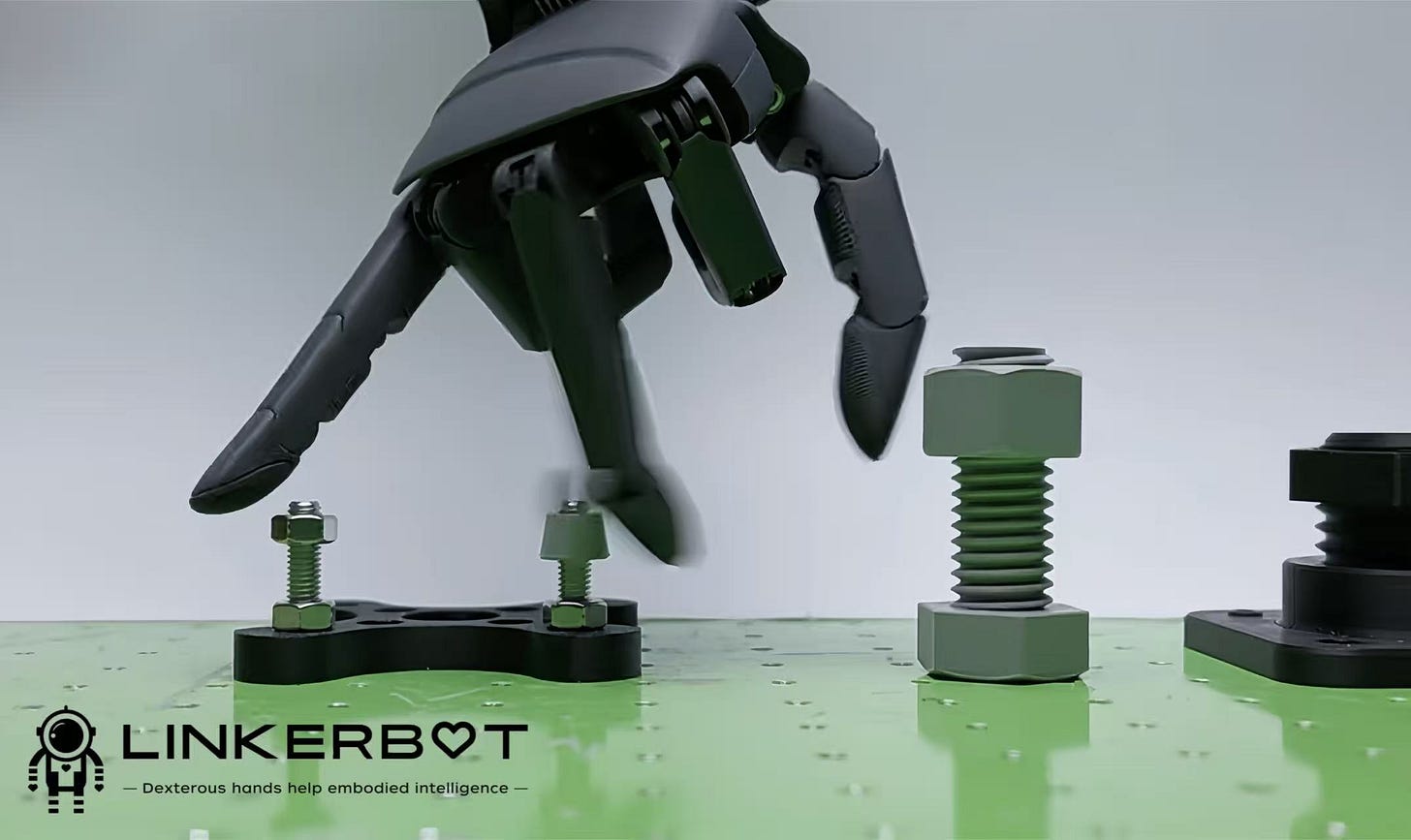
The Revo 3 is a robotic manipulator designed to move beyond research prototypes. Its core specifications are geared toward practical application:
- 21 Active Degrees of Freedom (DOF): This provides the complexity needed for human-like, in-hand manipulation of diverse objects.
- Substantial Payload and Grip Force: The hand supports a 20kg total payload, with a 5kg load capacity per finger across its four fingers. It generates a five-finger grip force exceeding 70 Newtons, enabling it to handle heavy or resistive tools.
- Industrial-Grade Compatibility: It features 12-80V wide voltage compatibility and supports multiple communication protocols, easing integration into existing robotic cells and industrial systems.
- Seamless Open-Source Integration: BrainCo emphasizes compatibility with mainstream open-source robotics frameworks, lowering the barrier to software development.
The Key Feature: One-Click Sim-to-Real Transfer
The most critical claim for addressing the deployment gap is the "one-click deployment" for sim-to-real transfer with plug-and-play demos. In practice, this suggests the company provides software tooling to rapidly transfer policies trained in simulation (e.g., using Isaac Gym, MuJoCo) to the physical Revo 3 hardware, minimizing the notorious "reality gap" that breaks simulated behaviors.
Technical Details & Competitive Context
High-DOF dexterous hands are not new. The Shadow Hand has been a research staple for years, and companies like ROBOTIS (with its Dynamixel-based hands) and Allegro Hand (from Wonik Robotics) serve the market. Tesla's Optimus robot also features a dexterous hand design.
BrainCo's positioning with the Revo 3 appears to focus on a combination of high force/payload, industrial connectivity, and streamlined deployment software. The promised "plug-and-play demos" indicate a productization effort aimed at reducing setup time from weeks to hours for specific tasks.
Key Specs at a Glance:
Active Degrees of Freedom 21 Total Payload Up to 20 kg Per-Finger Load Capacity 5 kg (4 fingers) Five-Finger Grip Force > 70 N Voltage Range 12-80V Key Software Feature One-click sim-to-real deploymentWhat to Watch: From Announcement to Application
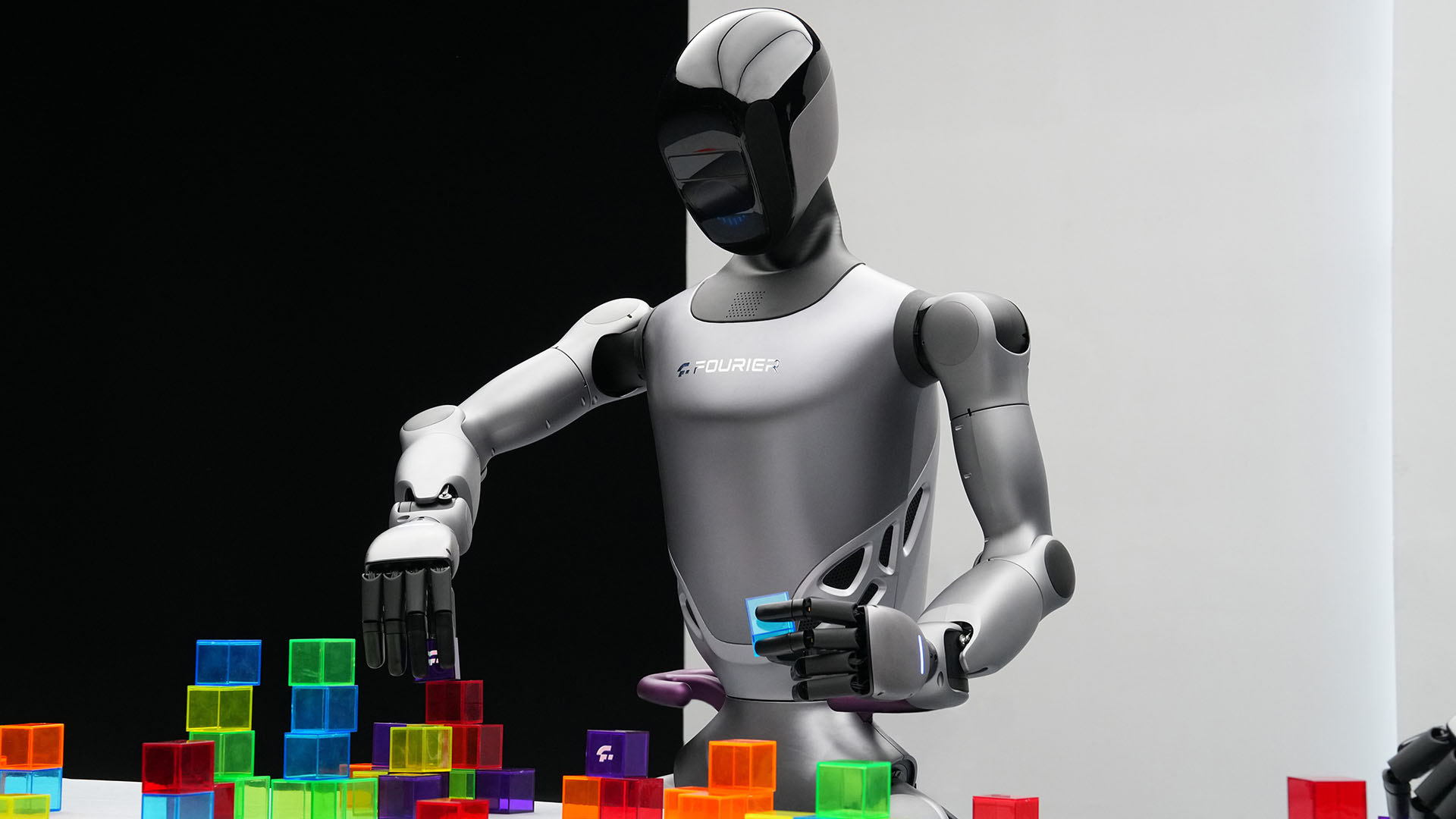
The announcement via social media lacks detailed benchmarks, pricing, availability, or in-depth technical publications. The critical questions for potential users and the field are:
- Real-World Validation: Does the one-click sim-to-real work for complex, dynamic manipulation tasks beyond simple pick-and-place? Independent verification will be crucial.
- Durability and MTBF: Real-world deployment means collisions, dust, and continuous operation. Mean Time Between Failure (MTBF) data is essential.
- Cost: High-DOF hands are historically expensive. A competitive price point could accelerate adoption in logistics, manufacturing, and lab settings.
BrainCo notes to "stay tuned for more DOF versions," suggesting a future product family.
gentic.news Analysis
This announcement taps directly into the most persistent bottleneck in embodied AI: transferring intelligence from simulation to physical hardware. The focus on industrial compatibility (wide voltage, multiple protocols) signals a clear pivot from pure research to applied robotics, targeting sectors like advanced manufacturing and logistics where robustness is non-negotiable.
The emphasis on sim-to-real tooling is the most technically significant aspect. If BrainCo's software stack delivers as promised, it could substantially lower the barrier for AI labs and companies to deploy learned manipulation policies. This aligns with the broader industry trend we've covered, such as in our analysis of NVIDIA's Project GR00T and Google DeepMind's RT-X initiative, which aim to create general-purpose robot foundations. However, where those efforts focus on the brain (the AI model), BrainCo is focusing on the body (the actuator) and the critical bridge between them.
Historically, companies like Embodied Intelligence (founded by Pieter Abbeel) pioneered sim-to-real for manipulation, but often with standard robot arms. BrainCo's integrated hardware-software approach for a dexterous hand is a more specialized, full-stack attempt at the problem. The success of the Revo 3 will depend less on its DOF count—which is comparable to others—and more on the reliability of its actuators and the efficacy of its proprietary deployment pipeline. It represents a necessary step in the ecosystem: building durable, software-ready hardware platforms upon which advanced AI models can reliably operate.
Frequently Asked Questions
What is sim-to-real transfer in robotics?
Sim-to-real transfer is the process of training a robot's control policy in a simulated environment and then successfully deploying that policy on physical hardware. The major challenge is the "reality gap"—differences between simulation and the real world in physics, sensing, and actuation that cause simulated policies to fail. BrainCo claims its one-click deployment tool minimizes this gap for the Revo 3 hand.
How does the BrainCo Revo 3 compare to the Shadow Hand or Allegro Hand?
The Shadow Hand is a seminal research platform known for its biomimetic design and tactile sensing. The Allegro Hand is a popular, relatively lower-cost 16-DOF hand for research. The Revo 3 appears to compete by emphasizing higher payload capacity (5kg/finger), broader industrial voltage/protocol support, and bundled software for sim-to-real deployment, positioning it as a product for applied development rather than pure research.
What are the main applications for a dexterous hand like the Revo 3?
Primary applications are in environments where robots must manipulate a wide variety of objects with human-like adaptability. This includes advanced manufacturing (assembly, kitting), logistics and warehousing (packing irregular items), laboratory automation (handling labware), and potentially hazardous environments (disaster response, ordnance disposal). Its industrial specs suggest a focus on factory and warehouse settings.
When will the BrainCo Revo 3 be available and how much will it cost?
The initial announcement does not include pricing or specific availability dates. These are critical details for assessing its market viability. Interested parties should monitor BrainCo's official channels for product launch details, datasheets, and purchasing information.