Epoch AI published a technical explainer on the Elliptic-Curve Discrete Logarithm Problem, the hardness assumption securing Bitcoin and Ethereum. The piece walks engineers through the group theory and why 256-bit curves still hold.
Key facts
- ECDLP secures Bitcoin's secp256k1 and Ethereum signatures
- Pollard's rho runs in O(√n), ~2^128 ops for 256-bit curves
- Shor's algorithm would break ECDLP on fault-tolerant quantum hardware
- No classical attack solves ECDLP in polynomial time
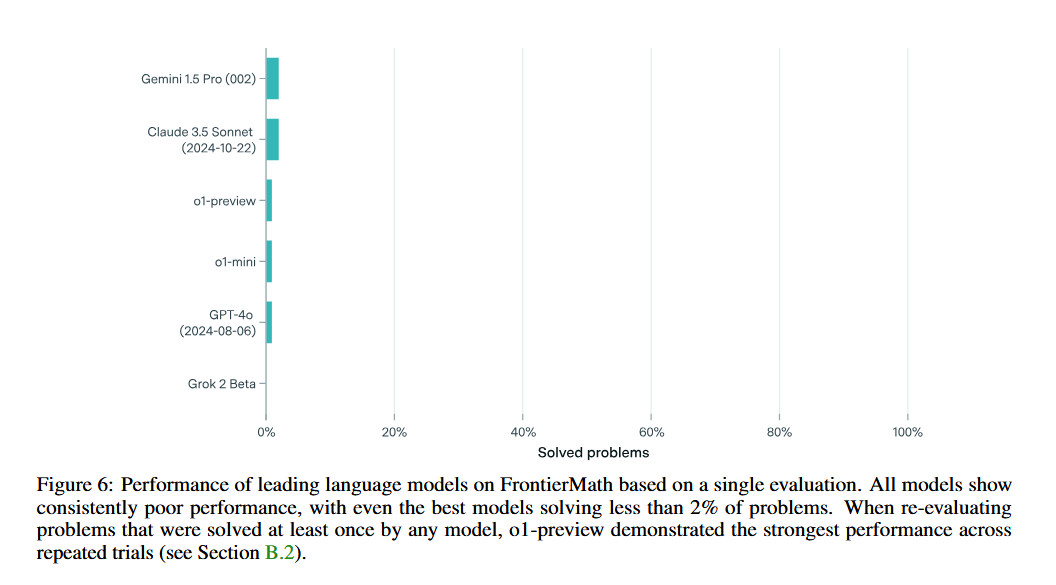
- Epoch AI published the explainer after opening FrontierMath in Dec 2026
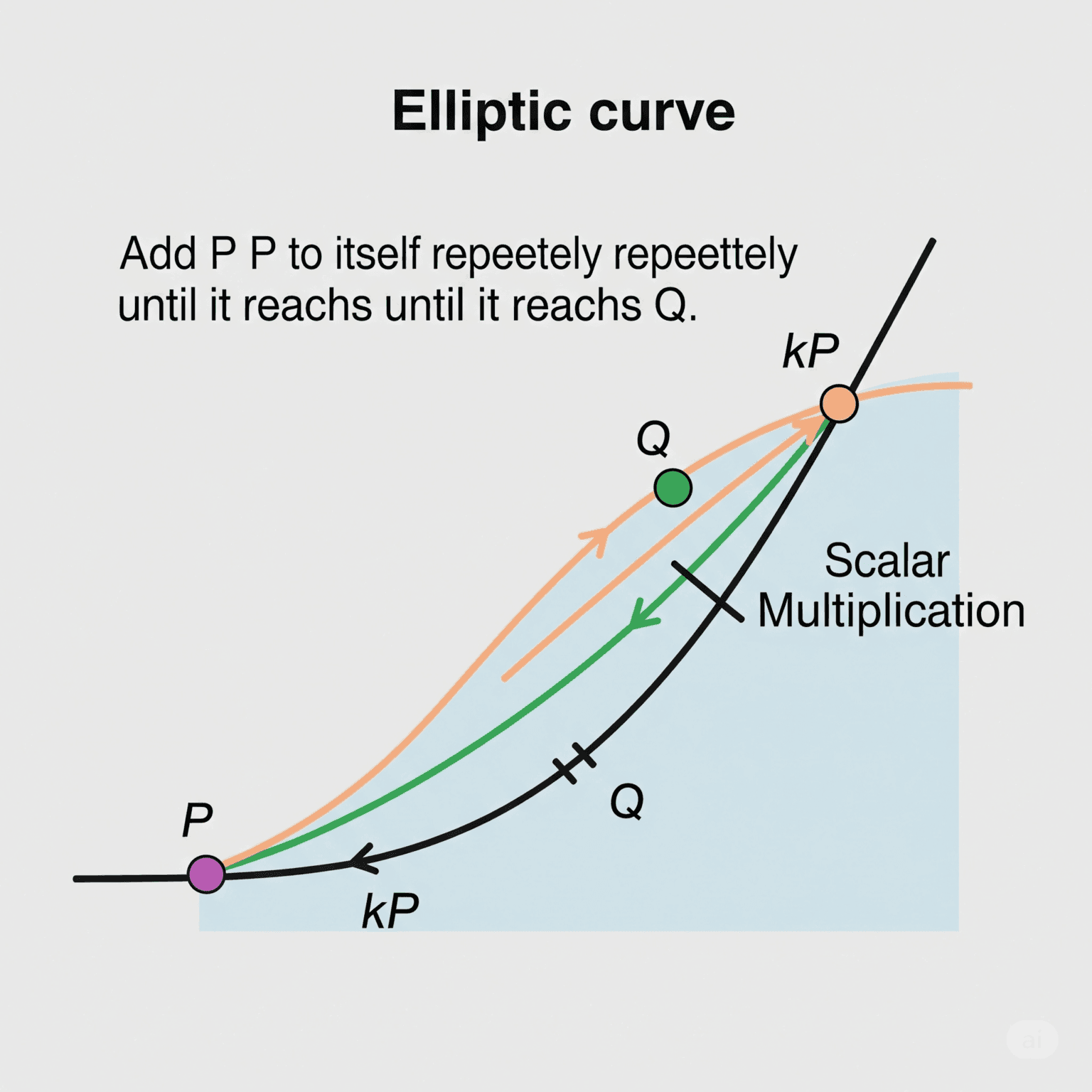
Epoch AI's new explainer on the Elliptic-Curve Discrete Logarithm Problem (ECDLP) is a refresher for engineers who've taken the math for granted. The source article breaks down why ECDLP — not RSA, not lattice problems — is the load-bearing wall under modern blockchain signatures and TLS handshakes. Bitcoin's secp256k1 and Ethereum's signature scheme both reduce to this single assumption: given points P and Q on an elliptic curve, find the integer k such that Q = kP. No classical algorithm solves that in polynomial time, and that's the entire game.
The math that holds up trillions
The explainer covers the group-theoretic structure that makes ECDLP hard. Unlike finite-field discrete logs, where index-calculus attacks apply, elliptic curve groups resist those methods. The best generic attack remains Pollard's rho, which runs in O(√n) — for a 256-bit curve, that's roughly 2^128 operations. That number is why secp256k1 has survived a decade and a half of blockchain use without a practical break. Epoch AI's piece doesn't just state this; it walks through the reasoning so an engineer can verify the security margin themselves.
The quantum asterisk
The explainer doesn't ignore the elephant in the room: Shor's algorithm. On a fault-tolerant quantum computer, Shor's would solve ECDLP in polynomial time, collapsing the assumption overnight. But the piece correctly notes the gap between theory and hardware. No existing quantum machine has demonstrated the error-corrected qubit counts needed to run Shor's against a 256-bit curve. The threat window is a function of quantum error correction scaling, not of any classical breakthrough. For now, the $1.1T in AI capex flowing into data centers as previously reported by this publication is a more immediate pressure on the industry than any quantum attack on ECDLP.
Why this matters now
The timing of Epoch AI's explainer is notable. The organization spent two years keeping FrontierMath's problems secret before opening them to public scrutiny in December 2026. That move was about verifying AI capabilities; this piece is about re-grounding the fundamentals. As post-quantum cryptography (PQC) standards from NIST push into production, engineers need a crisp mental model of what ECDLP actually protects and what it doesn't. Epoch AI's contribution is that clarity — no vendor hype, just the math.
The article doesn't break new ground mathematically; it's a synthesis. But that synthesis has practical value. Every developer who ships a wallet, a TLS config, or a smart contract is betting on ECDLP. Understanding why that bet holds — and precisely where it could fail — is the difference between cargo-cult security and engineering judgment.
Key Takeaways
- Epoch AI explains ECDLP, the math securing Bitcoin and Ethereum.
- No classical break exists; quantum Shor's remains theoretical, keeping 256-bit curves safe.
What to watch

Watch NIST's PQC migration deadlines for federal systems and whether any vendor demonstrates a fault-tolerant quantum machine above 1,000 logical qubits — the threshold where Shor's against 256-bit curves moves from theoretical to engineering problem. Also track Epoch AI's next explainer in the series.
Source: news.google.com