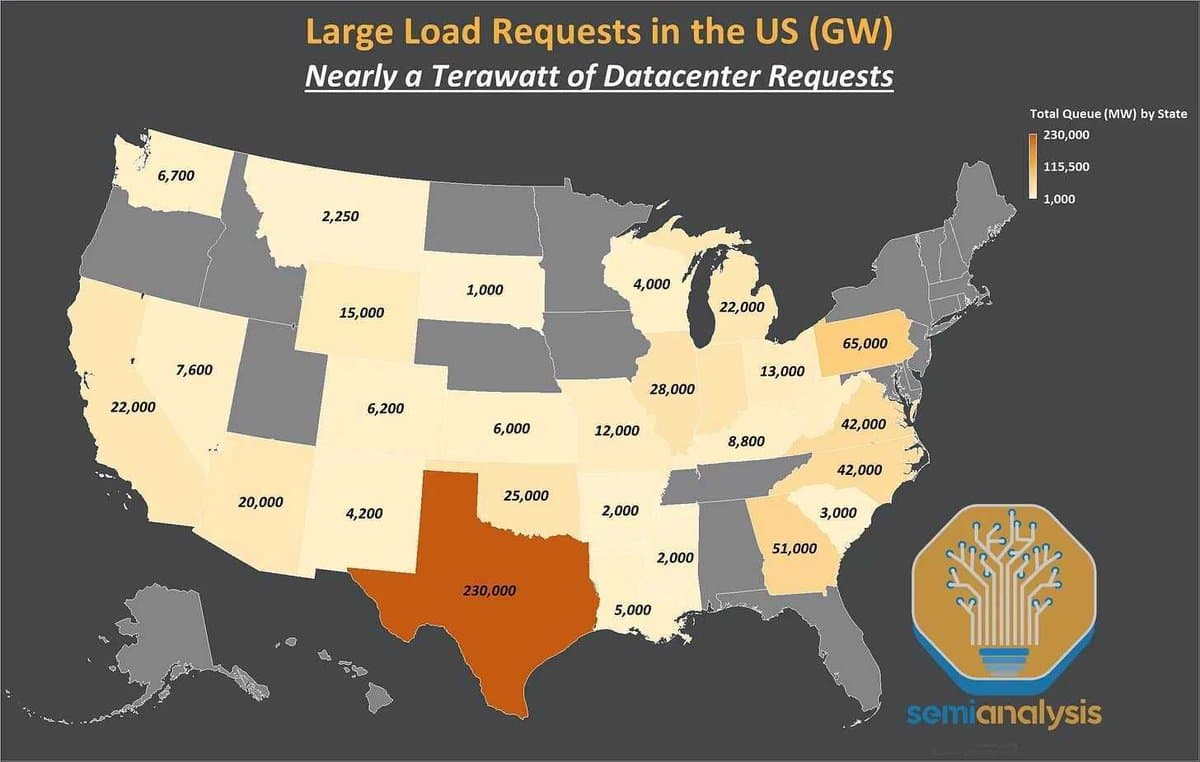
ERCOT datacenter interconnect requests far exceed what the Texas grid operator will underwrite, @SemiAnalysis_ reports. The gap captures the structural mismatch between AI buildout ambitions and grid approval capacity.
Key facts
- ERCOT datacenter requests exceed underwriting capacity, per @SemiAnalysis_.
- Grid interconnection timelines in Texas often run 3-5 years.
- Winter Storm Uri (2021) left ERCOT sensitive to large load spikes.
- Chip supply constraints easing, but grid approval now the bottleneck.
The Texas grid, ERCOT, is facing a deluge of datacenter interconnect requests from AI operators seeking to power new clusters. Yet the grid operator's willingness to underwrite that load trails far behind. According to @SemiAnalysis_, this discrepancy is a core data point in their power-crisis research, illustrating a bottleneck that threatens to delay or cap AI infrastructure expansion.
The unique take here is not that AI needs power—that is well known—but that the grid's approval mechanism, not capital or chip supply, is becoming the binding constraint. Even with billions in funding, AI projects face multi-year interconnection queues in ERCOT and other grids, a structural limit that no amount of GPU procurement can bypass.
Why the grid bottleneck matters more than chip shortages
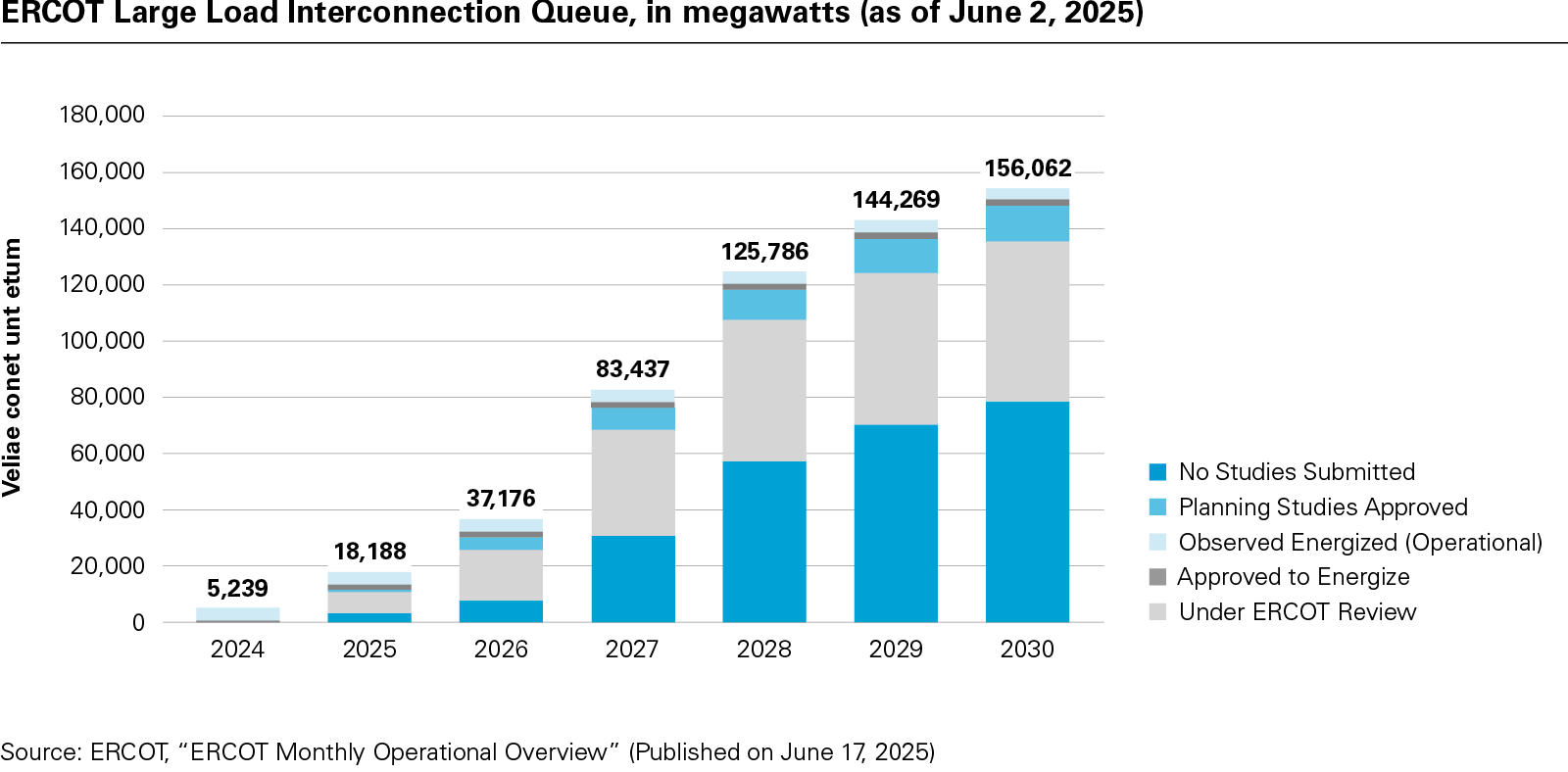
Chip supply constraints are easing as TSMC and Samsung ramp capacity. But grid interconnection timelines remain stubbornly long, often 3-5 years in Texas. @SemiAnalysis_ flags that the gap between requests and underwriting is a leading indicator: if the grid cannot approve the load, the datacenter does not get built, regardless of how many H100s are ordered.
This mismatch has direct implications for AI model training timelines. Operators planning 100MW+ clusters in Texas now face the reality that grid capacity may not materialize on their schedule. The result could be a geographic shift to regions with faster permitting, or a push for behind-the-meter generation (e.g., on-site gas or small modular reactors).
What the data shows
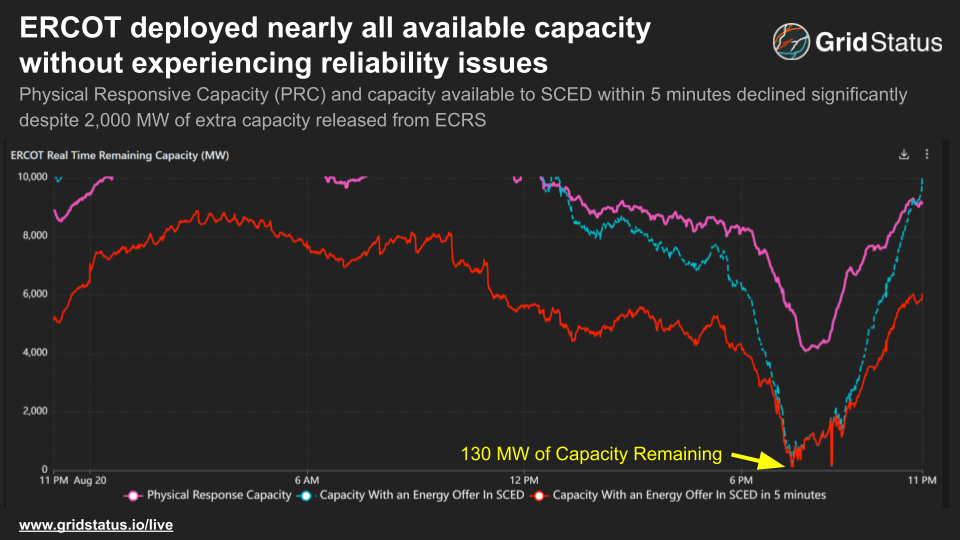
@SemiAnalysis_ does not disclose exact gigawatt figures in the thread, but the pattern is clear: requests are multiples of what ERCOT will underwrite. The grid operator's risk aversion stems from reliability concerns—ERCOT nearly collapsed during Winter Storm Uri in 2021 and remains sensitive to load spikes from large, uninterruptible datacenters.
The key number missing is the exact ratio of requests to approvals. @SemiAnalysis_ has not published that figure publicly, but the implication is that the gap is large enough to be a structural constraint, not a marginal one.
What to watch
Watch for ERCOT's next quarterly interconnection queue report, expected Q2 2026, which will quantify the exact gigawatt gap between requests and approvals. Also track any emergency orders from the Texas PUC that fast-track AI datacenter connections.
[Updated 31 May via dck_news]
Water and wastewater capacity are emerging as a second binding constraint for AI datacenter siting in Texas and beyond, according to Datacenter Knowledge. Even if ERCOT approves interconnection, projects may stall due to insufficient water supply for cooling systems, reshaping municipal planning and cooling technology choices. The new bottleneck compounds the grid approval gap flagged by @SemiAnalysis_, as hyperscale campuses require millions of gallons daily for liquid cooling [per Datacenter Knowledge].