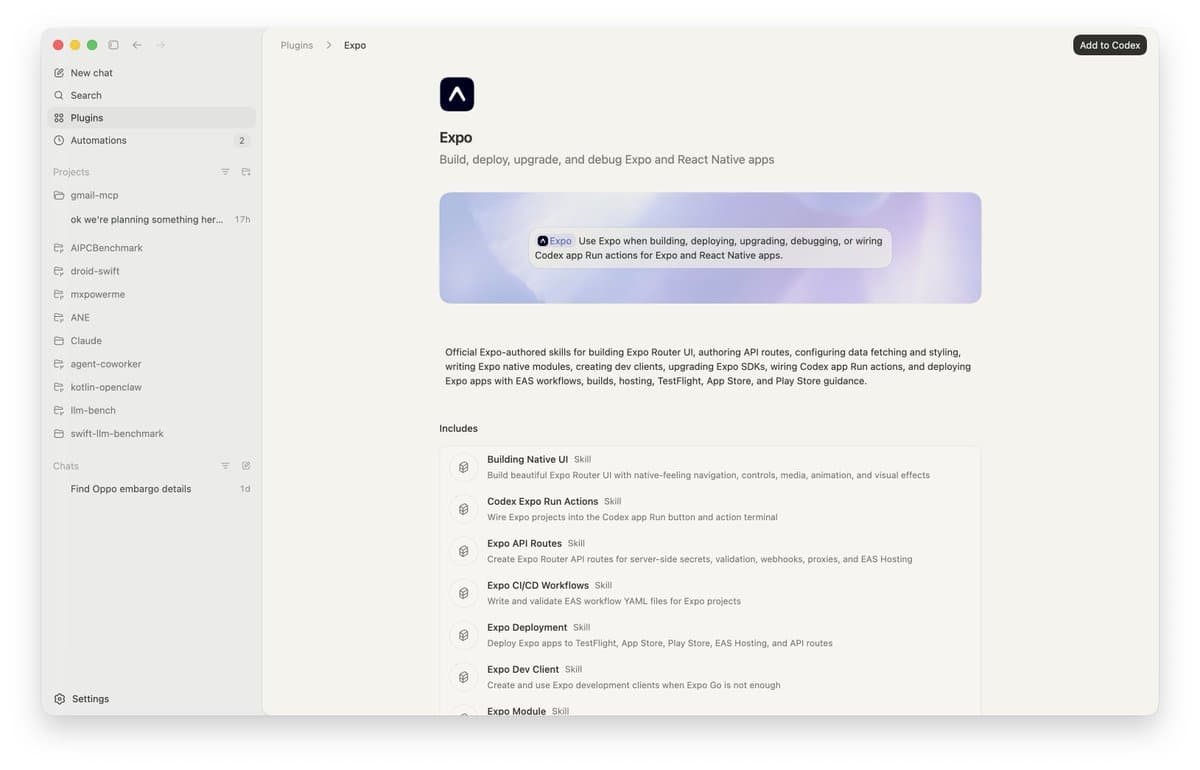
Expo, the company behind the popular open-source framework for building React Native applications, has released a plugin for Codex, OpenAI's code-generating AI model. The plugin allows developers to generate code directly within the Expo development environment using natural language prompts.
What Happened

The announcement was made via a social media post from Expo co-founder Evan Bacon, who called the integration "huge." The plugin is now available for developers using Expo's tools. It integrates Codex's capabilities into the Expo CLI and development server, enabling AI-assisted code generation for React Native components, API calls, and navigation logic without leaving the development environment.
Context
Expo provides a set of tools and services that simplify building, deploying, and iterating on iOS, Android, and web apps using React Native. By abstracting away native code complexities, Expo has become a popular choice for cross-platform mobile development. The integration of Codex represents a significant step in bringing AI-powered development tools directly into a mainstream application framework's workflow.
Codex, the model powering GitHub Copilot, is specifically trained on programming languages and can generate code from natural language descriptions. Until now, accessing Codex typically required using GitHub Copilot as a separate IDE extension or through OpenAI's API. The Expo plugin brings this functionality natively into the Expo ecosystem.
How It Works
Developers can install the plugin via npm and configure it with their OpenAI API key. Once set up, they can use special comment directives in their code files to prompt Codex for generation. For example, adding a comment like // @codex: Create a button component with a gradient background would trigger the plugin to generate the corresponding React Native code.
The plugin appears to be context-aware, understanding the current project structure and existing components to generate appropriate code. Early documentation suggests it can handle common React Native patterns including:
- Component generation with styling
- Navigation setup between screens
- API integration code
- State management logic
- Expo-specific module implementations
What This Means in Practice
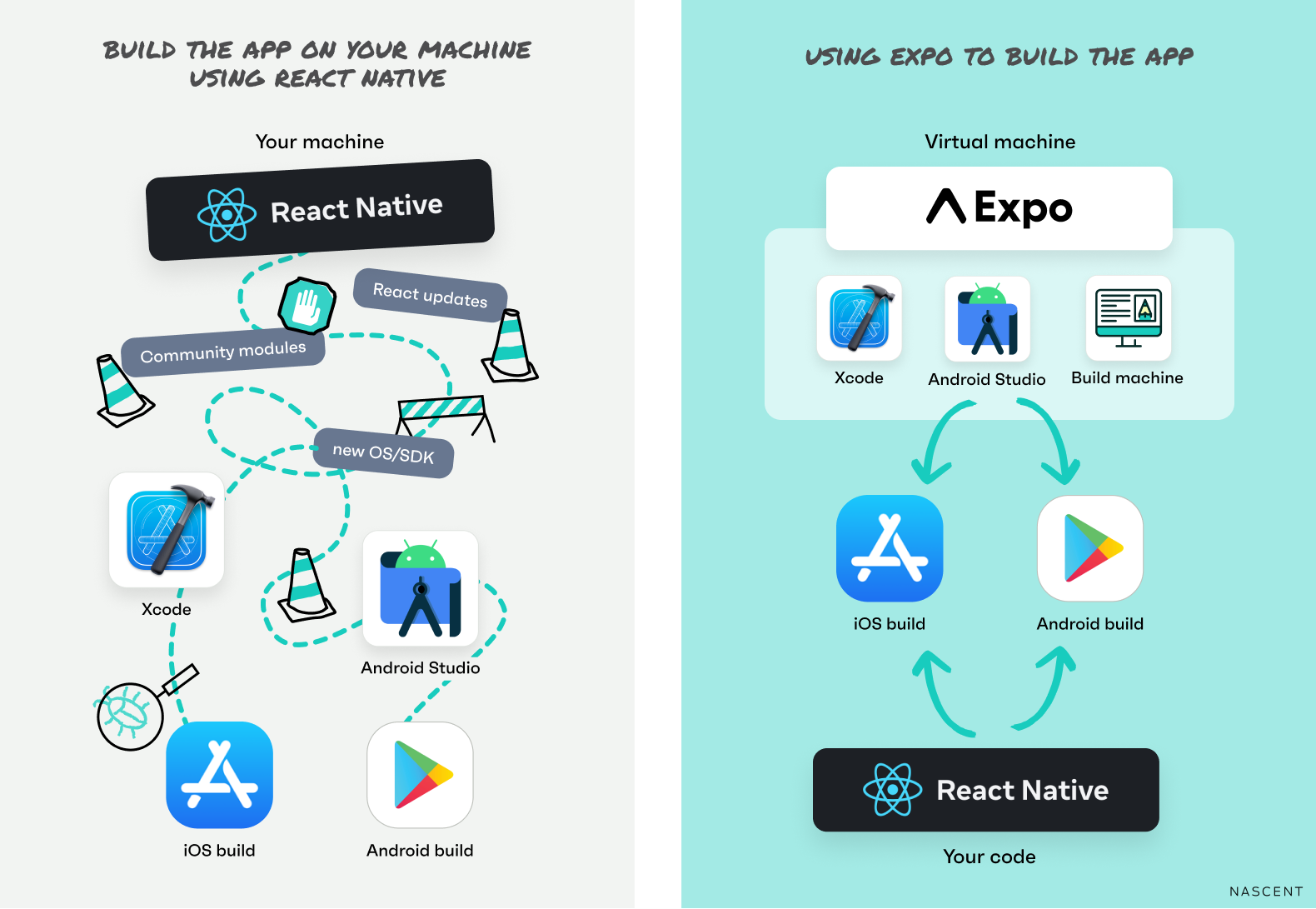
For React Native developers already using Expo, this eliminates context switching between their development environment and separate AI coding tools. The integration promises to accelerate prototyping and reduce boilerplate code writing, particularly for developers familiar with React Native patterns but who want to speed up implementation.
gentic.news Analysis
This move by Expo represents a strategic integration of AI into a mature development framework rather than creating yet another standalone AI coding tool. It follows a clear trend we've observed since 2024: framework-specific AI tooling. Where GitHub Copilot and similar tools aim for language-agnostic code generation, Expo's plugin is optimized specifically for React Native and Expo's ecosystem, which could lead to higher-quality, more contextually appropriate code generation for that specific stack.
The timing is notable. This follows OpenAI's broader release of Codex API access to more developers and comes amid increasing competition in the AI-assisted development space. Just last month, we covered Vercel's AI SDK updates that similarly integrate AI into the frontend development workflow. Expo's move suggests framework providers see native AI integration as a competitive necessity rather than an optional feature.
For the React Native ecosystem specifically, this could accelerate adoption among developers who are hesitant about the framework's learning curve. By lowering the barrier to generating correct React Native patterns, Expo may attract more web developers to mobile development. However, the success of this integration will depend heavily on the quality of generated code for production use, not just prototyping. Early adopters should monitor whether the plugin generates code that follows React Native best practices and Expo's specific recommendations.
Frequently Asked Questions
What is Expo?
Expo is an open-source platform for building universal native apps for Android, iOS, and the web using JavaScript and React. It provides a set of tools and services that simplify React Native development by handling build configurations, deployment, and updates.
How does the Expo Codex plugin work?
The plugin integrates OpenAI's Codex model directly into the Expo development environment. Developers install it via npm, add their OpenAI API key, and then use special comment directives in their code files to prompt Codex to generate React Native components, logic, or boilerplate code based on natural language descriptions.
Do I need an OpenAI API key to use the Expo Codex plugin?
Yes, the plugin requires a valid OpenAI API key with access to the Codex models. You'll need to sign up for OpenAI's API and add billing information, as Codex usage is not free beyond initial trial credits.
How is this different from using GitHub Copilot with React Native?
While GitHub Copilot is a general-purpose code completion tool that works across many languages and frameworks, the Expo plugin is specifically optimized for React Native and Expo's ecosystem. It understands Expo-specific modules, patterns, and project structures, which may result in more contextually appropriate code generation for Expo projects compared to a general AI coding assistant.