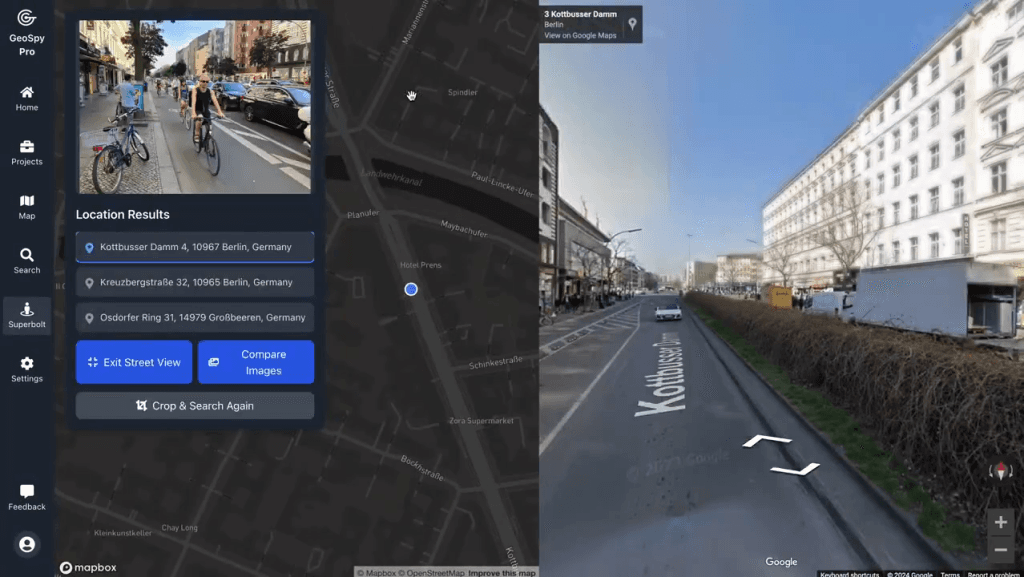
A new artificial intelligence system called GeoAgent is demonstrating a sophisticated ability to solve geolocation puzzles by thinking more like a human geographer than a conventional pattern-matching algorithm. Developed by researchers and documented in a new paper on arXiv, this model represents a significant leap in making AI reasoning more interpretable, consistent, and grounded in real-world domain knowledge—in this case, the complex characteristics of geography.
For years, AI has been tasked with geolocation—determining where a photo was taken or describing a location from clues. While reinforcement learning (RL) methods have improved performance, they've often relied on AI-generated "chain-of-thought" (CoT) data. This is a process where the model shows its step-by-step reasoning. The problem? This self-generated data can drift away from how humans actually reason about geography, leading to answers that might be statistically plausible but geographically nonsensical.
The Core Innovation: GeoSeek and Geographic Rewards
GeoAgent tackles this fundamental flaw with a two-pronged approach.
First, the researchers introduced GeoSeek, a novel dataset purpose-built for this task. Unlike datasets created by other AIs, GeoSeek's chain-of-thought data was meticulously annotated by geographic experts and professional players of geolocation games. This ensures the reasoning traces—the step-by-step logic—are inherently human, accurate, and reflect genuine geographic problem-solving strategies.
Second, and perhaps more crucially, the team designed training rewards that enforce geographic integrity. During its reinforcement learning training, GeoAgent isn't just rewarded for a correct final answer. It is guided by two specialized rewards:
- Geo-Similarity Reward: This encourages the model's internal reasoning path to resemble the expert human reasoning found in GeoSeek. It pushes the AI to use clues (like architecture, vegetation, road signs, or landscape) in the same logical, spatially-aware way a person would.
- Consistency Reward: Assessed by a separate "consistency agent," this reward penalizes contradictory logic within the AI's own reasoning chain. It ensures that if the model infers a Northern Hemisphere climate early on, it doesn't later suggest a plant species that only grows in the Southern Hemisphere.
Why This Matters: Beyond Pinpointing on a Map
The implications of GeoAgent's success extend far beyond winning a round of GeoGuessr.
1. Interpretable and Trustworthy AI: In critical applications like disaster response, urban planning, or environmental monitoring, we need to know why an AI suggests a location. GeoAgent's human-aligned reasoning provides a transparent audit trail. A rescue team can understand if a location was identified based on river patterns, mountain ridges, or road types, allowing them to trust and act on the information.
2. A Blueprint for Specialized AI: The methodology—combining expert-curated reasoning data with domain-specific reward functions—is a template for building reliable AI in other specialized fields. Imagine a "MedAgent" trained on doctor-narrated diagnostics, or a "CodeAgent" trained on senior engineer debugging sessions. The principle of aligning AI reasoning with deep, human expert knowledge is powerfully generalizable.
3. Closing the Sim-to-Real Gap: Many AI failures occur in the "sim-to-real" gap, where models trained in abstract or synthetic environments fail in the messy real world. By tethering GeoAgent's training to real geographic principles and human logic, the researchers have built a system whose intelligence is grounded in reality from the start.
Performance and Future Horizons
Experiments detailed in the paper show that GeoAgent outperforms existing geolocation-specific methods and a range of general-purpose vision-language large models (VLLMs) across tasks of varying granularity, from continent-level down to street-level identification. More importantly, its generated reasoning was judged to be more coherent and human-like.
The path forward is exciting. Future iterations could integrate dynamic, real-time data like weather, traffic, or seasonal changes. The core architecture could be adapted for temporal reasoning ("when was this photo taken?") or for parsing historical maps and imagery. The ultimate goal is an AI collaborator that can see an image and reason about place with the nuanced, integrative skill of a seasoned geographer.
GeoAgent is more than a clever locator; it's a compelling argument for building AI that doesn't just learn from data, but learns to think with the disciplined, consistent logic of a human expert. It suggests that the future of reliable AI may depend less on scaling raw data and more on carefully encoding the deep structures of human knowledge and reasoning into the learning process itself.