What Happened
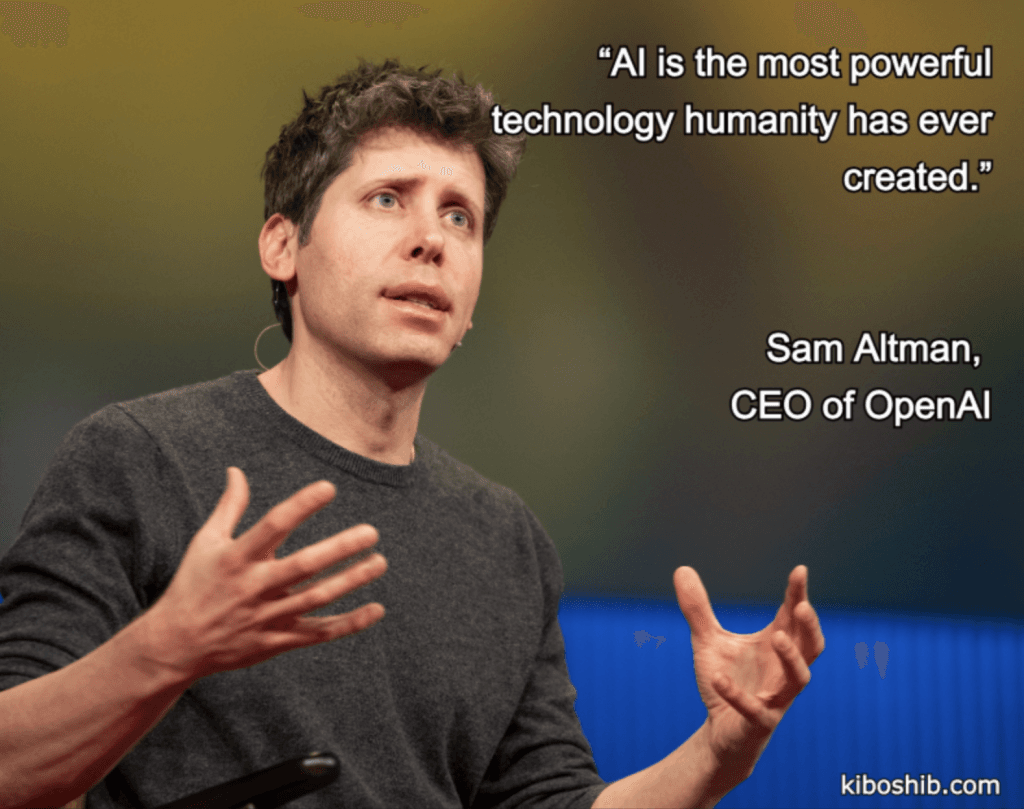
On April 19, 2026, Sam Altman posted on X that the cost of solving "the same hard problem" with OpenAI's models has dropped by approximately 1,000x between the release of o1 and the current GPT-5.4, a span of roughly 16 months. He attributed the efficiency gains to improvements "across every layer" of the AI stack rather than a single breakthrough.
This is a rare public quantification of the pace of inference cost reduction inside OpenAI, and it aligns with broader industry trends. The post was amplified by AI commentator @rohanpaul_ai, who highlighted the 1,000x number and the 16-month timeline.
The exact benchmark or "hard problem" referenced was not specified, but the framing — "from o1 to 5.4" — suggests a consistent evaluation task used internally to track progress.
Context: The o1 to GPT-5.4 Timeline
OpenAI launched o1 (internally code-named "Strawberry") in September 2024 as a reasoning model that "thinks" before responding. It was followed by o3 in early 2025, then GPT-5 in late 2025, and GPT-5.4 in early 2026. Each iteration introduced architectural improvements, better training infrastructure, and inference optimizations.
The 16-month window (late 2024 to early 2026) covers:
- o1 → o3: Improved chain-of-thought reasoning, better token efficiency
- o3 → GPT-5: MoE scaling, speculative decoding, KV-cache optimizations
- GPT-5 → GPT-5.4: Quantization advances, batch inference improvements, hardware co-design
How 1000x Cost Reduction Happens
Altman's framing — "people improving every layer" — maps to real engineering work across the stack:
Architecture: From dense transformers to mixture-of-experts (MoE) with sparsely activated parameters. GPT-5.4 likely uses a much higher sparsity ratio than o1, meaning each forward pass activates a smaller fraction of total parameters for a given input.
Inference engine: Continuous batching, PagedAttention, and speculative decoding have each contributed ~2-10x throughput improvements. Combined, these optimizations compound.
Hardware: NVIDIA's B200 and subsequent Blackwell Ultra GPUs (released in 2025) offer higher FLOP/s per watt and better memory bandwidth. OpenAI also reportedly deployed custom inference ASICs in late 2025.
Quantization: Moving from FP16 to FP8 (and potentially FP4 for parts of the model) reduces memory bandwidth requirements and compute per token by 2-4x.
System-level: Better load balancing, request scheduling, and cache hit rates from repeated queries reduce marginal cost per inference.
Each of these layers provides a 2-5x improvement. Multiplied together, the combined effect reaches 1000x.
What This Means in Practice

If a hard problem cost $100 to solve with o1 in September 2024, it now costs roughly $0.10 with GPT-5.4. This changes the economics of AI applications: tasks that were uneconomical at $100 per query (e.g., iterative code generation, multi-step research, document analysis at scale) become viable at $0.10.
For API customers, this translates into either lower prices (OpenAI has cut GPT-5-class pricing multiple times in 2025-2026) or the ability to run far more tokens for the same budget. The practical effect is that AI agents can afford to "think" longer — generating more reasoning tokens — without breaking budgets.
Industry Context
This cost trajectory mirrors what the broader AI industry has experienced. Anthropic's Claude Opus 4, Google's Gemini 2.5 Ultra, and DeepSeek's R2 have all seen similar per-token cost reductions driven by the same set of optimizations. DeepSeek, in particular, demonstrated that aggressive engineering optimization (not just scale) can produce order-of-magnitude cost drops.
The 1,000x figure also provides a reference point for the ongoing debate about whether AI progress is slowing. From a cost-performance perspective, the trend remains steep — even if raw benchmark scores are plateauing, the cost to achieve a given score is dropping rapidly.
Frequently Asked Questions
What does 1000x cheaper mean for AI inference?
It means the cost to solve a fixed, difficult problem dropped from roughly $100 to $0.10 over 16 months, making previously uneconomical AI applications viable.
How did OpenAI achieve 1000x cost reduction?
Through compounding improvements across architecture (MoE), inference engines (speculative decoding, continuous batching), hardware (new GPUs, custom ASICs), and quantization (FP8/FP4).
Is this cost reduction specific to OpenAI?
No. Similar trends exist across the industry — Anthropic, Google, and DeepSeek have all reported comparable inference cost improvements through analogous engineering optimizations.
What problem was used to measure the 1000x cost drop?
Altman did not specify the exact benchmark, but it was described as a "hard problem" used for internal tracking. It likely involves multi-step reasoning or code generation requiring extended chain-of-thought.