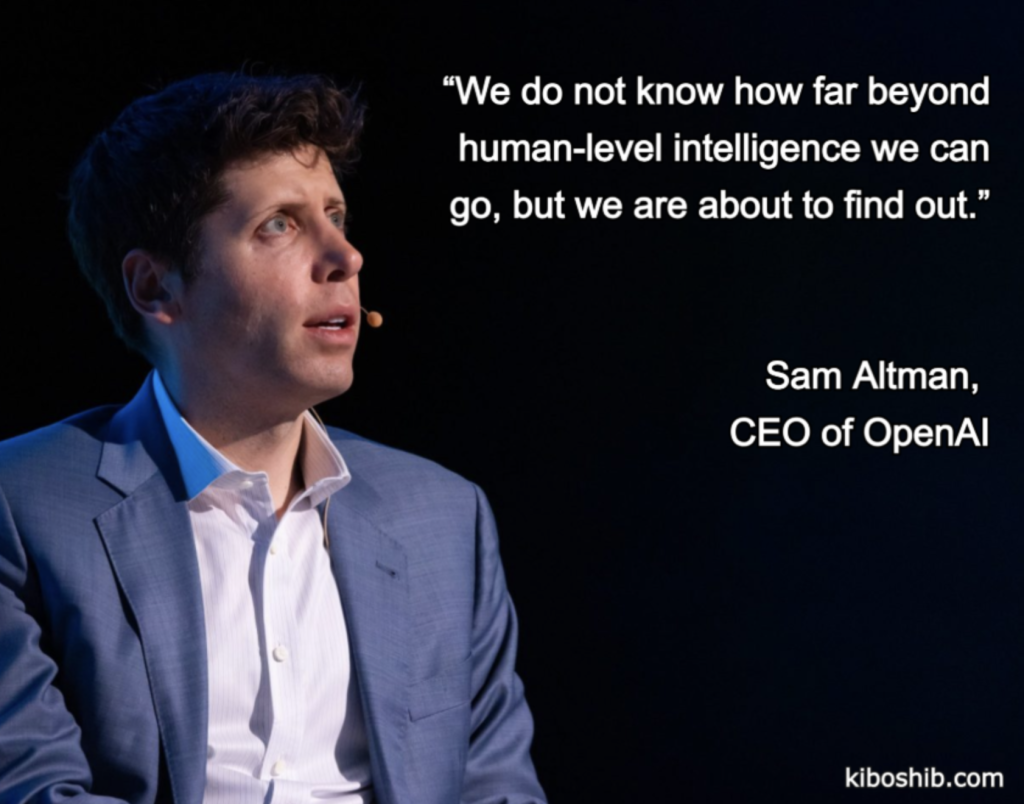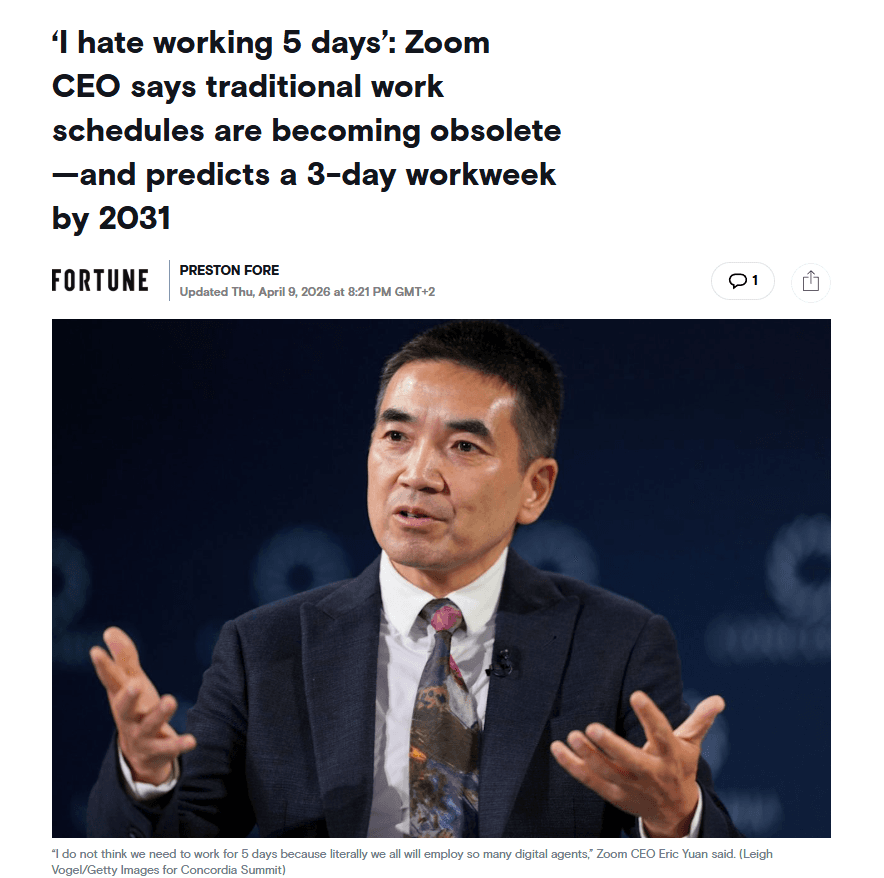
A notable shift is occurring in corporate leadership circles, with a growing number of C-level executives moving away from advocating for longer hours and instead calling for a reduction in the standard work week. This trend, highlighted in a recent observation, finds a prominent advocate in Sam Altman, CEO of OpenAI.
Altman has authored a policy paper in which he argues that a four-day work week, totaling 32 hours, is "practically indispensable." He calls for the establishment of a "new social contract" to address the profound changes automation is bringing to the workforce. His position adds significant weight to a chorus of voices suggesting that the advancement of AI and robotics should logically lead to people working less, not more, to maintain economic participation and well-being.
What Happened
The discourse, noted by commentator @kimmonismus, marks a reversal from historical corporate norms where executive rhetoric typically emphasized productivity gains through increased labor hours. The central development is the publication of a policy paper by Sam Altman, a leading figure in the AI industry, which formally advocates for a reduced 32-hour work week. This is presented not as a fringe idea but as a necessary component of a societal adaptation to technological change.
Context
This advocacy sits at the intersection of AI ethics, economic policy, and corporate strategy. For decades, automation anxiety has centered on job displacement. Altman's proposal reframes the narrative: instead of AI solely as a job destroyer, it can be a tool for reclaiming time, provided social and economic structures are redesigned. The call for a "new social contract" implies systemic changes in wage distribution, corporate profit-sharing, and potentially the role of universal basic income (UBI)—a concept Altman has previously explored.
gentic.news Analysis

Altman's policy paper is a strategic intervention that aligns with a broader, multi-year effort by OpenAI's leadership to shape the narrative around AI's societal impact. This follows Altman's extensive 2024-2025 "World Tour" of dialogues with governments and institutions, where he consistently framed AI as a force requiring new governance models. The call for a reduced work week directly connects to our previous coverage on the rising economic research into AI's deflationary pressure on knowledge labor and the experiments in shortened work weeks at companies like Microsoft Japan.
This move also positions Altman in a growing camp of tech leaders, distinct from the "effective accelerationism" (e/acc) movement. While e/acc proponents often dismiss regulatory and social adaptation concerns, Altman's paper acknowledges that unmanaged technological adoption could lead to severe social disruption. It is a pragmatic, corporate-friendly argument for pre-emptive structural change to maintain stability and consumer markets—key interests for any company, including OpenAI, that depends on a functioning economy.
Furthermore, this advocacy creates a tangible policy goal for the "AI for good" discourse. It moves beyond vague promises of future abundance and proposes a specific, measurable metric for shared prosperity: time. For AI engineers and technical leaders, this signals that the conversation is rapidly moving from model capabilities (LLM benchmarks, agent workflows) to their concrete, first-order effects on business organization and labor contracts. The companies that build the technology are now openly debating how to mitigate its most disruptive effects.
Frequently Asked Questions
What did Sam Altman actually propose?
Sam Altman authored a policy paper advocating for the widespread adoption of a four-day work week consisting of 32 hours. He argues this is "practically indispensable" and calls for a "new social contract" to manage the economic transition driven by AI and robotics.
Is this a new idea?
The concept of a shortened work week has been debated for decades, often linked to productivity gains from earlier technological waves. However, advocacy from a sitting CEO of a dominant AI company like OpenAI, framing it as an urgent necessity specifically due to AI, marks a significant shift in the mainstream business and tech discourse.
How would a 4-day work week work with AI?
The proposal is based on the premise that AI and automation will dramatically increase productivity, allowing the same economic output to be generated with less human labor input. The "new social contract" would involve redistributing the gains from this productivity—through wages, profit-sharing, or other mechanisms—so that reduced hours do not equate to reduced income for workers.
Are other executives supporting this?
The source observation notes a growing number of C-level executives are increasingly advocating for reduced working hours, a reversal from past trends. While Altman is the named example, the commentary suggests he is part of a broader, emerging consensus among business leaders concerned about AI's societal impact.