What Happened
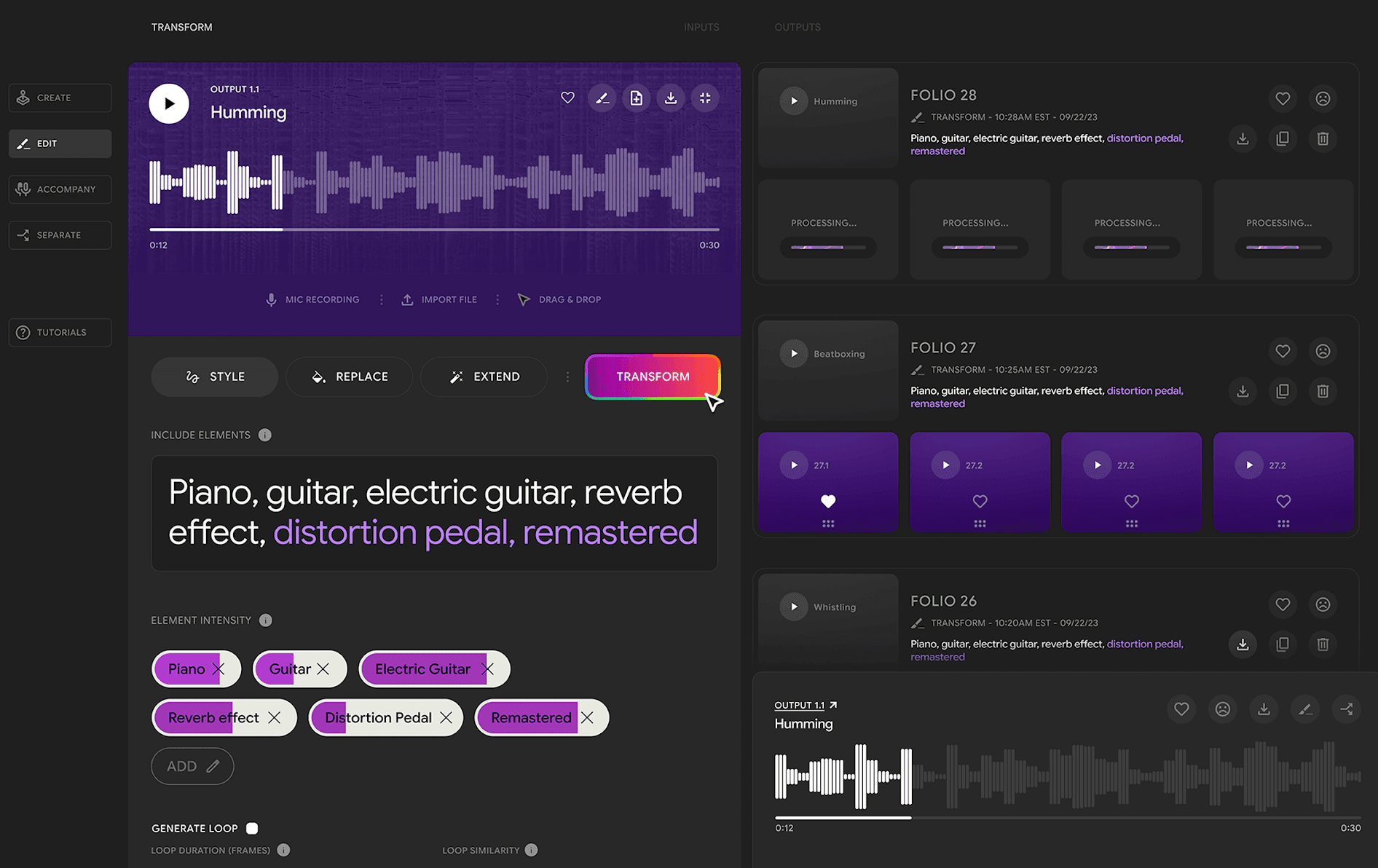
Ethan Mollick, a professor at Wharton and researcher studying AI adoption, posted on X that he had early access to Google Lyria 3 Pro, an unreleased music generation AI model. In a brief demonstration, he prompted the model with the text of Rainer Maria Rilke's "Duino Elegies: The First Elegy" and instructed it to make the poem "more 1990s boy band."
The model generated a musical output, which Mollick described as "catchy," humorously noting he was "ruining(?) Rilke." He shared a short audio clip where a vocal line sings a modified lyric: "oooo the beginning of terror, girl." Mollick's post emphasized the surprising capability: "It is also nuts that you can ask an AI to do this & it can."
Context
Google Lyria is the underlying AI model powering music generation features in YouTube Shorts and Google's Music AI Sandbox, first announced in late 2023. The "Lyria" model family is designed specifically for high-quality, controllable music generation. The existence of a "Pro" tier suggests a more advanced version, potentially with greater parameter count, improved audio fidelity, or enhanced controllability compared to the currently available model.
Mollick's access indicates Google is likely conducting limited external testing or providing early access to select researchers ahead of a broader release. The demo is notable for its focus on stylistic transformation—taking a specific, complex text input (a German poet's work) and reinterpreting it within a wildly different, specified musical genre. This goes beyond simple text-to-music generation, touching on style transfer and lyrical adaptation.
Current Public Capabilities vs. Lyria 3 Pro
Publicly, Google's music AI efforts are accessible through experimental tools like MusicFX in AI Test Kitchen, which allows text-to-music generation and includes a "stylistic prompt" feature. However, the complexity of the task demonstrated by Mollick—processing a full poem and executing a coherent, genre-specific transformation—appears to be a step beyond current public offerings.
No technical specifications, release date, or benchmark data for Lyria 3 Pro were provided in the demo. The post serves as a qualitative, anecdotal preview of the model's creative capabilities.
gentic.news Analysis
This sneak peek of Lyria 3 Pro arrives amidst an intensifying race in generative audio. Google's move to advance its Lyria model directly challenges competitors like Suno AI (which recently released its v3.5 model) and Stability AI's Stable Audio. More significantly, it positions Google against OpenAI, which has been aggressively expanding its multimodal portfolio. Just last week, we reported on OpenAI's acquisition of the multi-agent framework company Rocket, signaling a push towards more complex, coordinated AI systems. Audio generation is a key frontier in this expansion, and OpenAI has been actively hiring audio AI engineers, suggesting its own flagship music model may be in development.
Google's strategy appears to be one of vertical integration, leveraging Lyria to enhance its ecosystem—primarily YouTube. This follows the pattern set by its video generation model Veo, which is also being integrated into YouTube Shorts. The "Pro" designation for Lyria suggests a tiered model strategy, similar to Google's Gemini (Nano/Pro/Ultra), potentially aiming a more powerful version at professional creators or offering it via a premium API, while a lighter version powers free user-facing tools.
Mollick's test—turning high poetry into pop music—highlights a critical challenge and opportunity for these models: interpretation and stylistic fidelity. The task requires the AI to parse the abstract, emotional content of the text, understand the precise musical tropes of a 1990s boy band (harmonies, vocal timbre, song structure), and synthesize the two. Success in such a niche, creative task is a strong signal of improved latent space understanding and controllability, which are major hurdles in audio generation. If Lyria 3 Pro can reliably perform this level of stylistic remixing, it could significantly lower the barrier for creating high-quality, genre-specific audio content, impacting music production, advertising, and social media content creation.
Frequently Asked Questions
What is Google Lyria 3 Pro?
Google Lyria 3 Pro is an unreleased, advanced version of Google's Lyria music generation AI model. It appears capable of complex tasks like transforming written poetry into music of a specified genre, as demonstrated in a researcher's early access test. It is not yet available to the public.
How can I use Google's music AI right now?
The currently available public tool is MusicFX, accessible via Google's AI Test Kitchen. It allows users to generate short music clips from text descriptions and offers some control over style, instruments, and duration. It is powered by an earlier version of the Lyria model.
How does Google Lyria compare to Suno AI or Udio?
Based on the limited Lyria 3 Pro demo, a direct comparison is not possible. Publicly, tools like Suno AI v3.5 are known for generating full, structured songs with vocals from text prompts. Google's public MusicFX tool typically creates shorter, 30-second instrumental loops. The Lyria 3 Pro demo suggests Google is advancing towards more complex, vocally-driven, and stylistically controllable song generation, which would bring it into more direct competition with Suno and Udio.
When will Google Lyria 3 Pro be released?
Google has not announced a release date for Lyria 3 Pro. The demo by an external researcher suggests the model is in an advanced testing phase. Releases of such models often follow a pattern of limited previews (like the Music AI Sandbox for artists) before a wider beta or full integration into products like YouTube.