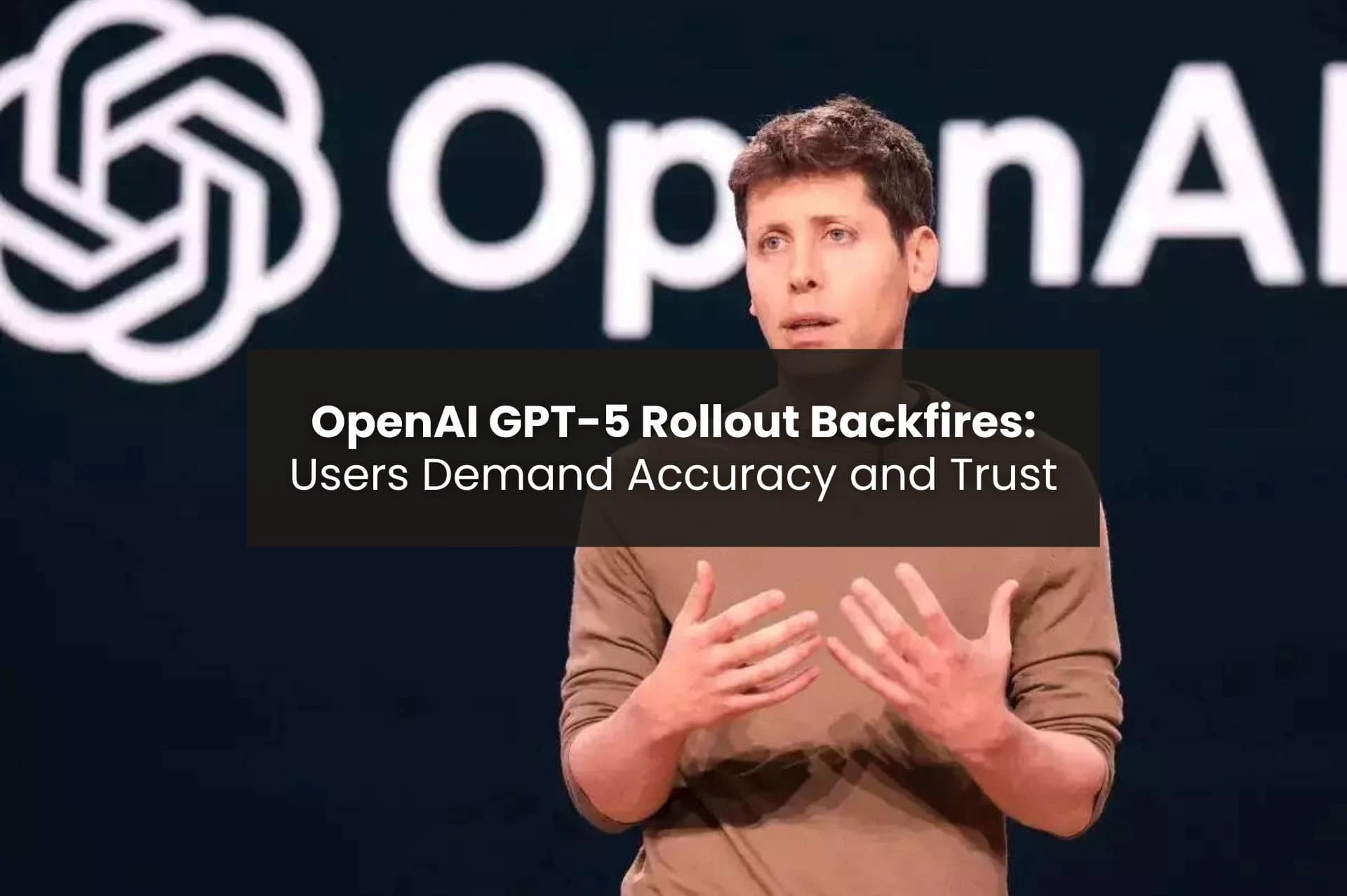
OpenAI has initiated a limited, staged rollout of what appears to be an intermediate version of its flagship model, referred to as GPT-5.5. The release, confirmed by early access users on social media, is currently available only to a select group. The primary improvement noted in initial reports is a significantly enhanced frontend user interface, described as having "great quality."
Key Takeaways
- OpenAI has started a limited rollout of GPT-5.5 to select users, with early reports highlighting significant frontend quality improvements.
- This suggests an incremental update focused on user experience rather than core model capabilities.
What Happened

On April 12, 2026, AI researcher and influencer @intheworldofai posted on X: "GPT-5.5 available for some. Frontend quality is great!" This brief announcement is the first public confirmation of a new version identifier in OpenAI's product line between GPT-5 and the anticipated GPT-6.
The key details from the source are:
- Version: GPT-5.5
- Availability: Limited rollout ("available for some")
- Noted Improvement: Frontend/UI quality ("great")
No technical specifications, benchmark scores, API changes, or pricing details were disclosed in this initial report.
Context
The "5.5" versioning suggests this is an incremental update rather than a full generational leap. This follows OpenAI's established pattern of releasing intermediate models (like GPT-3.5 Turbo) that refine user experience, optimize performance, or address specific limitations of the major release.
GPT-5 was released in late 2025, establishing new state-of-the-art performance across numerous benchmarks while introducing multimodal capabilities that were more deeply integrated than previous versions. A "5.5" release in Q2 2026 aligns with OpenAI's typical 6-9 month cycle for significant updates.
The emphasis on "frontend quality" is particularly notable. For enterprise and power users, the ChatGPT interface's reliability, speed, and tool integration have been as critical as the underlying model's capabilities. Improvements here could include faster response streaming, more stable code interpreter sessions, better file handling, or enhanced multimodal input/output interfaces.
What We Don't Know Yet
Critical information missing from this initial report includes:
- Whether this is a new model or primarily a UI/interface update
- Performance improvements over GPT-5 on standard benchmarks (MMLU, GPQA, MATH, etc.)
- API availability and pricing changes
- Multimodal capabilities enhancement
- Context window changes
- Reasoning or coding-specific improvements
- Safety and alignment updates
gentic.news Analysis
This limited rollout of GPT-5.5 represents a strategic move by OpenAI to maintain momentum in the highly competitive frontier model race. With Anthropic's Claude 3.5 Sonnet maintaining strong performance in coding and reasoning tasks, and Google's Gemini 2.0 Pro showing competitive multimodal capabilities, OpenAI cannot afford extended periods between visible improvements. A "5.5" release allows them to address specific competitive weaknesses or user complaints without waiting for the full GPT-6 development cycle.
The focus on frontend improvements is telling. Following our coverage of the ChatGPT Desktop App Overhaul in January 2026, which significantly improved local file handling and system integration, OpenAI appears to be doubling down on the user experience aspect of its product suite. This aligns with increasing enterprise adoption where reliability and workflow integration often trump marginal benchmark gains.
Historically, OpenAI's ".5" releases have served multiple purposes: they field-test new architectural tweaks, gather real-world usage data before major launches, and respond to competitive pressures. The GPT-3.5 series, for instance, introduced significant cost reductions and latency improvements that made API adoption more feasible for developers. If GPT-5.5 follows this pattern, we might see optimizations targeting the model's operational efficiency rather than raw capability increases.
From a competitive timeline perspective, this release comes at a critical moment. Google's I/O 2026 is scheduled for May, where Gemini updates are expected, and Anthropic has been steadily iterating on the Claude 3.5 series. By deploying GPT-5.5 now, OpenAI ensures they enter this competitive period with fresh improvements rather than being perceived as stagnant.
Frequently Asked Questions
What is GPT-5.5?
GPT-5.5 appears to be an incremental update to OpenAI's GPT-5 model, currently in limited release. Based on the initial report, the most noticeable improvements are in the frontend user interface quality, though underlying model enhancements are likely also included.
How is GPT-5.5 different from GPT-5?
Without official technical details, the primary confirmed difference is improved frontend/UI quality. Historically, OpenAI's ".5" releases have included model optimizations for speed and cost, bug fixes, safety improvements, and sometimes new capabilities. We'll need to wait for official benchmarks or broader access to determine specific technical differences.
When will GPT-5.5 be available to everyone?
OpenAI typically follows a staged rollout process, starting with a small percentage of users, then expanding to ChatGPT Plus subscribers, and finally making the model available via API. This process can take weeks to months. Given this is just appearing for "some" users, general availability is likely several weeks away at minimum.
Should I switch from GPT-5 to GPT-5.5?
For most users, the decision will depend on the specific improvements. If you're experiencing interface-related issues with ChatGPT or need more reliable tool integration, GPT-5.5 might offer immediate benefits. For raw model capability, wait for benchmark comparisons or try it yourself if you gain access. API users should evaluate based on cost-performance tradeoffs once pricing is announced.