The Incident: A Silent Failure in Front of Stakeholders
The author describes "the worst fifteen minutes of my professional life" during a live enterprise demo. A multi-model AI inference pipeline—built with Triton, orchestrated through Ray Serve, and running on Amazon EKS—had been stable in staging for two weeks. Load tests and dry runs showed no issues.
Two minutes into the demo, requests began to hang. Not erroring, but hanging. This is a more insidious failure mode because it initially appears as latency. The GPU utilization graph in CloudWatch was flatlined, a telltale sign of deep trouble. The Kubernetes pods were running, Triton was up, Ray was up—"Everything was up and nothing was working" while fifteen people watched a loading spinner.
The Root Cause: A Triple-Failure Cascade
Post-mortem analysis revealed three interconnected problems:
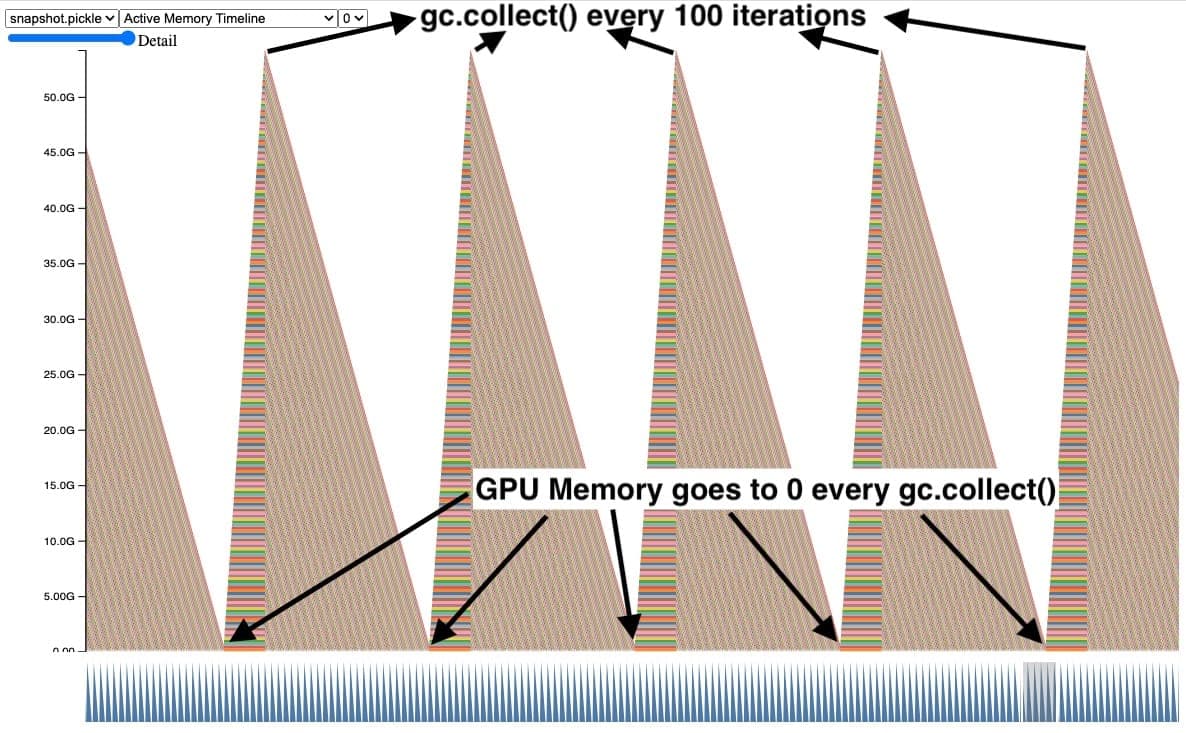
- GPU Memory Leak: A Triton model instance had a slow memory leak that accumulated across dry runs. By demo time, memory was so fragmented that new inference requests queued indefinitely, waiting for allocations that never arrived. No Out-of-Memory (OOM) error was thrown; the GPU silently starved.
- Inadequate Health Checks: The system's health checks only verified that the Triton server's HTTP endpoint returned a 200 status. The server was "healthy," but the GPU was not. These are two distinct states, and the monitoring only checked one.
- Missing Circuit Breakers: The Ray Serve deployment had no mechanism to stop accepting requests when the downstream Triton service failed. It continued to queue requests, which hung indefinitely, giving users a spinner with no upstream visibility into the cause.
Individually, these issues might have been manageable. Together, they created a "completely fatal" scenario.
The Architectural Rewrite: Building Resilience
Given two weeks to fix the system, the author implemented a robust, multi-layered defense.
1. Real Health Checks That Exercise the Model
The simplistic HTTP health check was replaced with a ModelHealthValidator class. This proactive check does more than ping the server; it validates the entire inference pathway:
- Server & Model Liveness: Confirms the Triton server and the specific model are ready.
- Canary Inference: Runs a fixed, deterministic inference request with a known input and validates the output against a pre-computed hash. This catches silent failures like incorrect model loads or dependency-induced numerical drift.
- GPU Headroom Check: Queries Triton's inference statistics to ensure sufficient GPU memory is available, preventing silent starvation.
This validator runs on every Kubernetes readiness probe. The author notes it caught two production issues in the following month that would have otherwise reached users.
2. Circuit Breaking at the Service Layer
The Ray Serve orchestrator was refactored to include a stateful circuit breaker pattern, protecting the system from downstream degradation.
Key components of the ModelOrchestrator:
- Three-State Circuit:
CLOSED(normal operation),OPEN(failing fast),HALF_OPEN(testing recovery). - Hard Timeouts: Uses
asyncio.wait_forwith a strict timeout (e.g., 10 seconds) to replace indefinite hanging with a controlled timeout error. - Failure Tracking: Counts consecutive failures; after a threshold (e.g., 5), the circuit trips to
OPEN. In this state, all new requests immediately fail with a"Service temporarily unavailable"error, preventing queue buildup. - Automatic Recovery: After a configurable recovery period, the circuit moves to
HALF_OPENto test a single request. Success closes the circuit and resumes normal operation.
This pattern ensures failures are fast and visible, not silent and lingering.
3. The Enhanced Architecture
The new system diagram includes critical layers absent from the original:
- Circuit Breaker: Sits in front of the model pipeline.
- Canary Validator: Continuously exercises the model.
- CUDA Version Pinning: On node groups to prevent subtle floating-point drift from dependency updates.
- Output Distribution Monitor: Tracks model output statistics to detect behavioral drift.
The author states: "Every box in that diagram exists because something broke in production."
The Core Lesson: Production AI is an Infrastructure Problem
The incident underscores that moving AI from prototype to production is less about model accuracy and more about building resilient, observable, and defensive infrastructure. The failure wasn't in the AI logic but in the surrounding orchestration, monitoring, and fault tolerance.
Successful enterprise AI requires:
- Proactive, Not Passive, Health Checks: Assume components will fail in subtle ways. Health checks must actively validate functional correctness.
- Defensive Design: Implement patterns like circuit breakers, timeouts, and bulkheads to isolate failures and prevent cascades.
- Deep Observability: Monitoring must go beyond service uptime to include hardware health (GPU memory), inference correctness, and behavioral consistency.
The $20K/month client was retained, but the cost was a hard lesson in the non-negotiable requirements of production AI systems.