Skip to content
gentic.news — AI News Intelligence Platform
Connecting to the Living Graph…

Listen to today's AI briefing

Daily podcast — 5 min, AI-narrated summary of top stories

A person browsing a digital retail display on a tablet, with product recommendations highlighted and a revenue…
AI ResearchBreakthroughScore: 100

How a Retail Product Recommendation System Could Generate £311K Annual

Soko Diraharja details building a retail recommendation system using collaborative filtering and hybrid methods, projecting £311K annual value. The system leverages user behavior and product data for e-commerce.

·2d ago·3 min read··15 views·AI-Generated·Report error
Share:
Source: medium.comvia medium_recsysCorroborated
How can a retail product recommendation system generate £311K in annual business value?

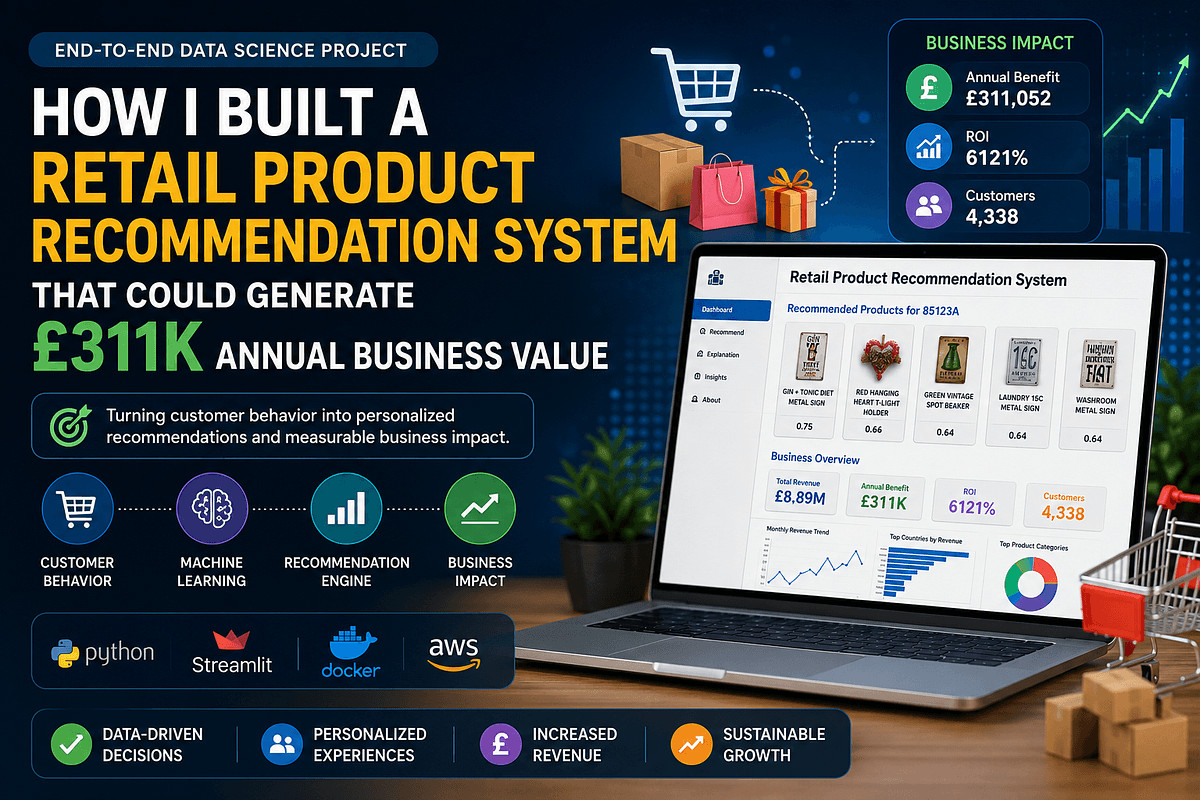
A Medium article by Soko Diraharja details building a retail product recommendation system using collaborative filtering and hybrid methods, projecting £311K annual business value through increased conversion rates and average order value.

TL;DR

A developer built a retail recommendation system with potential £311K annual value using collaborative filtering and hybrid approaches.

Key Takeaways

Real-Time E-Commerce Product Recommendation System | by ...

  • Soko Diraharja details building a retail recommendation system using collaborative filtering and hybrid methods, projecting £311K annual value.
  • The system leverages user behavior and product data for e-commerce.

What Happened

A Medium article by Soko Diraharja outlines the development of a retail product recommendation system designed to generate significant business value. The system, built using collaborative filtering and hybrid recommendation approaches, projects an annual business value of £311K through improved conversion rates and average order value.

Technical Details

The recommendation system employs:

  • Collaborative Filtering: Analyzes user behavior patterns to recommend products based on similar users' preferences.
  • Hybrid Approaches: Combines collaborative filtering with content-based methods to improve accuracy and handle cold-start problems.
  • Data Sources: Utilizes user purchase history, browsing behavior, and product attributes.

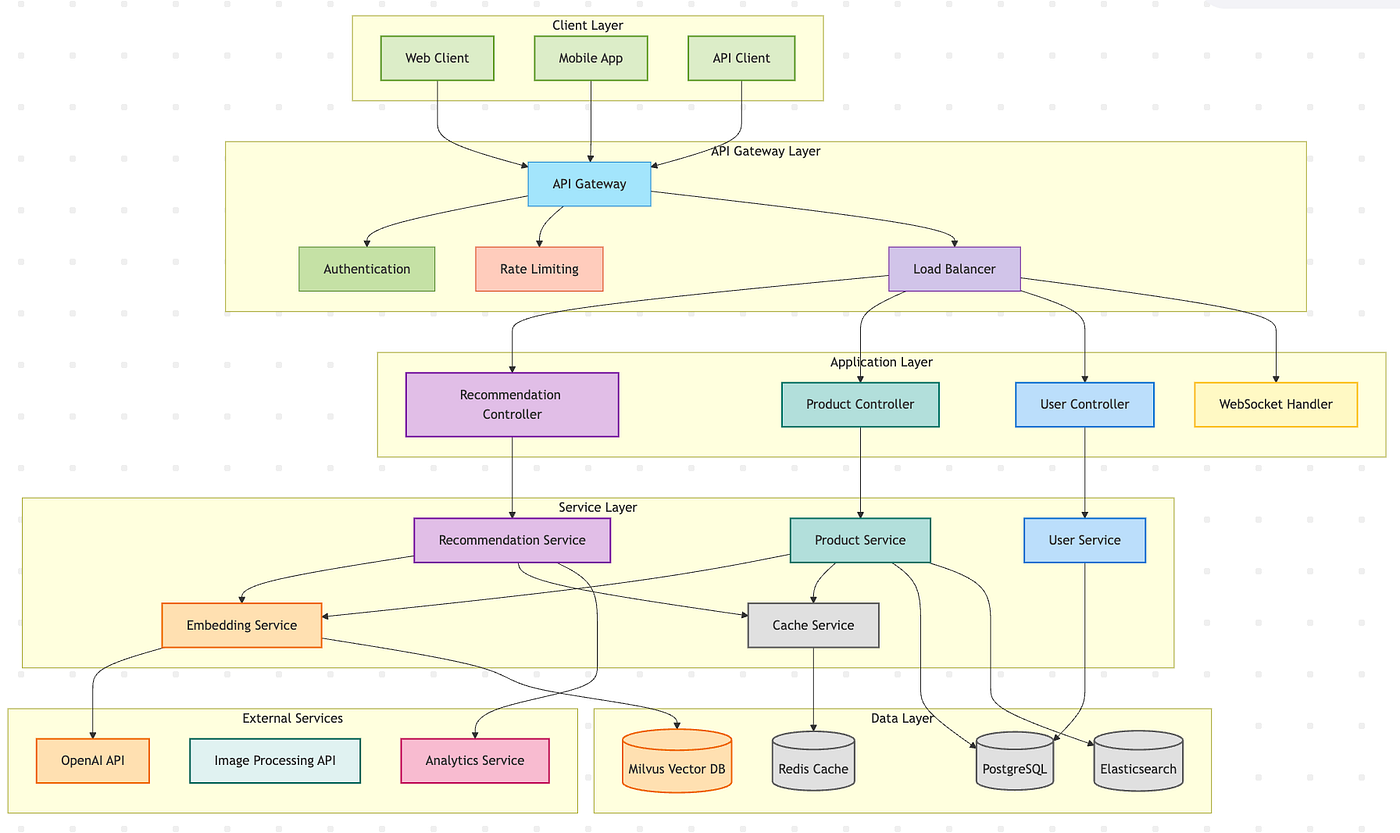
The article emphasizes practical implementation for e-commerce platforms, focusing on scalability and real-time recommendation delivery.

Retail & Luxury Implications

For retail and luxury brands, recommendation systems are critical for personalization. The £311K value projection is based on typical e-commerce metrics:

  • Conversion Rate Improvement: Targeted recommendations can increase purchase likelihood by 10-30%.
  • Average Order Value (AOV): Cross-selling and upselling through recommendations boost AOV by 5-15%.
  • Customer Retention: Personalized experiences reduce churn and increase lifetime value.

Luxury brands, however, must balance personalization with brand exclusivity. Collaborative filtering may struggle with sparse data in niche luxury segments, where purchase frequency is low. Hybrid approaches, as described, can mitigate this by incorporating product attributes like brand, material, or style.

Implementation Approach

Building such a system requires:

  1. Data Infrastructure: Collect and store user interactions (clicks, purchases, cart adds).
  2. Model Selection: Choose between collaborative filtering (e.g., matrix factorization) or hybrid models (e.g., LightFM).
  3. Real-time Inference: Deploy models via APIs for live recommendations.
  4. A/B Testing: Validate impact on conversion and AOV before full rollout.

For luxury retailers, consider:

  • Cold Start: Use content-based recommendations for new users or products.
  • Privacy: Ensure compliance with GDPR and other regulations when using personal data.

Governance & Risk Assessment

  • Maturity Level: Proven in mass-market retail; requires adaptation for luxury.
  • Privacy: User tracking must be transparent and opt-in.
  • Bias: Collaborative filtering can reinforce existing preferences, limiting discovery. Hybrid models reduce this risk.
  • Business Fit: High potential for e-commerce, but luxury brands should test with curated collections first.

Source: medium.com

Source: gentic.news · · author= · citation.json

AI-assisted reporting. Generated by gentic.news from multiple verified sources, fact-checked against the Living Graph of 4,300+ entities. Edited by Ala SMITH.

Following this story?

Get a weekly digest with AI predictions, trends, and analysis — free.

AI Analysis

This article represents a practical, hands-on approach to building recommendation systems—a staple in retail AI. The £311K projection is realistic for mid-size e-commerce businesses, though actual value depends on traffic, conversion rates, and product margins. The hybrid approach described addresses common pitfalls like cold-start problems, making it applicable to luxury retail where user-item interactions are sparse. For AI practitioners in retail, the key takeaway is the importance of combining behavioral and attribute data. Luxury brands can enhance this by incorporating brand heritage, material quality, and seasonal trends into the model. However, the article lacks specifics on model architecture, training data size, or validation methodology—critical details for production deployment. Practitioners should view this as a conceptual blueprint rather than a replicable system. Given that recommender systems are a mature technology (mentioned in 13 prior gentic.news articles), the competitive edge lies in domain-specific customization. Luxury brands should invest in hybrid models that handle sparse data and emphasize brand exclusivity, rather than pure collaborative filtering that may dilute brand perception.
Compare side-by-side
Collaborative Filtering vs Hybrid Recommendation System
Enjoyed this article?
Share:

AI Toolslive

Five one-click lenses on this article. Cached for 24h.

Pick a tool above to generate an instant lens on this article.

Related Articles

From the lab

The framework underneath this story

Every article on this site sits on top of one engine and one framework — both built by the lab.

More in AI Research

View all