A synthesis of 27 papers (2023-2026) across 19 benchmarks finds LLM agent failures compound nonlinearly with task length. The study, led by Wael Albayaydh, Rui Zhao, and Ivan Flechais, identifies six failure clusters in tool use, planning, and coordination.
Key facts
- 27 papers synthesized across 19 benchmarks
- Six failure clusters identified in LLM agents
- Failures compound nonlinearly with task length
- Additional scaffolding does not consistently improve reliability
- Progress demonstrated in single-turn tool use and short-horizon navigation
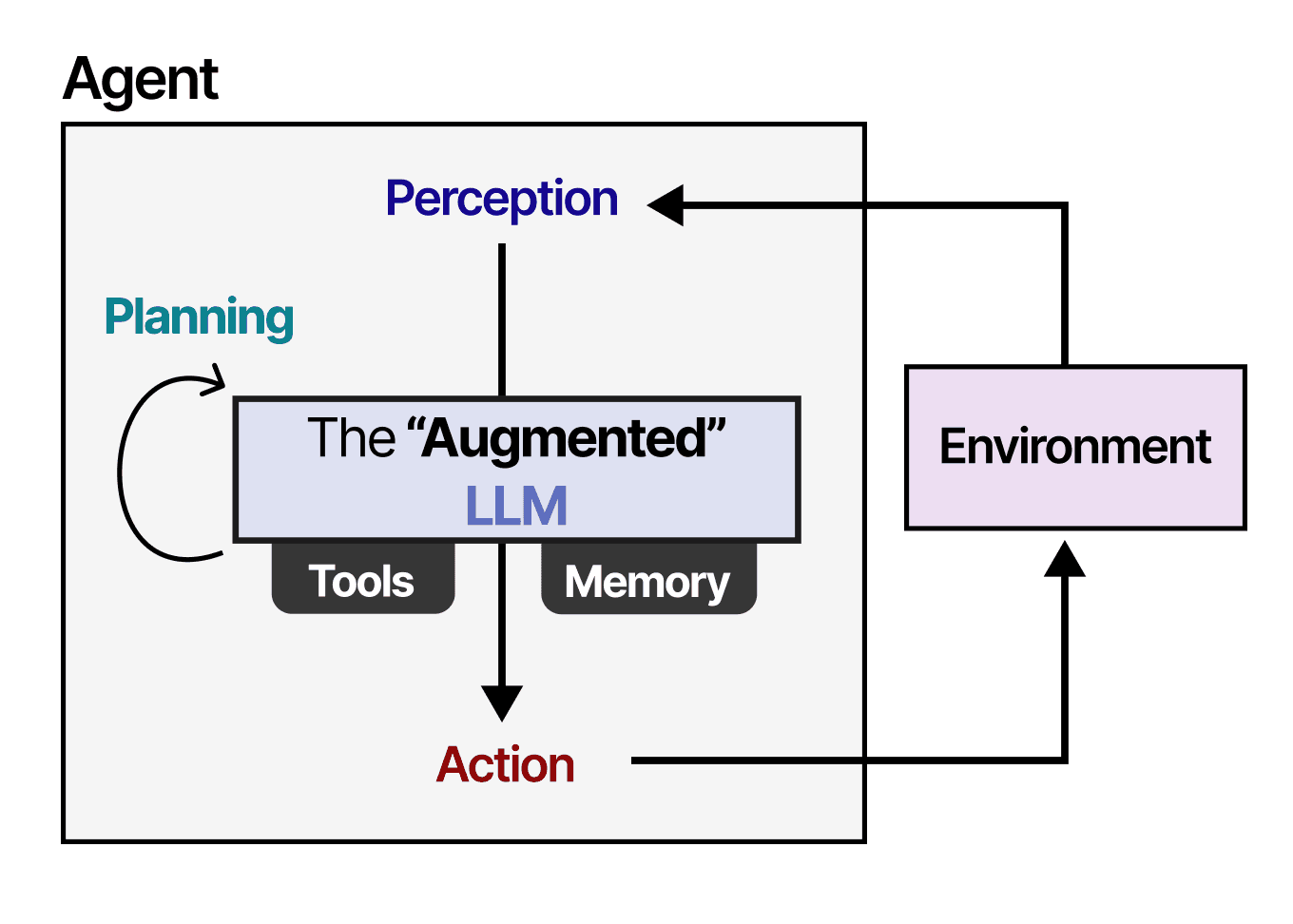
A new synthesis of 27 benchmark, taxonomy, and audit papers (2023-2026) spanning 19 distinct benchmarks provides the first unified taxonomy of LLM agent limitations. According to the arXiv preprint, the authors identify six failure clusters: (1) tool invocation and parameter-level errors, (2) planning and constraint-satisfaction failures, (3) long-horizon degradation from context accumulation, (4) multi-agent coordination failures, (5) safety and security failures under adversarial or underspecified conditions, and (6) measurement validity problems.
Failures compound nonlinearly
The taxonomy was derived iteratively by grouping independently reported error categories into themes corresponding to distinct stages of the agent reasoning-to-action pipeline. Across the literature, the authors find that failures compound nonlinearly with task length, that strong performance on individual sub-tasks does not reliably translate into end-to-end success, and that additional scaffolding does not consistently improve reliability. At the same time, substantial progress has been demonstrated in single-turn tool use, short-horizon web navigation, and narrowly scoped coding tasks.
A gap between benchmarks and real-world reliability
The synthesis highlights a structural problem: benchmark gains often obscure recurring failure modes documented across otherwise unrelated evaluation efforts. The paper does not disclose specific benchmark scores or model names, focusing instead on cross-cutting patterns. The authors note that measurement validity problems—where benchmarks fail to capture real-world agent behavior—constitute one of the six clusters, undermining the reliability of reported progress.
What this means for agent deployment
The finding that additional scaffolding does not consistently improve reliability challenges a common assumption in the industry. As large language models are increasingly deployed as autonomous agents, the nonlinear degradation with task length poses a practical ceiling on agent autonomy. The synthesis suggests that progress in narrow, single-turn tasks has not generalized to multi-step, long-horizon scenarios.
Key Takeaways
- 27-paper synthesis finds LLM agent failures compound nonlinearly with task length.
- Six failure clusters identified across 19 benchmarks.
What to watch
Watch for follow-up papers that test the taxonomy against specific model families (e.g., GPT-5, Claude 4, Gemini 2) and whether benchmark designers adopt the proposed failure clusters to improve evaluation validity.
Source: arxiv.org