Key Takeaways
- Claude Routines are cloud-based AI automations that run on triggers/schedules.
- While not directly in Claude Code yet, they hint at future workflow automation possibilities developers should prepare for.
What Claude Routines Actually Are
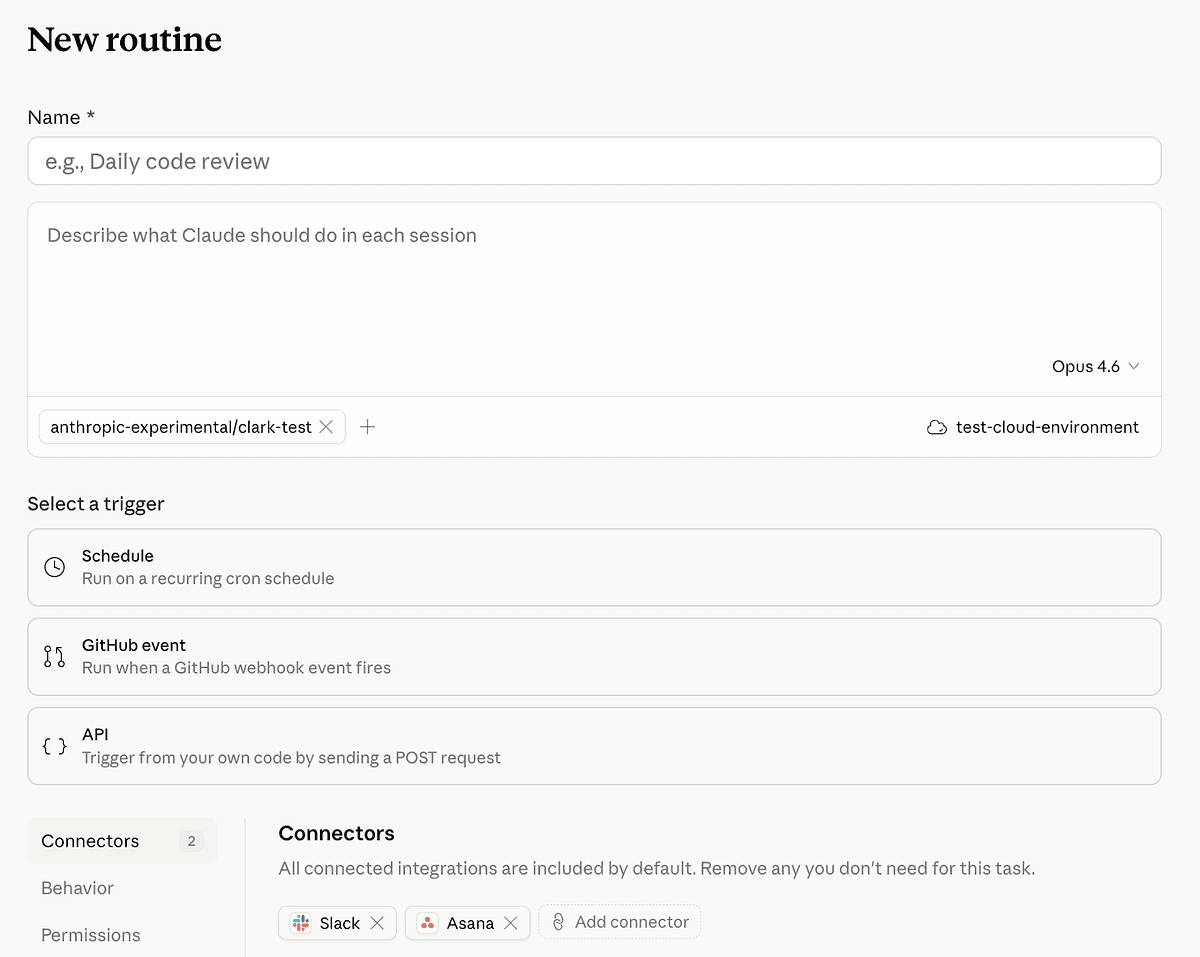
Claude Routines are Anthropic's new cloud-native automation service that lets you schedule Claude to perform tasks automatically. Think of them as cron jobs for AI—you define a trigger (schedule, webhook, or event), and Claude executes predefined actions through the API.
Key technical details from the source:
- Architecture: Serverless execution on Anthropic's infrastructure
- Triggers: Time-based schedules, HTTP webhooks, or manual execution
- Limits: 100 routines per project, 10K executions/month on free tier
- Use cases: Daily code reviews, dependency updates, documentation generation, test analysis
What This Means For Claude Code Users
While Claude Routines run in the cloud separately from Claude Code (the desktop IDE), they represent a significant shift in how AI could integrate into development workflows. The most immediate implication: you can now have Claude perform maintenance tasks while you're not even at your computer.
For example, you could set up a Routine to:
- Daily at 9 AM: Review your main branch's latest commits and suggest improvements
- Every Monday: Scan dependencies for security updates
- On webhook: When a PR is created, automatically generate test coverage analysis
The Missing Link: Direct Claude Code Integration
Here's the catch for daily Claude Code users: Routines currently require API calls and cloud configuration. There's no direct integration with your local Claude Code workspace yet. You can't point a Routine at your local CLAUDE.md file or have it interact with your open files.
However, this architecture suggests where Anthropic is heading. If you're using Claude Code heavily, you should:
- Start thinking in automatable chunks: What repetitive tasks do you prompt Claude for daily? Those are Routine candidates.
- Document your best prompts: Routines work best with well-tested, specific prompts that don't need context negotiation.
- Consider hybrid workflows: Use Claude Code for interactive development, then schedule Routines for maintenance tasks.
How To Experiment With Routines Today

Even without direct Claude Code integration, you can start testing the concept:
# Example: Set up a daily code quality check Routine via API
curl -X POST https://api.anthropic.com/v1/routines \
  -H "x-api-key: YOUR_KEY" \
  -H "anthropic-version: 2023-06-01" \
  -d '{
    "name": "daily_code_review",
    "schedule": "0 9 * * *",
    "prompt": "Analyze the latest commit in repo XYZ. Focus on: 1. Code smells 2. Security issues 3. Performance optimizations. Return as markdown.",
    "model": "claude-3-5-sonnet-20241022"
  }'
Or better yet, create a Routine that monitors your CI/CD pipeline and provides AI analysis on failures—something that complements rather than replaces your interactive Claude Code sessions.
What To Watch For
The real game-changer will come when (not if) Anthropic connects these cloud Routines to local development environments. Imagine:
- Routines that can access your project's
CLAUDE.mdcontext - Scheduled refactoring sessions that modify your codebase overnight
- Automated documentation updates when you change function signatures
Until then, treat Routines as a separate but related tool in your AI-assisted development toolkit. The patterns you develop now—clear prompts, specific tasks, reliable triggers—will pay dividends when tighter integration arrives.
gentic.news Analysis
This follows Anthropic's steady expansion from pure chat interfaces (Claude.ai) to developer tools (Claude Code) and now cloud services. The pattern is clear: Anthropic is building a full-stack AI development ecosystem, not just individual tools.
This aligns with our previous coverage of Claude Code's MCP server support—both features represent Anthropic's push to make Claude an integrated part of the development lifecycle, not just a chat companion. Where MCP servers connect Claude to your local tools, Routines automate Claude's work in the cloud.
Looking at the competitive landscape, this puts Anthropic closer to GitHub Copilot's scheduled workflows while maintaining Claude's strength in complex reasoning tasks. The 10K free executions/month is notably generous compared to similar automation services, suggesting Anthropic wants developers to experiment heavily with this paradigm.
For Claude Code power users, the takeaway is simple: Start documenting your most repetitive prompts. When cloud-to-local integration arrives, you'll be ready to automate what you've already perfected manually.