What Happened: The Battle Against Data Poisoning
Recent research, highlighted in coverage from Futu NiuNiu, delves into a critical security frontier for large language models: defending against data poisoning attacks. The core concept is "self-purification"—a defensive mechanism where LLMs can identify, isolate, and potentially neutralize malicious or corrupted data that has been intentionally injected into their training datasets or retrieval corpora. This defense is increasingly being integrated with Retrieval-Augmented Generation (RAG) architectures, creating a multi-layered security approach.
Data poisoning is an adversarial attack where bad actors subtly manipulate the training data or the external knowledge sources an AI system uses. The goal is to cause the model to produce incorrect, biased, or harmful outputs, or to degrade its performance over time. For enterprise deployments, this represents a significant operational and reputational risk.
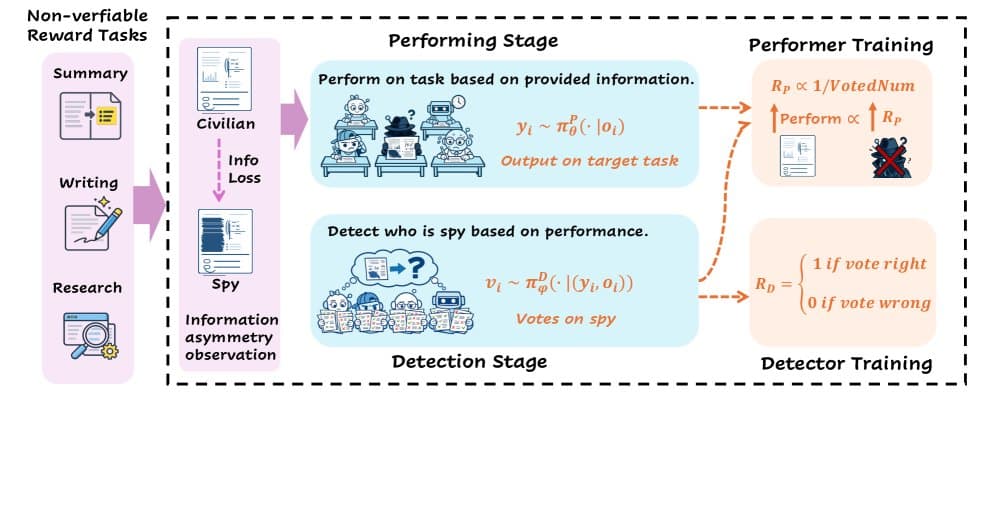
The research suggests a paradigm where the LLM is not just a passive consumer of retrieved information but an active participant in vetting it. In a RAG pipeline, before ingested data is used to generate a response, the model itself applies internal consistency checks, cross-references with its pre-existing (presumably cleaner) parametric knowledge, and flags or filters out content that appears statistically anomalous or contradicts established facts.
Technical Details: The Mechanics of Self-Purification
The "battle" involves several technical components:
- Anomaly Detection at Retrieval: When a RAG system queries a vector database, the returned chunks are not just ranked by similarity. The LLM or an auxiliary model scores them for potential "poison" based on stylistic inconsistencies, factual improbabilities, or conflicts with high-confidence internal knowledge.
- Confidence-Based Filtering: The system assigns a confidence score to each retrieved piece of information. Low-confidence or contradictory information can be automatically quarantined or trigger a human-in-the-loop review process.
- Generative Verification: In some proposed frameworks, the LLM attempts to reconstruct or summarize the retrieved content. A significant divergence between the retrieved text and the model's clean summary can indicate poisoned data.
- Continuous Learning Safeguards: For systems that learn from user interactions or new document uploads, self-purification acts as a gatekeeper, preventing poisoned data from entering the long-term knowledge base.
This approach is particularly relevant in light of recent industry movements. Google's launch of Gemini Embedding 2, a second-generation multimodal embedding model, underscores the importance of robust retrieval. Better embeddings improve the precision of retrieval, which is the first line of defense—fetching the most relevant content. Self-purification acts as the second, more intelligent line of defense, examining what was retrieved.
Retail & Luxury Implications: Securing the Knowledge Foundation
For luxury and retail enterprises deploying AI, the implications of this research are primarily about risk mitigation and trust assurance.
The Vulnerability: A luxury brand's AI customer service agent, product recommendation engine, or internal knowledge management system relies on RAG. Its knowledge base could include product manuals, CRM data, sustainability reports, and historical campaign materials. A poisoning attack could involve:
- Injecting subtle misinformation about product materials or provenance into a supplier document database.
- Manipulating customer sentiment data to skew product development insights.
- Corrupting internal policy documents to cause compliance failures in AI-generated responses.
The Application of Self-Purification:
- Protected Customer Interactions: A concierge-style chatbot for high-net-worth clients uses RAG to pull from the latest catalog, private client notes, and event details. A self-purification layer would continuously check retrieved data against the core model's understanding of brand standards and factual history, preventing a compromised data entry from causing a brand-damaging error.
- Supply Chain Intelligence: AI systems analyzing supplier documentation for ESG compliance could use these techniques to flag potentially altered or fraudulent documents before they influence reporting.
- Content Moderation & Brand Safety: For user-generated content platforms or social listening tools, self-purification can help filter out coordinated attempts to poison sentiment analysis or inject harmful narratives about the brand.
The key value proposition is moving from a static, perimeter-based data security model to a dynamic, intelligent filtering model that operates at the point of consumption within the AI itself. It acknowledges that in complex enterprises, not all data sources can be perfectly secured at the point of entry.
Current State & Considerations: This research points to an emerging capability, not a plug-and-play solution. Implementing effective self-purification requires:
- A sufficiently capable "judge" LLM with strong reasoning skills.
- Careful tuning to avoid being overly conservative and filtering out legitimate but novel information.
- Significant computational overhead, as it adds another step to the RAG pipeline.
- Clear governance on what constitutes "poison" versus acceptable data variance.
For retail AI leaders, the takeaway is to begin factoring adversarial robustness into their AI architecture reviews. When evaluating RAG platforms or LLM providers, questions about built-in defenses against data poisoning and the ability to audit retrieval sources are becoming increasingly relevant. The "self-purification battle" is a technical arms race that will define the reliability of enterprise AI in the coming years.