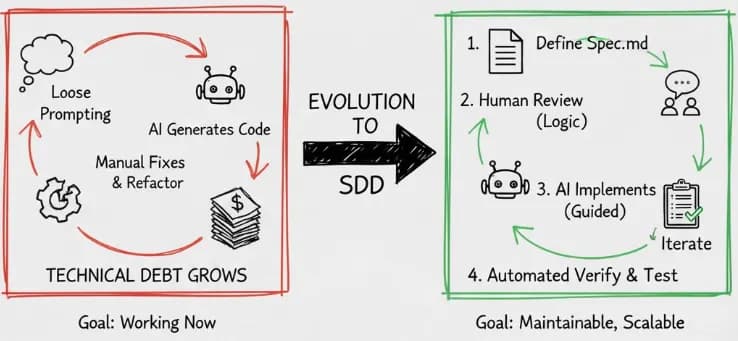
The Technique: Spec-First, Code-Second
The core technique is simple but transformative: before asking Claude Code to write any code, you write a detailed, structured specification file. This isn't a vague user story. It's a comprehensive document that includes:
- Functional Requirements: Every feature, button, and behavior.
- Technical Constraints: Framework, libraries, API patterns, and performance requirements.
- Acceptance Criteria: Concrete, testable conditions for success.
- File Structure: The exact directory and file layout you expect.
You then pass this spec file to Claude Code as the primary context. The command is straightforward:
claude code --file project_spec.md "Implement the user authentication module as defined."
Why It Works: Context is Everything
This works because it directly addresses Claude Code's greatest strength and a common weakness in AI-assisted development: context management. A vague prompt like "add user login" forces the model to guess your stack, patterns, and preferences, leading to iterations. A comprehensive spec gives it a perfect blueprint.
This aligns with recent performance guidance from Anthropic warning against using elaborate personas (2026-04-01). A detailed spec is not a persona; it's direct, actionable data. It also leverages the power of Claude Opus 4.6, Anthropic's most capable model for complex reasoning, which excels at parsing detailed instructions and executing long-horizon tasks.
By front-loading the thinking into the spec, you turn Claude Code from a conversational partner into an execution engine. It has all the information it needs to generate the correct code, in the right place, the first time.
How To Apply It: Your Spec Template
Create a SPEC.md file in your project root or feature directory. Use this structure:
# Feature: [Feature Name]
## 1. Overview
[2-3 sentences on the goal.]
## 2. Functional Requirements
- [ ] FR1: The user can...
- [ ] FR2: The system must...
## 3. Technical Stack & Constraints

- **Framework:** Next.js 15
- **Database:** PostgreSQL, use Prisma ORM
- **API Style:** REST, JSON responses
- **Key Libraries:** `bcryptjs`, `jsonwebtoken`
- **File Naming:** Use kebab-case for components.
## 4. Acceptance Criteria
- **AC1:** Given a valid email/password, the API returns a 200 with a JWT.
- **AC2:** Given an invalid password, the API returns a 401.
## 5. Implementation Plan & File Structure
project/
├── src/
│ ├── app/
│ │ └── api/
│ │ └── auth/
│ │ ├── login/
│ │ │ └── route.ts <-- POST handler
│ │ └── signup/
│ │ └── route.ts
│ └── lib/
│ └── auth.ts <-- JWT utility functions
## 6. Open Questions / Decisions Needed
- [ ] Decision: Should we use HTTP-only cookies or Bearer tokens?
With this file in place, your prompt to Claude Code becomes trivial. The model has its marching orders. This method is particularly powerful when combined with Claude Code's multi-file editing and direct git access, allowing it to create and modify dozens of files in a single, coherent pass.
The Result: From Planning to PR in One Session
Adopting this workflow shifts your role from a micro-manager of code generation to an architect and reviewer. You spend 30 minutes writing a spec, then run Claude Code. It generates the code, runs shell commands to install dependencies, and can even create initial test stubs. You review the output against your spec—not against a moving target of your own poorly-communicated expectations.
This follows the trend of increasingly agentic workflows with Claude Code, as seen in tools like the recently launched Computer Use feature (2026-03-30). Spec-driven development is a conceptual framework that prepares you to leverage these powerful execution capabilities effectively, ensuring the AI is working on the right problem.