What Happened
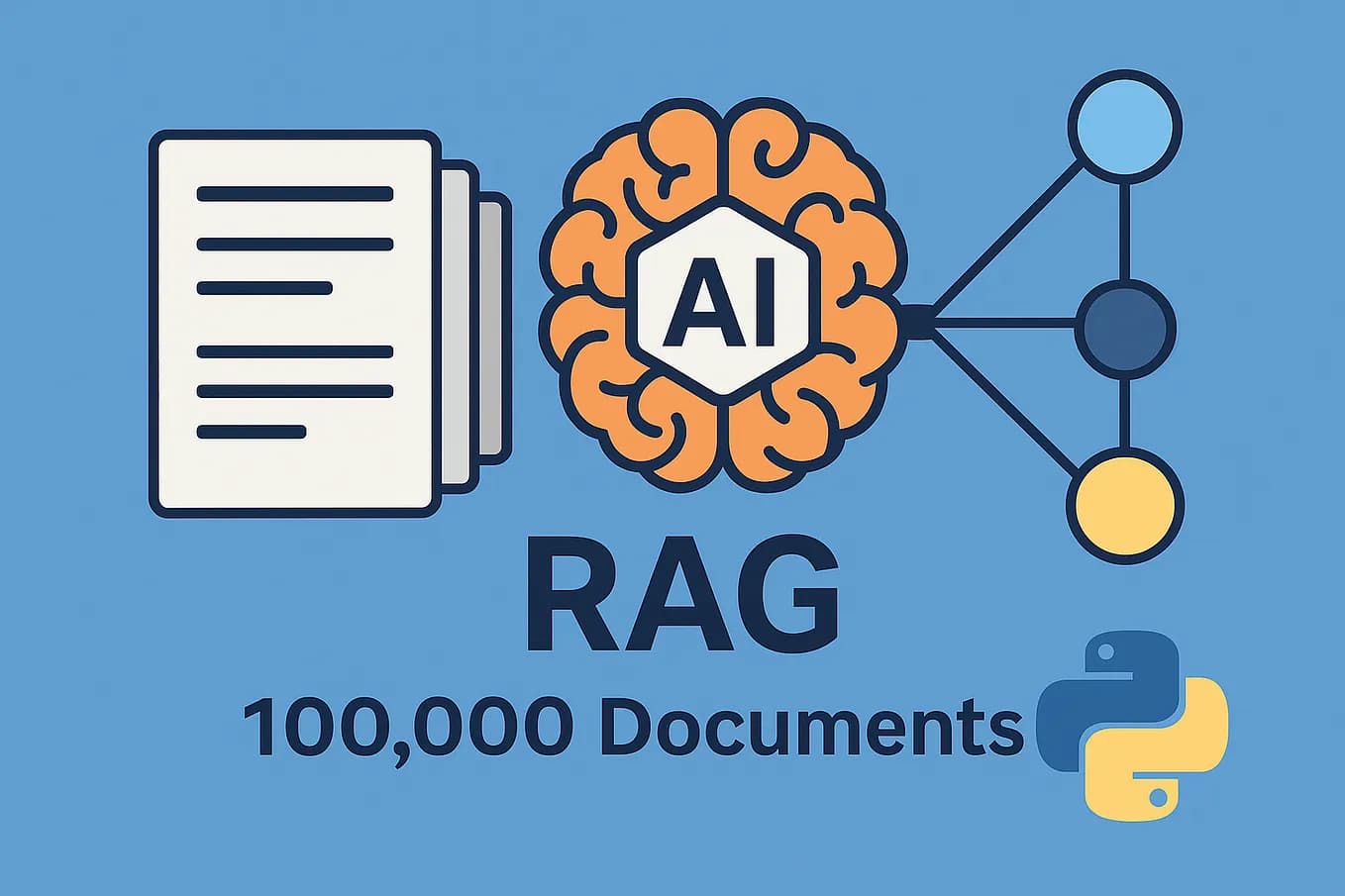
The source is a first-person narrative from a developer, published on Medium, detailing the journey of building a Retrieval-Augmented Generation (RAG) system. The author describes creating a "dream" prototype that performed excellently in controlled, low-traffic tests. The system successfully retrieved relevant documents from a knowledge base and used a large language model (LLM) to generate accurate, context-aware answers. However, this initial success was an illusion of scale.
When the system was subjected to real-world, production-level user traffic, it "crashed." The post outlines the multifaceted failures encountered:
- Retrieval Breakdown: The search and embedding retrieval pipeline, which worked for dozens of queries, became unreliable and slow under concurrent loads, leading to timeouts and irrelevant context being passed to the LLM.
- Latency Spikes: End-to-end response times ballooned from seconds to tens of seconds or more, creating a poor user experience.
- Cost Explosion: The naive architecture led to uncontrolled LLM API calls and compute costs, making the system economically unviable.
- Systemic Fragility: The integrated system of vector databases, embedding models, and LLMs revealed hidden failure modes and complex error handling requirements not apparent in the prototype phase.
The core thesis is that building a functional RAG proof-of-concept is fundamentally different from engineering a robust, scalable production service. The article serves as a practical, post-mortem guide highlighting the operational and architectural pitfalls that lie between a demo and a deployed application.
Technical Details: The Scaling Gap
While the specific technical stack isn't detailed in the provided summary, the failure modes described are canonical challenges in moving ML systems to production, especially for RAG. The "crash" likely involved several interconnected components:
- Vector Database Load: A prototype might use a local, in-memory vector store (like FAISS) or a cloud instance with minimal provisioned capacity. Real user traffic can overwhelm its query throughput, leading to high latency and dropped connections.
- Embedding Model Bottleneck: Generating embeddings for query and documents is computationally intensive. A system not designed for parallel processing or batch optimization will become a bottleneck, slowing down the entire retrieval chain.
- LLM Context Window & Cost Management: Naively retrieving too many or too large document chunks fills the LLM's context window inefficiently, increasing token cost per call and latency. Without smart chunking, filtering, or re-ranking, quality and cost suffer.
- Lack of Observability: Prototypes often lack detailed logging, metrics, and tracing. When the system fails at scale, developers are left debugging a black box without data on where in the pipeline (retrieval, embedding, generation) the failure occurred.
- Absence of Caching and Fallbacks: Production systems require strategies like caching frequent query embeddings or LLM responses and implementing fallback mechanisms (e.g., returning a simple search result if the full RAG pipeline times out).
The author's experience underscores that RAG is not just an AI model but a distributed software system with demanding reliability, performance, and cost constraints.
Retail & Luxury Implications
The lessons from this scaling nightmare are directly applicable to retail and luxury brands experimenting with or deploying RAG. The most promising use cases—precisely where failure would be most costly—are also the most demanding:
- Global Customer Service Chatbots: A RAG system powering a 24/7 chatbot that answers questions about product care, store policies, or order status must handle thousands of concurrent users during peak shopping seasons or a product launch. A "crash" here means lost sales, frustrated customers, and brand damage.
- Internal Knowledge Assistants for Store Staff: Associates using a tablet-based assistant to query real-time inventory, look up client purchase history, or get styling advice need sub-second responses. Latency of 10 seconds per query renders the tool useless on the shop floor.
- Personalized Product Discovery Engines: A RAG-driven search that understands natural language queries (e.g., "a summer dress for a garden party that isn't too floral") requires complex, multi-stage retrieval and ranking. Scaling this for a global e-commerce site is a monumental engineering challenge.
The gap between a demo that impresses leadership and a system that reliably supports business operations is vast. For luxury brands, where customer experience is paramount, deploying a fragile RAG system is a significant reputational risk. This article is a vital reminder that the investment in production engineering—monitoring, load testing, caching, cost controls—must match or exceed the investment in the AI models themselves.
Implementation Approach: Lessons for Production
Based on the failures described, a robust implementation for a retail context would require:
- Load Testing & Capacity Planning: Before launch, simulate peak traffic (e.g., Black Friday volumes) on a staging environment that mirrors production specs. Identify bottlenecks in the embedding service, vector database, and LLM gateway.
- Architect for Resilience: Design the system as independent, scalable microservices (e.g., separate services for embedding, retrieval, and generation). Implement circuit breakers, retries with exponential backoff, and graceful degradation.
- Implement Caching Strategically: Cache embeddings for common queries and standard product information. Cache final LLM responses where appropriate (e.g., for factual FAQs).
- Cost & Usage Governance: Implement strict usage quotas, track token consumption per query, and design prompts to be efficient. Use cheaper/faster models for retrieval re-ranking where possible, reserving premium LLMs for final answer synthesis.
- Comprehensive Observability: Instrument every step with detailed metrics (latency, error rates, retrieval score distributions) and tracing. This is non-negotiable for diagnosing failures in a complex pipeline.
Governance & Risk Assessment
- Maturity Level: Medium-High (for the pattern), Low (for easy execution). The RAG pattern is well-established, but production-grade implementation remains complex and bespoke.
- Privacy & Data Security: Retrieving from internal knowledge bases (customer data, inventory logs) requires strict access controls at the retrieval level. Ensure your vector database and embedding pipelines are compliant with data residency and privacy regulations (GDPR, CCPA).
- Bias & Hallucination Risk: A system that fails under load may deliver incomplete or erroneous context to the LLM, increasing the risk of hallucinations. Stress testing should include evaluation of answer quality under load, not just system uptime.
- Vendor Lock-in: Many scaling solutions involve proprietary cloud vector databases and LLM APIs. Develop abstraction layers to mitigate lock-in where possible.