Key Takeaways
- Impact Analytics secured the 2026 'Demand Forecasting Solution of the Year' award from SupplyTech Breakthrough, marking its second straight win.
- The recognition highlights AI's growing role in retail inventory and pricing optimization.
What Happened
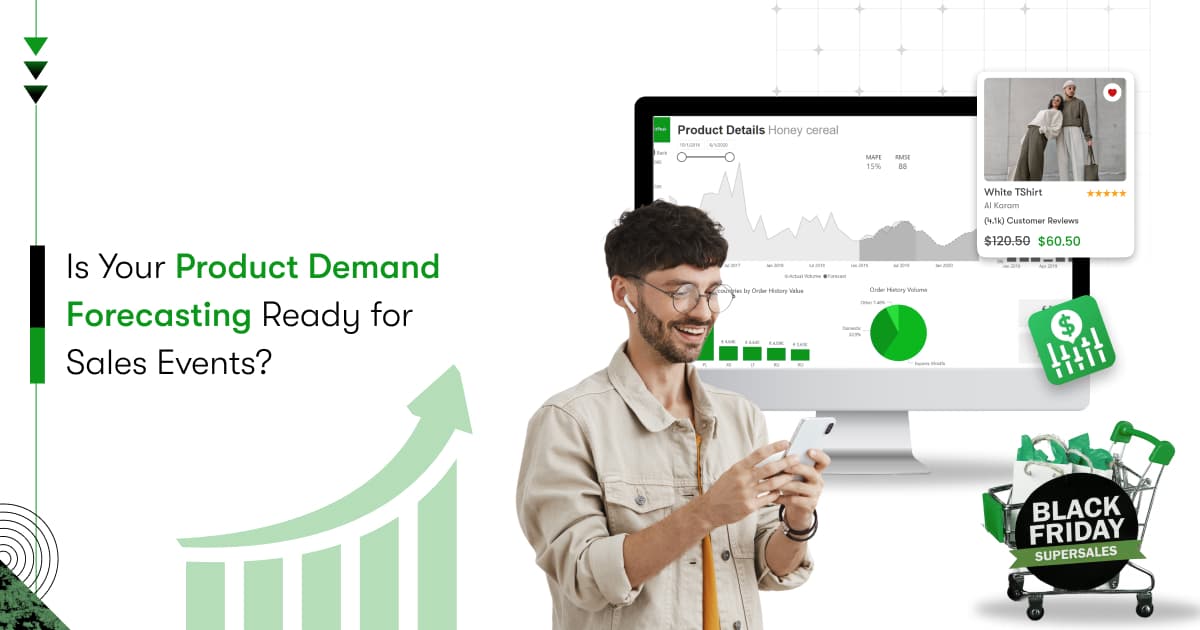
Impact Analytics has been named the 2026 'Demand Forecasting Solution of the Year' by SupplyTech Breakthrough, marking the second consecutive year the company has received this honor. The award recognizes the company's AI-powered demand forecasting platform, which helps retailers and supply chain operators improve inventory accuracy, pricing decisions, and markdown strategies.
SupplyTech Breakthrough is an independent market intelligence organization that evaluates technology solutions for supply chain and logistics. The award specifically highlights Impact Analytics' ability to deliver measurable improvements in forecast accuracy and operational efficiency for retail clients.
Why This Matters for Retail & Luxury
For retailers—especially those in fashion and luxury where demand is notoriously volatile—accurate demand forecasting directly impacts margins. Overstock leads to markdowns that erode brand equity, while understock results in lost revenue and disappointed customers.
Impact Analytics' AI platform addresses this by analyzing historical sales data, seasonality, promotions, and external factors like weather or economic trends. The platform generates granular forecasts at the SKU level, enabling retailers to:
- Reduce excess inventory and associated carrying costs
- Optimize markdown timing and depth
- Improve in-stock rates for high-demand items
- Align supply chain procurement with actual demand
For luxury brands, where scarcity and exclusivity are part of the value proposition, precision forecasting is especially critical. Overproduction can dilute brand perception, while underproduction leaves money on the table.
Business Impact
While the announcement does not include specific performance metrics from Impact Analytics' clients, the back-to-back award win suggests sustained adoption and proven ROI. In general, AI-powered demand forecasting can reduce forecast errors by 20–50% compared to traditional statistical methods, according to industry benchmarks.
For a mid-size retailer with $1 billion in annual sales, even a 10% reduction in excess inventory can free up tens of millions in working capital. For luxury houses, the impact on brand perception and full-price sell-through rates is even more significant.
Implementation Approach
Impact Analytics' platform is cloud-based and integrates with existing ERP and POS systems. Implementation typically involves:
- Data integration – connecting historical sales, inventory, and promotion data
- Model training – using proprietary AI algorithms tuned for retail demand patterns
- Validation – comparing forecasts against actual sales over a holdout period
- Deployment – embedding forecasts into planning workflows and dashboards
The company reports that most clients see measurable improvements within 2–3 months of deployment.
Governance & Risk Assessment
Demand forecasting AI carries relatively low risk compared to customer-facing AI applications like chatbots or personalization. The primary risks are:
- Data quality issues – inaccurate forecasts from incomplete or dirty data
- Over-reliance on AI – teams may override AI forecasts based on intuition, reducing ROI
- Model drift – changing consumer behavior can degrade forecast accuracy over time
Impact Analytics addresses these through continuous model retraining and human-in-the-loop validation. The platform is designed to augment, not replace, human planners.
gentic.news Analysis
Impact Analytics' back-to-back win reflects a broader trend: retail AI is maturing from experimental to operational. Demand forecasting is one of the highest-ROI use cases for AI in retail, and the market is consolidating around a few proven platforms.
For luxury and fashion retailers evaluating demand forecasting solutions, the key criteria should be:
- Granularity – can the platform forecast at the SKU-store-day level?
- Speed – how quickly can it retrain as new data comes in?
- Explainability – can planners understand why the model made a particular prediction?
- Integration – does it work with existing tech stack?
Impact Analytics appears to check these boxes, but retailers should conduct their own proof-of-concept before committing. The award signals market recognition, but the real test is whether the platform delivers measurable results in your specific product categories and demand patterns.
Given Google's expanding role in AI infrastructure (TPUs, Gemini models, Vertex AI), retail demand forecasting platforms like Impact Analytics may increasingly leverage Google Cloud services for compute and model training. This could create an indirect competitive dynamic with Google's own retail AI offerings, though Impact Analytics appears to maintain platform-agnostic positioning for now.
Source: news.google.com