What Happened
A technical article published on Towards AI, a Medium publication, proposes a significant architectural shift for visual recommendation systems. The core argument is that traditional systems relying on Convolutional Neural Network (CNN) embeddings capture primarily low-level visual features—textures, colors, and basic shapes. While useful, these features often miss the deeper semantic meaning of an item, which is crucial for understanding style, occasion, and aesthetic intent.
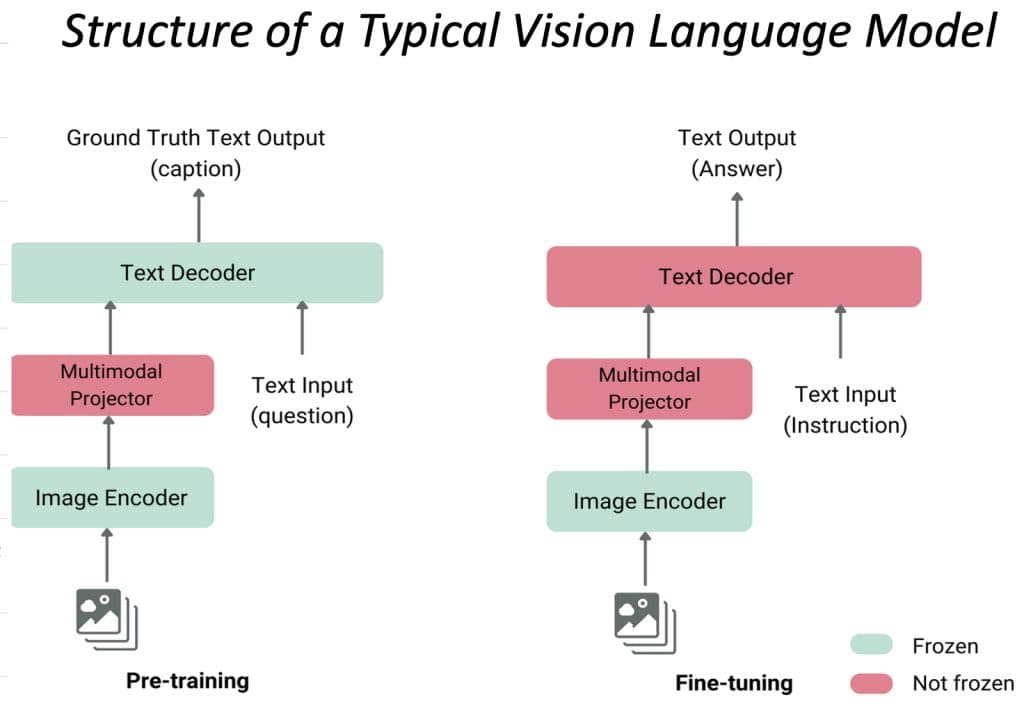
The article advocates for replacing these CNN embeddings with those generated by modern Vision-Language Models (VLMs), specifically highlighting SigLIP (Sigmoid Loss for Language-Image Pre-training). SigLIP is a contrastive model trained on massive image-text pairs to align visual and textual representations in a shared embedding space. This means the resulting vector for an image encapsulates not just what it looks like, but what it is and its described context.
Technical Details
The proposed method is conceptually straightforward but represents a foundational change in feature engineering:
- Feature Extraction Shift: Instead of using a CNN (e.g., ResNet) as a feature extractor, a pre-trained SigLIP model processes the product image.
- Embedding Generation: The model outputs a dense vector embedding that semantically represents the image. Because SigLIP is trained with language, this embedding is inherently aligned with textual concepts (e.g., "bohemian summer dress," "minimalist leather tote," "architectural heel").
- Integration into Recommender: These new, semantically rich embeddings replace the old CNN vectors as the item's visual representation within the existing recommendation pipeline (e.g., a two-tower retrieval system or a ranking model).
The key advantage is that similarity in this new embedding space reflects semantic similarity, not just visual similarity. A navy blue blazer and black trousers might look different in a CNN space but are close in a VLM space because they both represent "tailored professional wear." This enables more accurate "style-based" or "occasion-based" recommendations, moving beyond simple pattern matching.
Retail & Luxury Implications
This technical shift, while not yet a deployed case study, has clear and profound implications for luxury and retail AI teams exploring the next generation of discovery.
1. Superior Visual Search and "Find Similar": The most direct application is enhancing visual search engines. A customer uploading a photo of a desired item (e.g., a runway look) could receive recommendations not just for items with similar color blocks, but for items that capture the same essence—be it "deconstructed tailoring," "baroque embellishment," or "fluid silhouette." This bridges the gap between a customer's aesthetic intent and the catalog.
2. Cross-Modal Retrieval and Zero-Shot Discovery: Since SigLIP embeddings live in a space shared with text, they enable powerful cross-modal queries. A merchandiser could search the entire product catalog with a natural language prompt like "bags that would complement a formal winter coat" without any pre-tagging. This unlocks dynamic, intent-driven discovery beyond pre-defined categories or attributes.
3. Enriching Cold-Start and Niche Item Recommendations: New items or highly unique pieces often suffer in recommendation systems due to lack of interaction data. A semantically rich VLM embedding provides a strong, content-based signal from day one, placing the item in the correct "conceptual neighborhood" within the product universe, improving its chance of being recommended to the right audience.
4. Building a Unified Style Ontology: By projecting all products into a semantically structured embedding space, brands can algorithmically map their entire assortment into a coherent style graph. This can inform everything from assortment planning (identifying gaps in a style segment) to personalized editorial content ("Your curated gallery of minimalist jewelry").
The implementation complexity is moderate. It involves swapping out a feature extraction module, which requires reprocessing the entire product image catalog and potentially retraining downstream models (like neural retrieval systems) on the new embeddings. The major dependency is access to high-quality product imagery.