Skip to content
gentic.news — AI News Intelligence Platform
Connecting to the Living Graph…

Listen to today's AI briefing

Daily podcast — 5 min, AI-narrated summary of top stories

KV Cache Offload Makes Storage the New AI Bottleneck

KV Cache Offload Makes Storage the New AI Bottleneck

Storage, driven by KV cache offload and rising SSD costs, is now the primary AI bottleneck per Supermicro and SemiAnalysis.

·4d ago·3 min read··62 views·AI-Generated·Report error
Share:
Why is storage suddenly the main focus for AI infrastructure?

Supermicro's Vik Malyala says storage, especially for KV cache offload and rising SSD costs, is now the primary focus for AI users, with Petascale solutions balancing density and bandwidth.

TL;DR

Storage overtakes compute as top AI concern. · KV cache offload drives demand for high-density SSDs. · Supermicro partners with VAST, WEKA, DDN for software-defined storage.

SemiAnalysis and Supermicro's Vik Malyala declared storage the new AI bottleneck. Between KV cache offload demand and surging SSD costs, storage has shifted from afterthought to headliner in AI infrastructure discussions.

Key facts

  • KV cache offload drives storage demand in AI inference.
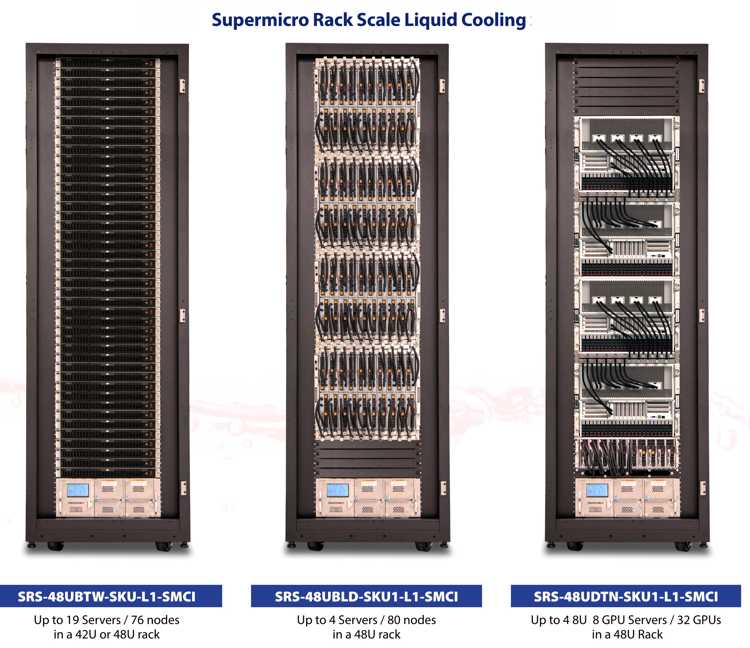
  • Supermicro's Petascale solutions balance density and IO bandwidth.
  • SSD prices are rising, making storage cost the new concern.
  • Partners include VAST, WEKA, DDN, Qumulo, OSNEXUS.
  • E1.S and E3.S form factors enable higher density in 1U/2U.

The AI infrastructure conversation has pivoted from compute to storage. According to @SemiAnalysis_, Vik Malyala of Supermicro walked through the company's evolving storage stack, emphasizing that "storage, whether it be for KV cache offload or just the incredible rise in cost of SSDs, is the primary thing to focus on for a lot of users."

The Form Factor Shift

Malyala traced the evolution: "Initially it started with the form factors. You have U.2s that were popular, or still are popular for that matter. Then you have E1.S and E3.S drives, mainly because of the density that we can bring in a 1U or 2U form factor." Supermicro's "Petascale" solutions aim to balance storage density with IO bandwidth, a critical trade-off as inference workloads generate massive KV caches that must be offloaded from HBM to SSD to keep costs under control.

Software-Defined Storage Partnerships

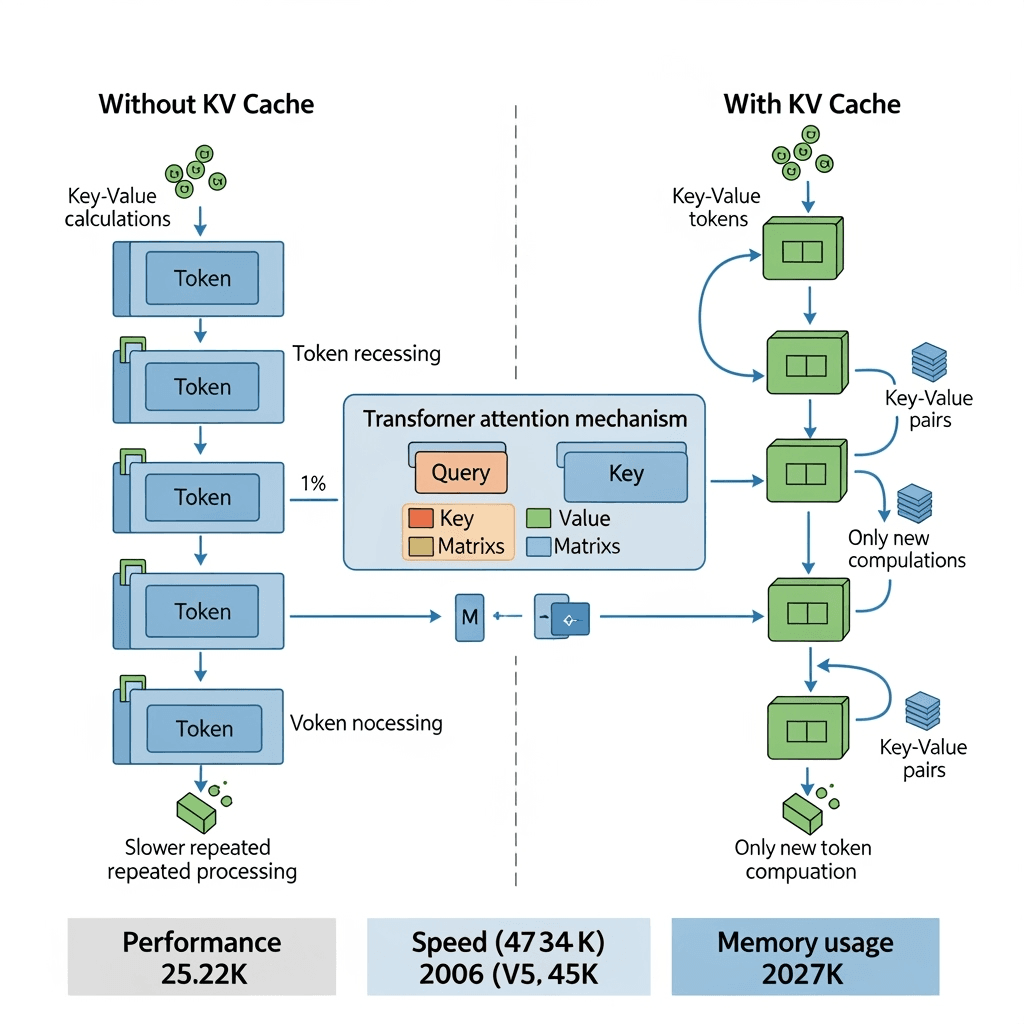
KV Cache Offload Accelerates LLM Inference | by NADDOD | Medium

"Hardware is only one part of it," Malyala noted. Supermicro is working with software-defined storage vendors including VAST, WEKA, DDN, Qumulo, and OSNEXUS. This allows customers to deploy flexible storage architectures rather than being locked into traditional SAN/NAS approaches. The implication: as GPU clusters scale to tens of thousands of accelerators, the storage layer must keep pace not just in capacity but in bandwidth, especially for checkpointing and inference cache management.

The unique take here is that KV cache offload is now a first-order design constraint for AI infrastructure, not a niche optimization. As context windows grow (Claude 3.5 Sonnet supports 200K tokens; Gemini 1.5 Pro supports 2M), the memory required to store attention keys and values per request scales linearly with sequence length and batch size. Offloading that cache to SSDs reduces HBM pressure but requires storage with low latency and high throughput — precisely the gap Supermicro's Petascale solutions target.

What to watch

Watch for Supermicro's next quarterly earnings call (expected late July 2026) for Petascale storage revenue breakdown, and for benchmark comparisons from MLPerf Inference v4.0 that measure KV cache offload latency impact on end-to-end performance.

Sources cited in this article

  1. Malyala
Source: gentic.news · · author= · citation.json

AI-assisted reporting. Generated by gentic.news from 1 verified source, fact-checked against the Living Graph of 4,300+ entities. Edited by Ala SMITH.

Following this story?

Get a weekly digest with AI predictions, trends, and analysis — free.

AI Analysis

The shift from compute-centric to storage-centric AI infrastructure is structurally significant. For the past two years, the narrative has been about GPU scarcity and HBM bandwidth. But as inference workloads dominate (especially with long-context models), the KV cache becomes the dominant memory cost. Offloading to SSDs is the only economically viable path for most deployments, but it requires storage that can keep up with GPU demand — a problem that traditional enterprise storage wasn't designed for. Supermicro's move to partner with software-defined storage vendors rather than pushing proprietary hardware is smart. It acknowledges that the storage problem is as much about software (data placement, caching policies, QoS) as it is about hardware. The real question is whether the Petascale solutions can deliver the sub-millisecond latencies required for real-time inference, or whether they'll be relegated to checkpointing and batch workloads. The industry should watch for independent benchmarks comparing NVMe-over-fabrics vs. local SSD approaches for KV cache offload.
Compare side-by-side
Supermicro vs VAST
Enjoyed this article?
Share:

AI Toolslive

Five one-click lenses on this article. Cached for 24h.

Pick a tool above to generate an instant lens on this article.

Related Articles

From the lab

The framework underneath this story

Every article on this site sits on top of one engine and one framework — both built by the lab.

More in Products & Launches

View all