The Innovation — What the Source Reports
The source is a detailed technical blog post titled "Machine Learning Adventures: Teaching a Recommender System to Understand Outfits." It presents a practical, end-to-end case study of developing a recommender system for a fictional clothing marketplace called "yibay." The core challenge addressed is moving beyond recommending standalone items (e.g., "you might like this shirt") to recommending coherent, stylistically compatible outfits (e.g., "this shirt pairs well with these trousers and shoes").
The narrative begins with a product manager's request: users are saving individual items to "outfit" boards, but the platform lacks the intelligence to suggest complementary items to complete a look. The author frames this as a shift from traditional collaborative filtering (which finds users with similar tastes) to a content-based approach that must understand the visual and categorical attributes of fashion items.
Technical Deep Dive: From Data to Deployment
The article meticulously outlines the implementation journey:
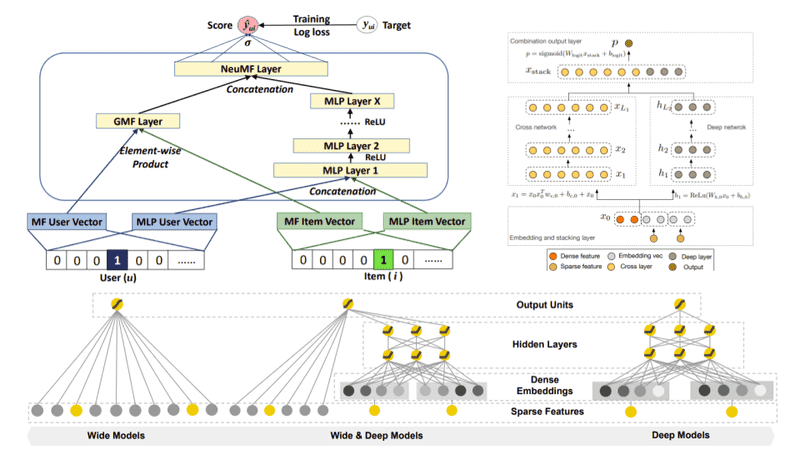
Data Pipeline & Feature Engineering: The foundation is a catalog of items, each with an image, category (e.g., shirt, trousers), and other metadata. The author describes using a pre-trained Convolutional Neural Network (CNN)—specifically ResNet50—to generate image embeddings. These dense vector representations encode the visual semantics of each product (patterns, colors, sleeve length, formality). Categorical features are one-hot encoded and combined with the image embeddings to form a comprehensive feature vector for each item.
Model Architecture & Training: The recommender is built as a neural network that learns a similarity function. The core idea is to train the model so that items that frequently appear together in user-curated outfits have similar vector representations in a latent space. The author likely discusses using a triplet loss or a similar metric learning objective. This setup teaches the model that for an "anchor" item (e.g., a blazer), positive examples (compatible trousers) should be closer in the vector space than negative examples (incompatible items).
The Recommendation Engine: Once the model is trained, generating an outfit recommendation involves:
- Taking a user's selected "anchor" item and computing its feature vector.
- Performing a k-Nearest Neighbors (k-NN) search in the learned vector space to find the most semantically similar items from different, complementary categories.
- Returning a set of items that form a stylistically coherent outfit.
Challenges & Iterations: The post doesn't shy away from the messy realities of ML projects. It hints at challenges like the cold-start problem (recommending for new items with no user interaction data), the need for diverse and representative training data of real outfits, and balancing categorical compatibility (don't recommend two pairs of trousers) with stylistic harmony.
Why This Technical Approach Matters for Retail & Luxury
For luxury and premium retail, the stakes for outfit recommendations are exceptionally high. A poor recommendation can break the illusion of curated expertise and brand aesthetic.
- Brand Aesthetics as a Feature: A system like the one described can be trained specifically on a brand's historical lookbooks, runway shows, and successful client outfit data. This encodes the "house style"—whether it's the sharp tailoring of Brunello Cucinelli, the romantic layers of Simone Rocha, or the streetwear edge of Off-White—directly into the model's understanding of compatibility.
- Beyond the Basket: Curating the Wardrobe: Luxury shopping is often aspirational and involves building a capsule wardrobe. This model shifts the e-commerce paradigm from transactional ("add to cart") to inspirational and consultative ("complete the look"). It can power features like "Shop This Runway Look" or "Build Your Capsule Collection."
- Personalization at the Style Level: By analyzing which recommended outfits a user engages with or purchases, the system can refine its understanding of that individual's style preferences, moving from generic compatibility to personalized style alignment.
Business Impact & Implementation Considerations
Potential Impact:
- Increased Average Order Value (AOV): Successful outfit recommendations directly encourage multi-item purchases.
- Enhanced Customer Experience: Provides a value-added, stylist-like service digitally, strengthening brand loyalty.
- Inventory Movement: Can help strategically pair slow-moving items with popular staples to increase their visibility and desirability.
Implementation Approach:
- Data Foundation: Requires a clean product catalog with high-quality images and consistent categorization. Historical outfit data (from stylists, lookbooks, or user saves/wishlists) is crucial for training.
- Technical Stack: Involves expertise in deep learning (PyTorch/TensorFlow), embedding generation, and efficient vector search (using libraries like FAISS or dedicated vector databases).
- Iterative Development: As the blog post illustrates, this is not an off-the-shelf solution. It requires an iterative build-measure-learn loop, starting with a minimum viable model on a specific category (e.g., menswear suiting) before expanding.
Governance, Risk, and Maturity Assessment
- Bias and Representation: The model will only be as good as its training data. If historical outfit data lacks diversity in body type, ethnicity, or style subculture, the recommendations will reflect and perpetuate that bias. Curating inclusive and expansive training sets is an ethical and commercial imperative.
- Explainability: Why did the system recommend this pair of shoes? Providing simple explanations ("Recommended for color match and formal style") builds user trust. The model's reliance on visual embeddings can make this challenging.
- Maturity Level: The core technology (CNNs for embeddings, metric learning) is well-established. The application to outfit recommendation is in the late-innovation/early-adoption phase in retail. Leading players are experimenting with it, but a robust, production-scale system requires significant investment in data, ML ops, and domain expertise.
- Privacy: If using user-specific interaction data for personalization, all standard data governance and privacy regulations (GDPR, CCPA) apply.
Conclusion
This technical walkthrough demystifies the process of building an intelligent outfit recommender. It highlights that the magic isn't in a single algorithm, but in the thoughtful integration of computer vision, metric learning, and domain-specific data. For luxury brands, this represents a concrete path to translating intangible brand ethos into a scalable, personalized digital service—turning an e-commerce site into a style partner.