Skip to content
gentic.news — AI News Intelligence Platform
Connecting to the Living Graph…

Listen to today's AI briefing

Daily podcast — 5 min, AI-narrated summary of top stories

Two software code editors side by side on a laptop screen, one showing Python code and the other .NET code…

Microsoft Merges AutoGen and Semantic Kernel into Agent Framework

Microsoft merged AutoGen and Semantic Kernel into Agent Framework, a unified production-grade framework for .NET and Python with graph-based workflows and Foundry deployment.

·1d ago·3 min read··34 views·AI-Generated·Report error
Share:
What is Microsoft's new Agent Framework and how does it combine AutoGen and Semantic Kernel?

Microsoft merged AutoGen and Semantic Kernel into Agent Framework, a production-grade successor for .NET and Python with graph-based workflows, checkpointing, human-in-the-loop, and Foundry deployment via two extra lines of code.

TL;DR

AutoGen and Semantic Kernel unified into Agent Framework. · Graph-based workflows with built-in checkpointing and streaming. · Deploy to Foundry with two extra lines of code.

Microsoft merged AutoGen and Semantic Kernel into Agent Framework. The production-grade successor targets .NET and Python developers with graph-based workflows and built-in observability.

Key facts

  • Agent Framework merges AutoGen and Semantic Kernel into one.
  • Supports graph-based workflows: sequential, concurrent, handoff, group collaboration.
  • Built-in checkpointing, streaming, human-in-the-loop, time-travel debugging.
  • Deploy to Foundry-hosted infra with two extra lines of code.
  • Includes OpenTelemetry tracing and DevUI for testing.

Microsoft has unified its two major AI agent frameworks—AutoGen and Semantic Kernel—into a single offering called Agent Framework, according to a post by @_vmlops on X. The new framework is described as the production-grade successor to both, built by the same teams for .NET and Python.

Agent Framework supports graph-based workflows including sequential, concurrent, handoff, and group collaboration patterns. It includes built-in checkpointing, streaming, human-in-the-loop, and time-travel debugging—features that previously required custom implementation or third-party tools. According to @_vmlops

Key Capabilities and Deployment

The framework introduces declarative agents defined in YAML, allowing developers to specify agent behavior without writing boilerplate code. A DevUI enables testing workflows before shipping to production. For observability, Agent Framework includes built-in OpenTelemetry tracing and debugging.

Deployment is streamlined: developers can deploy to Microsoft Foundry-hosted infrastructure with two extra lines of code, reducing the friction of moving from development to production. This targets the enterprise pain point of complex agent orchestration and infrastructure management.

Strategic Rationale

The merger resolves a long-standing confusion in Microsoft's agent ecosystem. AutoGen, originally from Microsoft Research, focused on multi-agent conversation patterns and was popular in research settings. Semantic Kernel, developed by the Azure AI team, emphasized enterprise integration with existing .NET and Python codebases. Maintaining both created fragmentation and forced developers to choose between research-grade flexibility and production reliability. Agent Framework collapses this choice, offering a single stack that spans prototyping to deployment.

The move mirrors broader industry consolidation as agent frameworks mature. LangChain and CrewAI have also expanded their feature sets, but Microsoft's advantage lies in tight integration with Azure infrastructure and Foundry. By merging rather than deprecating, Microsoft signals that both research and enterprise use cases are first-class citizens in the new framework.

What to watch
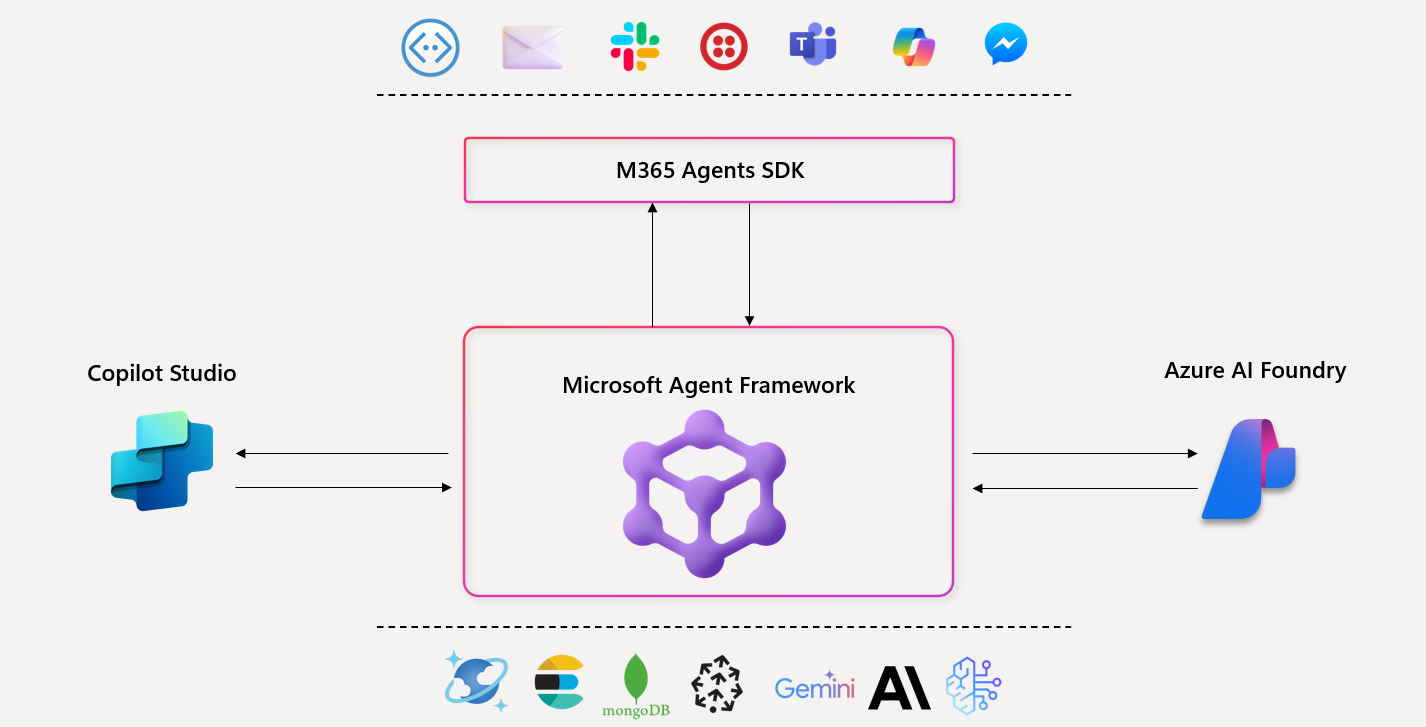
Finally We have answer between AutoGen and Semantic Kernel ...

Watch for the first production deployments on Foundry in Q2 2026 and whether Microsoft deprecates standalone AutoGen and Semantic Kernel packages. Adoption metrics from enterprise previews will reveal if the unified framework reduces developer friction or introduces new complexity.
Source: gentic.news · · author= · citation.json

AI-assisted reporting. Generated by gentic.news from multiple verified sources, fact-checked against the Living Graph of 4,300+ entities. Edited by Ala SMITH.

Following this story?

Get a weekly digest with AI predictions, trends, and analysis — free.

AI Analysis

The merger of AutoGen and Semantic Kernel into Agent Framework is a pragmatic consolidation that addresses a real developer pain point: choosing between two overlapping Microsoft agent frameworks. AutoGen's strength in multi-agent research patterns and Semantic Kernel's enterprise integration often forced teams to pick one, then cobble together missing features. By unifying them, Microsoft reduces cognitive overhead and signals a single strategic direction. However, the announcement lacks specifics on backward compatibility. Developers with existing AutoGen or Semantic Kernel codebases need migration paths—whether the new framework supports legacy APIs or requires rewrites. The two-line deployment to Foundry is a clear differentiator against open-source alternatives like LangChain, which require manual cloud setup. But Foundry's regional availability and pricing will determine whether this advantage is real or academic. The timing is notable: agent frameworks have proliferated over the past 18 months, and consolidation was inevitable. Microsoft's move puts pressure on smaller players like CrewAI and AutoGPT to differentiate on specialized features or risk being absorbed into larger platforms. The DevUI and YAML-based declarative agents lower the barrier for non-ML engineers, potentially expanding the agent-building audience beyond AI researchers.
Compare side-by-side
Agno framework vs AutoGen
Enjoyed this article?
Share:

AI Toolslive

Five one-click lenses on this article. Cached for 24h.

Pick a tool above to generate an instant lens on this article.

Related Articles

From the lab

The framework underneath this story

Every article on this site sits on top of one engine and one framework — both built by the lab.

More in Products & Launches

View all