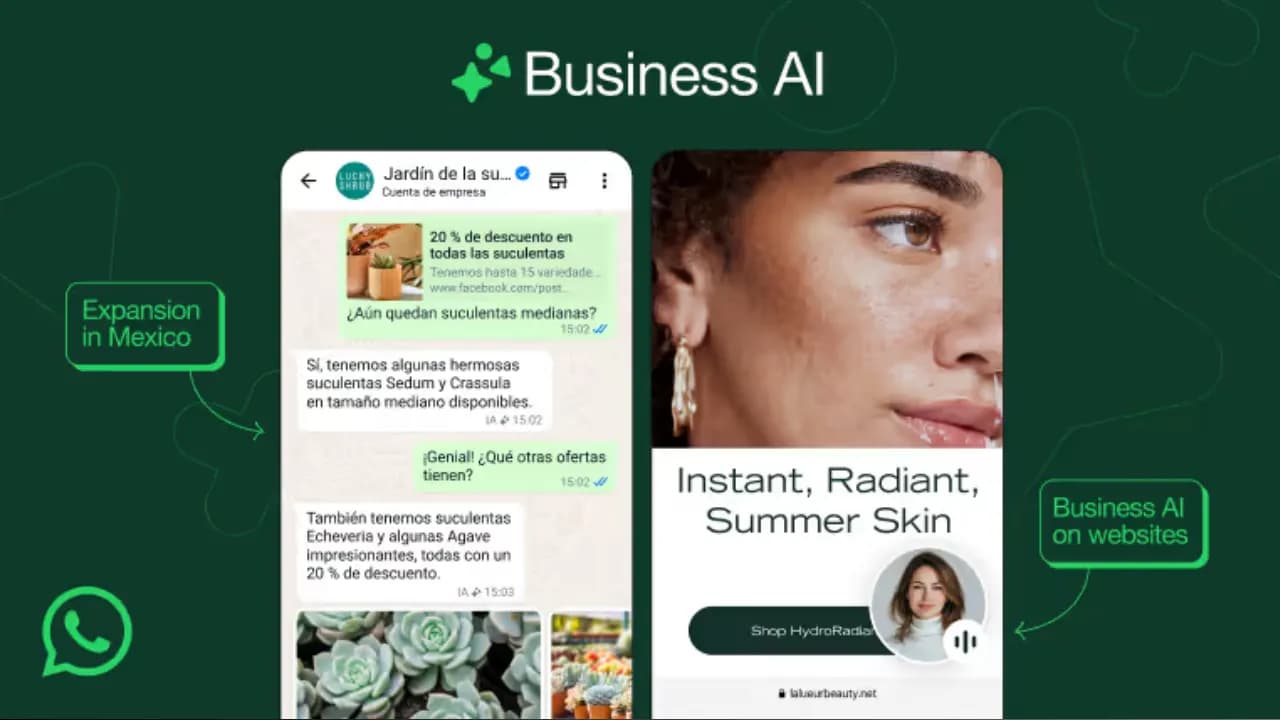
Chinese AI startup MiniMax AI has announced a partnership with conversational commerce platform Wati to power the newly launched Astra Voice 2.0. The integration brings MiniMax's voice synthesis technology directly into the WhatsApp Business ecosystem, targeting global enterprises.
What Happened
MiniMax AI confirmed via a social media post that its voice technology is the engine behind Wati's Astra Voice 2.0. The platform allows businesses to deploy AI voice agents for customer interactions on WhatsApp. The key claimed differentiator is voice quality that mimics "natural conversation" across multiple languages, tailored to a business's customer base.
This is a B2B2C play: MiniMax licenses its tech to Wati, which then offers it as a feature to its business clients for use on the WhatsApp Business API.
Context & Competitive Landscape
Wati is a Y Combinator-backed platform focused on WhatsApp-based customer engagement and commerce, serving over 10,000 businesses. Its Astra Voice product aims to automate voice calls and messages. The "2.0" update signifies a major vendor shift or upgrade, now leveraging MiniMax's AI models.
MiniMax AI, founded in 2021, is a well-funded contender in China's generative AI race. It is known for its ABAB large language model architecture and has developed a suite of multimodal models, including voice synthesis. The company has raised significant capital, with a reported valuation over $2.5 billion following a $600 million round in mid-2024.
The move places MiniMax in direct competition with other voice AI providers serving the business communication space, such as ElevenLabs, Play.ht, and Microsoft's Azure AI Speech. The specific battleground is integration into established CRM and business messaging platforms like WhatsApp.
Technical & Strategic Implications

While the announcement lacks detailed technical benchmarks, the partnership is strategically significant. It represents a major enterprise channel for MiniMax's technology outside of its direct products or its primary Chinese market. Success in this integration could serve as a reference case for other global platform partnerships.
The focus on multilingual support "in whatever language your customer speaks" targets a key pain point for international businesses, though the specific number of languages and their quality parity were not disclosed.
For Wati, embedding a state-of-the-art voice AI could differentiate its offering in a crowded market for WhatsApp Business tools, potentially increasing average revenue per user (ARPU) through premium voice features.
gentic.news Analysis
This partnership is a logical expansion for MiniMax AI, following its series of large funding rounds in 2023 and 2024 aimed at scaling its model offerings and global footprint. As we covered in our analysis of China's AI landscape in February 2026, MiniMax has been aggressively seeking enterprise and international partnerships to deploy its ABAB model suite beyond consumer apps.
The choice of Wati as a partner is astute. WhatsApp Business is a massive, growing channel for SME and enterprise customer service, especially in regions like Latin America, Southeast Asia, and India. By powering a core feature for a leading platform in this space, MiniMax gets immediate, scaled distribution without building the front-end CRM itself.
This also aligns with a broader trend we identified in our 2025 year-in-review: the "embedding" of specialized AI models (like voice synthesis) into vertical SaaS platforms. The competition is no longer just about raw model performance on academic benchmarks, but about integration ease, latency, cost, and platform fit. MiniMax's challenge will be to prove its voice technology maintains consistent quality and reliability at the scale demanded by Wati's global client base.
If successful, this could become a blueprint for other AI model providers from China seeking global B2B market entry, partnering with non-Chinese software platforms that already have distribution.
Frequently Asked Questions
What is Wati's Astra Voice 2.0?
Astra Voice 2.0 is a feature within the Wati platform that allows businesses to create and deploy AI-powered voice agents for automated customer calls and voice messages on WhatsApp. The new version 2.0 is now powered by MiniMax AI's voice synthesis technology.
What does MiniMax AI's technology do in this partnership?
MiniMax AI provides the core voice synthesis model that generates the spoken audio for Wati's voice agents. This model is responsible for creating natural-sounding, conversational speech in multiple languages, which is then delivered through the WhatsApp Business API.
Which businesses would use this technology?
Any business using Wati for WhatsApp-based customer engagement could use Astra Voice 2.0. This is particularly relevant for companies with high volumes of customer inquiries, appointment reminders, or support calls, such as e-commerce retailers, healthcare providers, financial services, and hospitality businesses operating in multiple countries.
How does this compare to other voice AI for business?
Most competitors, like ElevenLabs or Play.ht, offer standalone APIs or direct integrations. MiniMax's approach through Wati is more vertically integrated, offering the voice AI as part of a complete WhatsApp business solution. The key differentiator claimed is conversational quality across many languages within a specific, high-volume messaging platform.