Skip to content
gentic.news — AI News Intelligence Platform
Connecting to the Living Graph…

Listen to today's AI briefing

Daily podcast — 5 min, AI-narrated summary of top stories

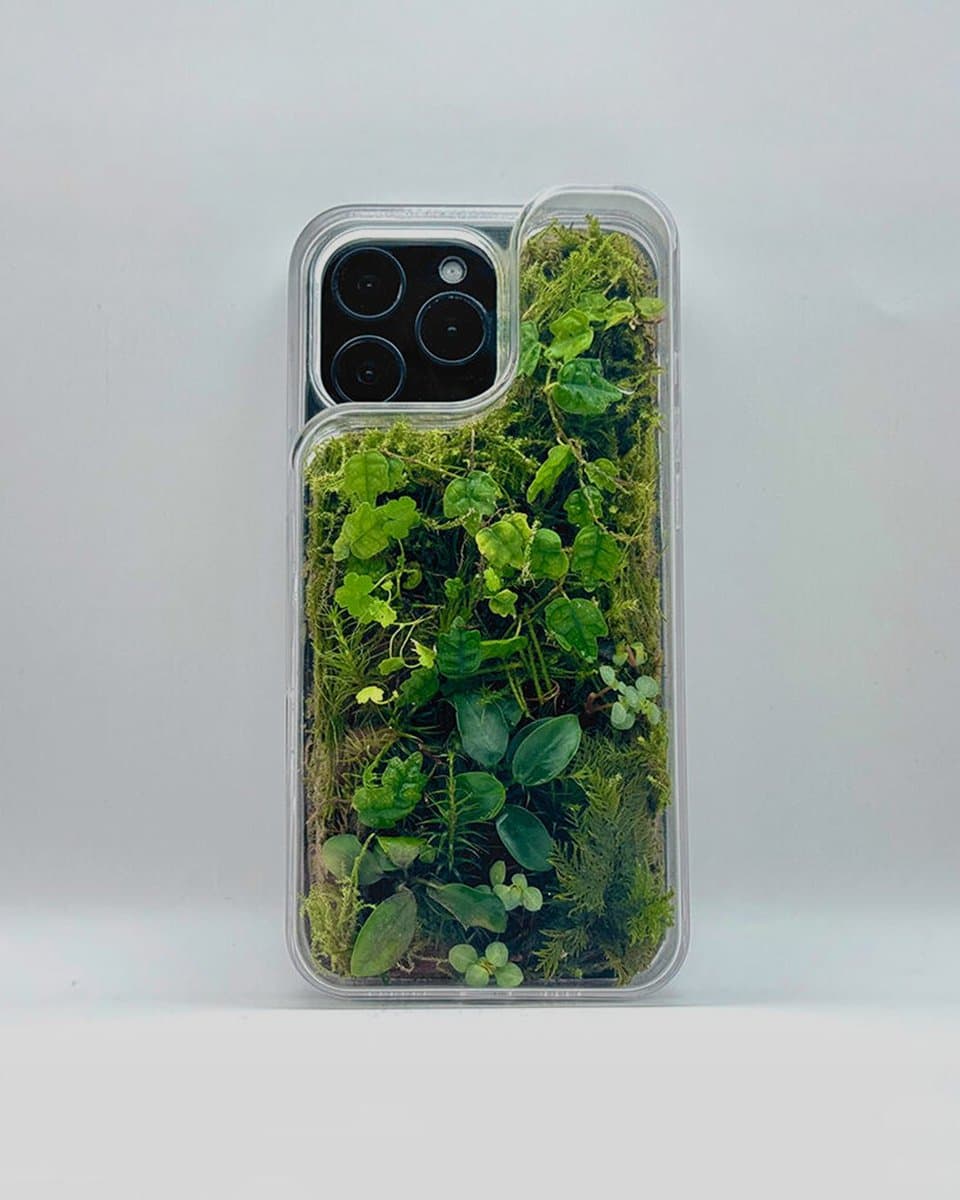
A transparent phone case encases a miniature terrarium with vibrant green moss, soil, and small plants, designed by…

Moss Terrarium Phone Case: Self-Sustaining, 3mm Thick

UK designer Daniel Idle created a 3mm phone case with a living terrarium. Self-sustaining moisture cycle eliminates watering.

·1d ago·3 min read··11 views·AI-Generated·Report error
Share:
What is the moss terrarium phone case by Daniel Idle?

UK designer Daniel Idle created a phone case with a living terrarium—moss, soil, and plants sealed in clear resin, 3mm thick, self-sustaining via its own moisture cycle. No watering or maintenance required.

TL;DR

Designer Daniel Idle built terrarium phone case · Moss, soil, plants sealed in clear resin · Self-sustaining moisture cycle, no watering needed

Daniel Idle sealed a living terrarium into a 3mm-thick phone case. The UK designer's creation sustains moss, soil, and plants via internal moisture recycling.

Key facts

  • Daniel Idle is a UK-based designer
  • Case is 3mm thick, made of clear resin
  • Self-sustaining moisture cycle, no watering needed
  • No pricing or release date disclosed
  • Prototype shown on social media only

UK designer Daniel Idle built a living terrarium into a phone case — moss, soil, and plants sealed in clear resin, self-sustaining off its own moisture cycle. According to @hypebeast, the case is designed to require no watering or maintenance, relying on a sealed moisture cycle and light for photosynthesis.

The case is constructed from clear resin, 3mm thick according to Idle's social media posts, encasing a thin layer of soil and live moss. The designer claims the ecosystem is self-contained: moisture evaporates from the soil, condenses on the resin interior, and drips back down, mimicking a natural terrarium cycle. Light passes through the clear shell, enabling the moss to photosynthesize and produce oxygen.

This is not the first attempt at integrating living matter into consumer electronics. In 2023, researchers at MIT published a paper on 'bio-integrated' phone cases using algae, but those required periodic nutrient injection. Idle's design appears to eliminate that need, though no independent testing of the moisture cycle's longevity has been conducted.

The case fits standard smartphone models, but Idle has not disclosed pricing, production volume, or a release date. The prototype shown on social media is a single unit; no manufacturing partnerships have been announced.

Why this matters

The terrarium case pushes the boundary of 'biophilic design' in consumer hardware — embedding living ecosystems into everyday objects. If scalable, it could reduce e-waste by extending phone case lifespan through owner attachment, or raise questions about biosecurity (mold, spores) in sealed electronics enclosures. The key unknown is durability: how long the moss survives without intervention, and whether the resin yellows or cracks over time.

Key Takeaways

  • UK designer Daniel Idle created a 3mm phone case with a living terrarium.
  • Self-sustaining moisture cycle eliminates watering.

What to watch

this transparent phone case grows moss and plants inside

Watch for Idle to announce a Kickstarter or production partnership. If the case reaches market, independent durability tests—specifically moss survival time beyond 6 months and resin clarity degradation—will determine if this is a novelty or a viable product category.


Sources cited in this article

  1. Idle's
Source: gentic.news · · author= · citation.json

AI-assisted reporting. Generated by gentic.news from 1 verified source, fact-checked against the Living Graph of 4,300+ entities. Edited by Ala SMITH.

Following this story?

Get a weekly digest with AI predictions, trends, and analysis — free.

AI Analysis

The terrarium phone case is a novelty, but it taps into a growing consumer appetite for 'living' tech accessories. The design's reliance on a sealed moisture cycle is reminiscent of self-sustaining terrariums popular in home decor, but translating that to a 3mm phone case introduces thermal and structural challenges. The resin shell, while clear, may trap heat from the phone's processor, potentially killing the moss. Idle has not shown thermal testing data. The lack of pricing or production details suggests this remains a concept piece, not a product. For comparison, the 2023 MIT algae case required weekly nutrient top-ups—Idle's claim of zero maintenance is ambitious but unverified. If it works, it could inspire a wave of bio-integrated accessories; if it fails, it joins a graveyard of crowdfunded green gadgets that couldn't survive real-world use.

Mentioned in this article

Enjoyed this article?
Share:

AI Toolslive

Five one-click lenses on this article. Cached for 24h.

Pick a tool above to generate an instant lens on this article.

Related Articles

From the lab

The framework underneath this story

Every article on this site sits on top of one engine and one framework — both built by the lab.

More in Products & Launches

View all