Key Takeaways
- Movable Ink launched Programmatic CRM with AI agents on June 18, 2026, automating personalized content creation and customer engagement for brands.
- The platform leverages real-time data to generate tailored content across email, web, and mobile, reducing manual effort while scaling personalization.
What Happened

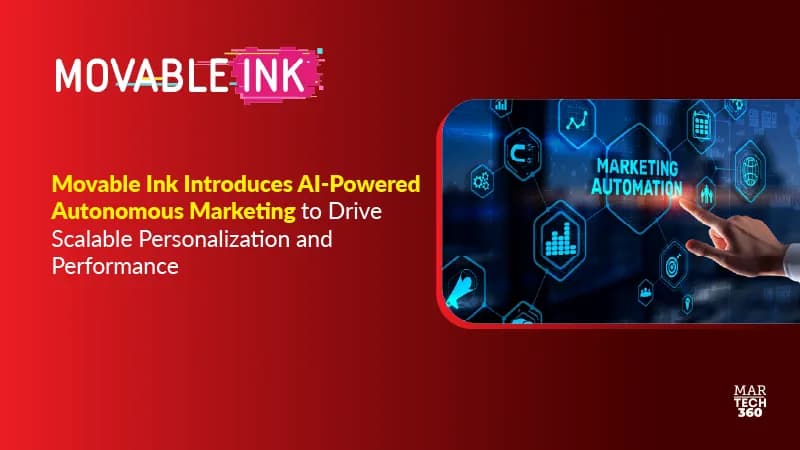
On June 18, 2026, Movable Ink announced the launch of Programmatic CRM, a new platform that uses AI agents to automate personalized content creation and customer engagement. The solution is designed to help brands deliver individualized experiences across email, web, and mobile channels without requiring manual content production for each customer segment.
According to the announcement, the AI agents within Programmatic CRM analyze real-time customer data — including browsing behavior, purchase history, and engagement patterns — to dynamically generate and deploy content. This moves beyond traditional rule-based personalization by enabling truly adaptive, one-to-one messaging at scale.
Technical Details
Programmatic CRM is built on Movable Ink's existing AI infrastructure, which has been powering visual content generation and personalization for major retail and luxury brands. The new AI agents represent an evolution from static templates to autonomous content creation.
Key capabilities include:
- Real-time content generation: AI agents create unique images, copy, and offers based on individual customer profiles at the moment of engagement.
- Multi-channel orchestration: The agents coordinate messaging across email, web, and mobile, ensuring consistency while adapting to channel-specific formats.
- Integration with existing stacks: The platform connects with CRM systems, data platforms, and marketing automation tools, allowing brands to layer AI agents onto their current infrastructure.
- Continuous learning: The agents improve over time by analyzing performance data and adjusting content strategies automatically.
Retail & Luxury Implications
For retail and luxury brands, Movable Ink's Programmatic CRM addresses a persistent challenge: delivering personalized experiences at scale without overwhelming creative teams. In luxury especially, where brand voice and visual consistency are paramount, the ability to generate on-brand, individualized content automatically is a significant advancement.
Use Cases
- Email marketing: Generate unique product recommendations and lifestyle imagery for each subscriber based on their browsing and purchase history.
- Web personalization: Dynamically update hero banners, product grids, and landing pages to reflect individual customer preferences in real time.
- Mobile push and in-app: Deliver personalized offers and content that adapt to location, time of day, and recent behavior.
- Loyalty programs: Create tailored rewards communications that reflect each customer's tier, preferences, and engagement history.
Business Impact
While Movable Ink did not provide specific metrics in the announcement, the company's existing personalization solutions have been shown to increase email revenue by 20-30% for clients. The AI agent approach promises to reduce content production time by automating tasks that previously required human designers and copywriters.
For luxury brands, the key benefit may be in maintaining exclusivity while scaling — AI agents can ensure that even high-volume communications feel bespoke, using customer data to craft messages that reference past purchases, preferences, and brand interactions.
Implementation Approach

Deploying Programmatic CRM requires:
- Data integration: Connecting the platform to existing customer data sources (CDPs, CRMs, e-commerce platforms).
- Brand guidelines: Configuring AI agents with brand voice, visual identity, and content rules to ensure output aligns with brand standards.
- Channel setup: Defining which channels (email, web, mobile) will use AI-generated content and how often.
- Testing and optimization: Running A/B tests to compare AI-generated content against existing approaches, then refining agent parameters.
Governance & Risk Assessment
- Privacy: Movable Ink states that the platform processes customer data in compliance with GDPR, CCPA, and other regulations. Brands must ensure their data-sharing agreements cover AI-driven content generation.
- Brand safety: Luxury brands should implement strict content guardrails to prevent AI agents from generating off-brand or inappropriate content. Movable Ink's platform allows for brand-specific rules and approval workflows.
- Maturity level: This is a production-ready solution — Movable Ink has been in the personalization space for over a decade, and the AI agent capabilities are built on proven infrastructure.
gentic.news Analysis
Movable Ink's move to embed AI agents into CRM is a logical evolution for the company, which has long been a leader in visual content personalization for retail. The shift from template-based to agent-driven content creation mirrors broader industry trends toward autonomous AI systems that can plan, execute, and optimize marketing campaigns with minimal human intervention.
For luxury brands, the critical question is whether AI agents can truly replicate the nuance and emotional resonance of human-crafted content. Movable Ink's approach — using real-time customer data to inform content generation — suggests that the answer may be yes, at least for personalized offers and product recommendations. However, high-touch brand storytelling and campaign-level creative direction will likely remain human-led for the foreseeable future.
The competitive landscape includes solutions from Salesforce (Einstein AI), Adobe (Sensei GenAI), and newer entrants like Jasper and Copy.ai. Movable Ink's differentiation lies in its deep focus on visual content generation and its established relationships with retail and luxury clients.
Bottom line: Programmatic CRM is a significant step toward truly autonomous marketing personalization. Retail and luxury brands should evaluate it as a way to scale one-to-one customer engagement while freeing creative teams for higher-value work.
Source: news.google.com