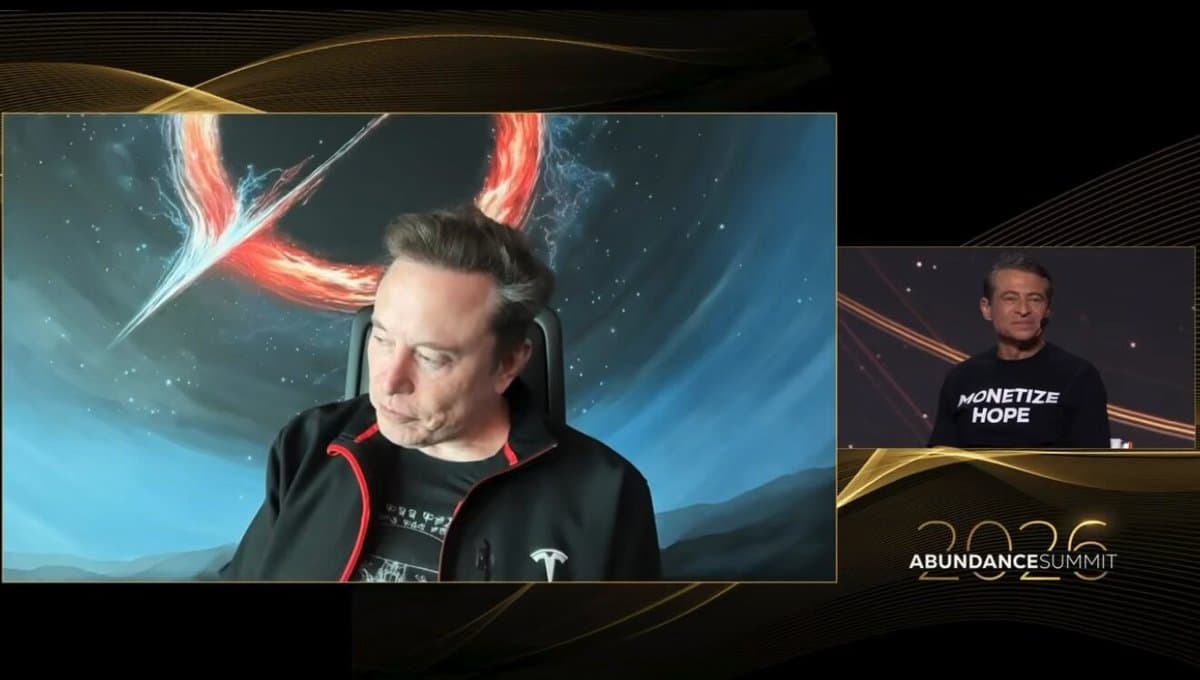
In a recent interview highlighted by AI commentator Rohan Paul, Elon Musk has made another bold prediction about the future of technology and human welfare. According to Musk, the development of humanoid robots with "high dexterity" will fundamentally transform global healthcare by providing every person on Earth with medical care that surpasses what the wealthiest individuals or sovereign nations can currently access. This vision suggests a future where advanced robotic systems outperform current human surgical standards, potentially addressing one of humanity's most persistent inequalities.
The Vision: Universal Access to Superior Care
Musk's statement builds on his longstanding interest in both artificial intelligence and human augmentation. While he didn't provide specific technical details in the quoted excerpt, the core promise is revolutionary: using robotics to eliminate the disparity between elite medical care available to the ultra-wealthy and the standard care accessible to the general population. The key technological requirement he identifies is "high dexterity"—the fine motor control and precision necessary for complex surgical procedures and delicate medical interventions.
This isn't Musk's first foray into medical technology discussions. His Neuralink venture aims to merge human brains with computers, while his broader interest in AI safety and capability suggests he views advanced robotics as an inevitable development. The medical application represents perhaps the most immediately relatable benefit to the general public of humanoid robot development.
The Technological Pathway
While Musk didn't outline specific timelines, his prediction implies significant progress in several converging fields:
Robotic Dexterity: Current surgical robots like the da Vinci system are teleoperated by human surgeons. Musk's vision suggests fully autonomous systems capable of performing procedures with precision exceeding human hands. This would require breakthroughs in tactile sensors, adaptive grip, and micro-movements.
AI Diagnostic Integration: For robots to provide "superior" care, they would need to integrate with advanced diagnostic AI capable of interpreting medical imaging, lab results, and patient history with superhuman accuracy.
Scalability Challenge: The promise of serving "every person on Earth" implies manufacturing and deployment at unprecedented scale, potentially leveraging Tesla's manufacturing expertise and Optimus robot development.
Implications for Global Health Equity
The most profound implication of Musk's statement lies in its potential to address healthcare inequality. Currently, access to top-tier surgical expertise is limited by geography, economics, and the finite availability of highly trained specialists. Robotic systems could theoretically be deployed anywhere with adequate infrastructure, bringing world-class procedural care to remote villages and urban slums alike.
This could dramatically impact:
- Maternal and neonatal care in developing regions
- Emergency trauma surgery in conflict zones
- Management of non-communicable diseases requiring surgical intervention
- Elderly care in aging societies with physician shortages
Challenges and Considerations
Realizing this vision faces significant hurdles beyond pure technical development:
Regulatory Pathways: Medical devices undergo rigorous testing and approval processes. Autonomous surgical robots would represent an entirely new category requiring novel regulatory frameworks.
Ethical Accountability: Who bears responsibility when an autonomous robot performs surgery—the manufacturer, the programmer, the deploying institution?
Human-Robot Interaction: Even the most precise surgery requires bedside manner, empathy, and nuanced decision-making that may prove challenging to automate fully.
Infrastructure Dependencies: Advanced robotic systems require stable power, maintenance networks, and digital connectivity that many regions currently lack.
Broader Context of Humanoid Robotics
Musk's comments come amid accelerating development in humanoid robots. His own Optimus project at Tesla aims to create general-purpose humanoid robots for manufacturing and eventually domestic tasks. Other companies like Boston Dynamics, Figure AI, and Sanctuary AI are making rapid advances in bipedal mobility and manipulation.
The medical application represents a particularly demanding use case that could drive innovation in precision, reliability, and safety systems. Success in medical robotics could create spillover benefits for industrial, domestic, and exploratory applications.
The Competitive Landscape
While Musk's vision is characteristically ambitious, he's not alone in pursuing medical robotics:
- Intuitive Surgical continues to dominate the teleoperated surgical robot market
- Johnson & Johnson, Medtronic, and other medical giants are investing heavily in robotic assistance
- Startups like Vicarious Surgical and CMR Surgical are developing next-generation systems
- Research institutions worldwide are working on autonomous surgical techniques
What distinguishes Musk's approach is the explicit link to humanoid form factors and the scale of ambition—not just improving existing surgical methods, but creating systems capable of delivering care beyond current human capabilities to the entire global population.
Looking Forward
If realized, Musk's prediction would represent one of the most significant applications of AI and robotics in human history. The democratization of elite medical care through technology could save millions of lives annually and fundamentally alter our relationship with health, aging, and mortality.
However, between today's teleoperated surgical systems and tomorrow's autonomous humanoid surgeons lies a vast terrain of technical innovation, clinical validation, and societal adaptation. The coming years will reveal whether this vision represents inevitable technological progress or another of Musk's characteristically optimistic projections.
Source: Interview excerpt shared by @rohanpaul_ai on X/Twitter, referencing Elon Musk's comments on humanoid robots in medical applications.