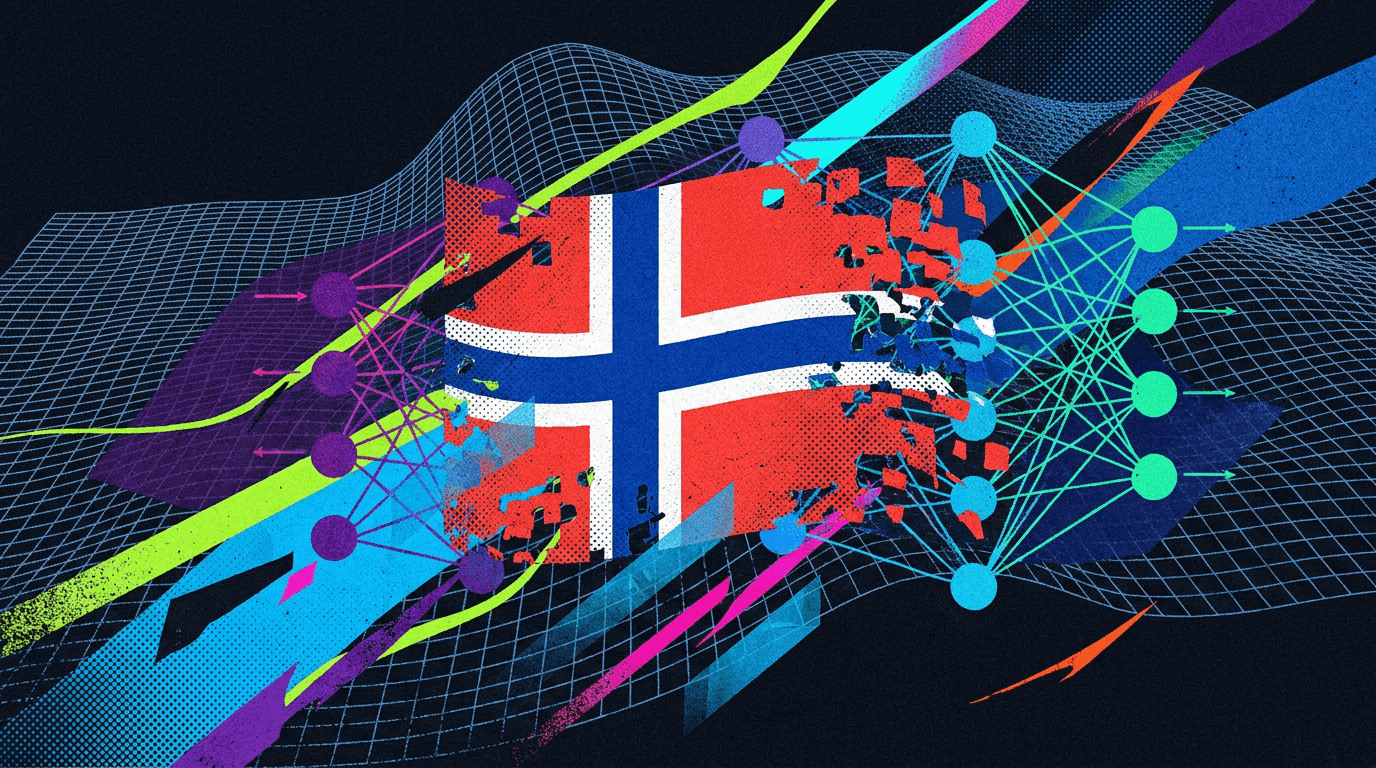
Norway is banning generative AI tools from grades 1 through 7 starting late August 2026, Prime Minister Jonas Gahr Stoere announced on June 19 — making the country one of the first in Europe to impose an outright prohibition on AI assistants for primary-age children, backed by hard data on what a decade of digital-first schooling has done to their test scores.
What the numbers say
Stoere's reference to a 'decline in learning outcomes since around 2015' is not rhetorical. OECD PISA data tells an uncomfortable story: Norway recorded its lowest-ever scores in mathematics, reading, and science in the 2022 assessment cycle. Math performance between 2015 and 2018 showed one of the steepest drops among all participating countries. By 2022, nearly a third of Norwegian students were performing at the lowest PISA level in mathematics, and 27-28 percent were at the floor in reading and science. Norway finished behind every other Nordic country except Iceland.
The government blames smartphones, algorithmic content feeds, and screen-heavy classrooms for compounding an underlying structural problem. 'The most important thing in school is that our children learn to read, write, and do mathematics,' Stoere said. 'Uncritical use of AI causes students to skip important learning steps.'
What changes in August
The new rules establish a three-tier system by age:

- Grades 1-7 (ages 6-13): generative AI tools banned outright
- Lower secondary (ages 14-16): AI permitted only under direct teacher supervision
- Upper secondary (ages 17-19): students should 'learn to use AI appropriately' for future study and work
Alongside the AI rules, the government will introduce legislation requiring municipalities to fund physical teaching materials — effectively mandating books back into classrooms after two decades of tablet-first procurement. Stoere acknowledged that previous governments 'gave digital media too much weight.'
The smartphone precedent matters
Norway is not experimenting blind. In 2024 the government banned smartphones from school premises entirely, and the Norwegian Institute of Public Health subsequently documented measurable results: bullying rates fell across the board and grade point averages began to climb. That evidence base gives the AI ban political credibility that similar proposals in other countries lack.
The government has also signalled a social media ban for children under 16, following Australia's lead.
A world splitting in two directions
Norway's move sharpens a genuine policy divide opening up between countries.
The United Arab Emirates has taken the opposite stance, making AI a mandatory subject from kindergarten through grade 12 starting in the 2025-26 school year, with more than 1,000 specially trained teachers and a seven-domain curriculum covering AI concepts, data literacy, and ethics. The UAE frames the investment as inseparable from its National AI Strategy 2031 and projected AED 335 billion in AI-driven economic growth.
Germany's education ministers have called bans 'unrealistic and untenable,' while committing USD 6 billion through the DigitalPakt Schule to school digitisation infrastructure. Estonia launched an 'AI Leap' initiative in September 2025 giving 20,000 students and 3,000 teachers structured access to AI tools.
In the United States, the Senate Judiciary Committee has advanced the GUARD Act, which would require AI companies to implement age-verification — a softer instrument than an outright ban. UC Berkeley Law School separately announced it will ban AI for nearly all graded assignments from summer 2026.
Japan issued guidelines in 2023 classifying AI-generated schoolwork as cheating for students under 13, but stopped short of a legislative ban.
The underlying question
Norway's intervention is significant not because AI bans in schools are new, but because it is the first country to tie one explicitly to a longitudinal decline in standardised test results and pair it with a reversal of its own prior digital policy. The causal chain Stoere is drawing — screens introduced, scores fell, screens restricted, scores recovered — is politically powerful even if researchers continue to debate how much of Norway's PISA drop is attributable to devices versus curriculum, teacher training, or pandemic disruption.
The honest read is that Norway is running a natural experiment. Whether primary-school PISA scores recover by the 2027 assessment cycle will determine whether other European governments treat this as a template or an outlier.
What to watch: The formal legislation mandating physical teaching materials is expected in parliament later this year. Track Norway's 2027 PISA preliminary results and whether Sweden or Denmark — both facing similar score declines — adopt comparable AI restrictions before then.
Source: the_decoder