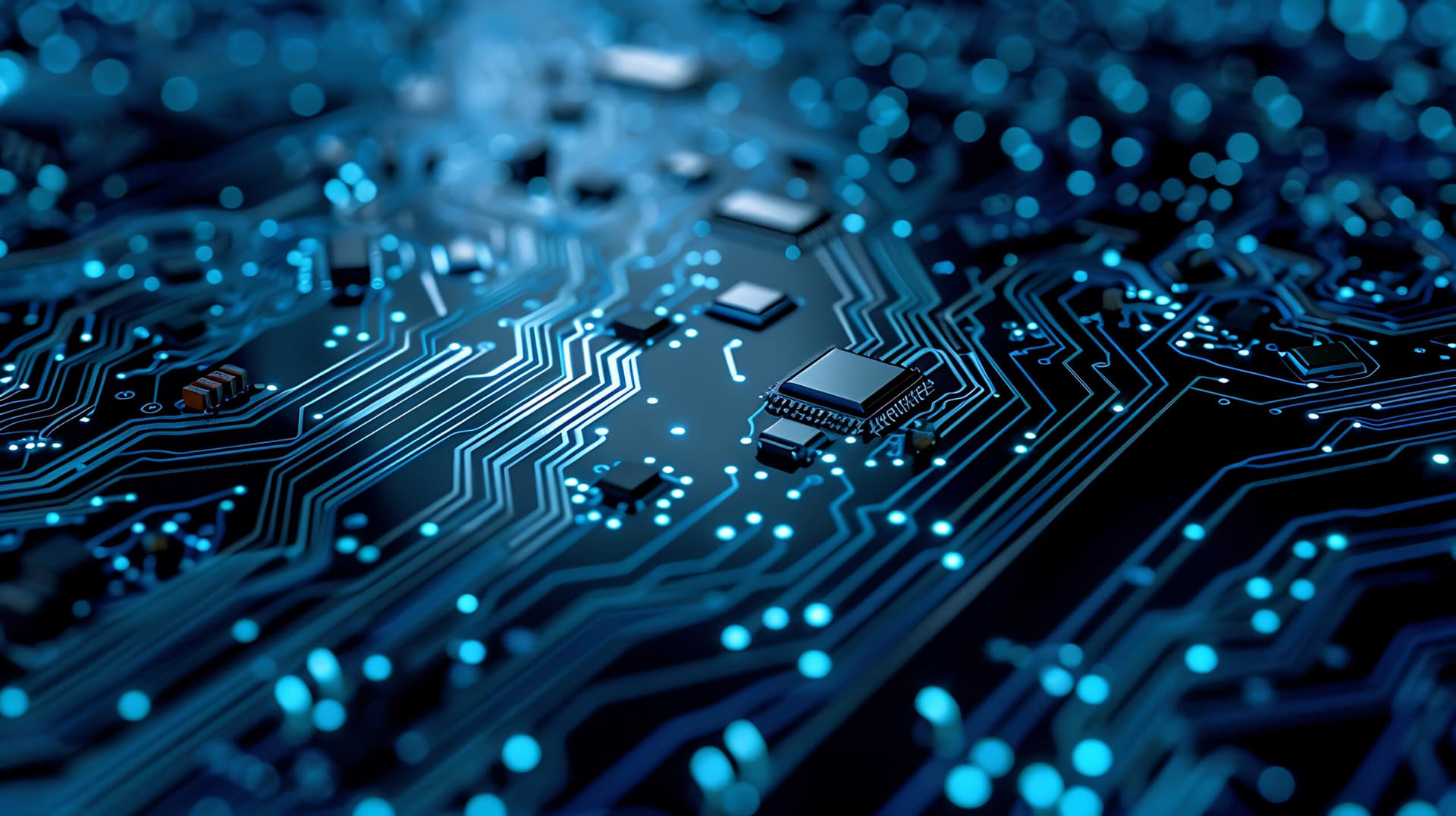
National University of Singapore researchers published CIMERA, a reconfigurable-precision LLM inference accelerator that integrates compute-in-interconnect and memory to mitigate the memory wall, per arXiv:2607.13649 (July 2026).
Key facts
- CIMERA integrates compute-in-interconnect and memory
- Supports reconfigurable precision for LLM inference
- Published on arXiv:2607.13649 in July 2026
- Authors: Chong, Wang, Zhang, Fong (NUS)
- Targets the memory wall bottleneck in LLMs
The memory wall has long been the silent tax on LLM inference—data movement dominates energy and latency. NUS researchers propose a structural answer: CIMERA, a compute-in-interconnect and memory architecture that embeds arithmetic units directly into the interconnect fabric and memory arrays, rather than shuttling activations and weights between separate compute and memory dies.
The paper, authored by Chong, Yue Jiet, Yimin Wang, Wei Zhang, and Xuanyao Fong, according to the source, describes an accelerator that supports reconfigurable precision—likely INT4, INT8, and FP16—allowing the hardware to match numerical precision to the layer's sensitivity. This is not a new idea in isolation: prior work from MIT and others has explored analog compute-in-memory for transformers. But CIMERA's novelty is the co-integration of compute in both the interconnect and the memory array, which could reduce data movement at two levels: the memory-to-logic path and the core-to-core communication path.
The abstract states the goal is to "mitigate the memory wall and enable precision-aware execution." The paper does not disclose specific benchmark results (SWE-Bench, MMLU, or throughput per watt) in the public summary, so the practical gains remain unvalidated. Without measured latency or energy numbers versus a baseline like NVIDIA H100 or a prior compute-in-memory ASIC, CIMERA is an architecture proposal rather than a demonstrated system.
What matters: the trend. As LLMs scale to hundreds of billions of parameters, the memory wall gets worse, not better. CIMERA joins a growing class of near-memory and in-memory accelerators from academic groups and startups (e.g., d-Matrix, Mythic) that bet on rearchitecting the memory hierarchy rather than shrinking transistors. The reconfigurable precision angle is also timely: the industry is moving toward mixed-precision inference (FP8 for attention, INT4 for FFN layers), and hardware that dynamically switches without a pipeline stall would be a real advantage.
What to watch

Look for the full paper's benchmark results—specifically latency and energy per token versus a baseline like NVIDIA H100 or a prior compute-in-memory design. Also watch for NUS spinout activity or licensing deals with inference chip startups.
Source: semiengineering.com