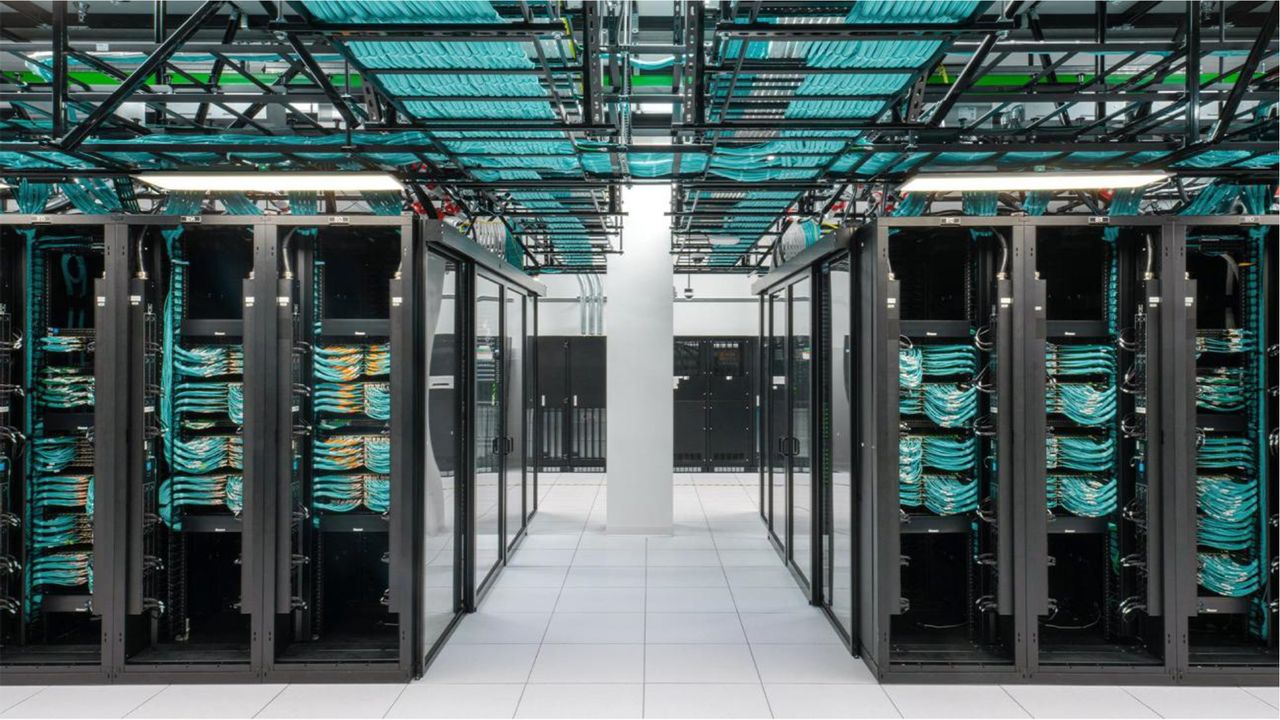
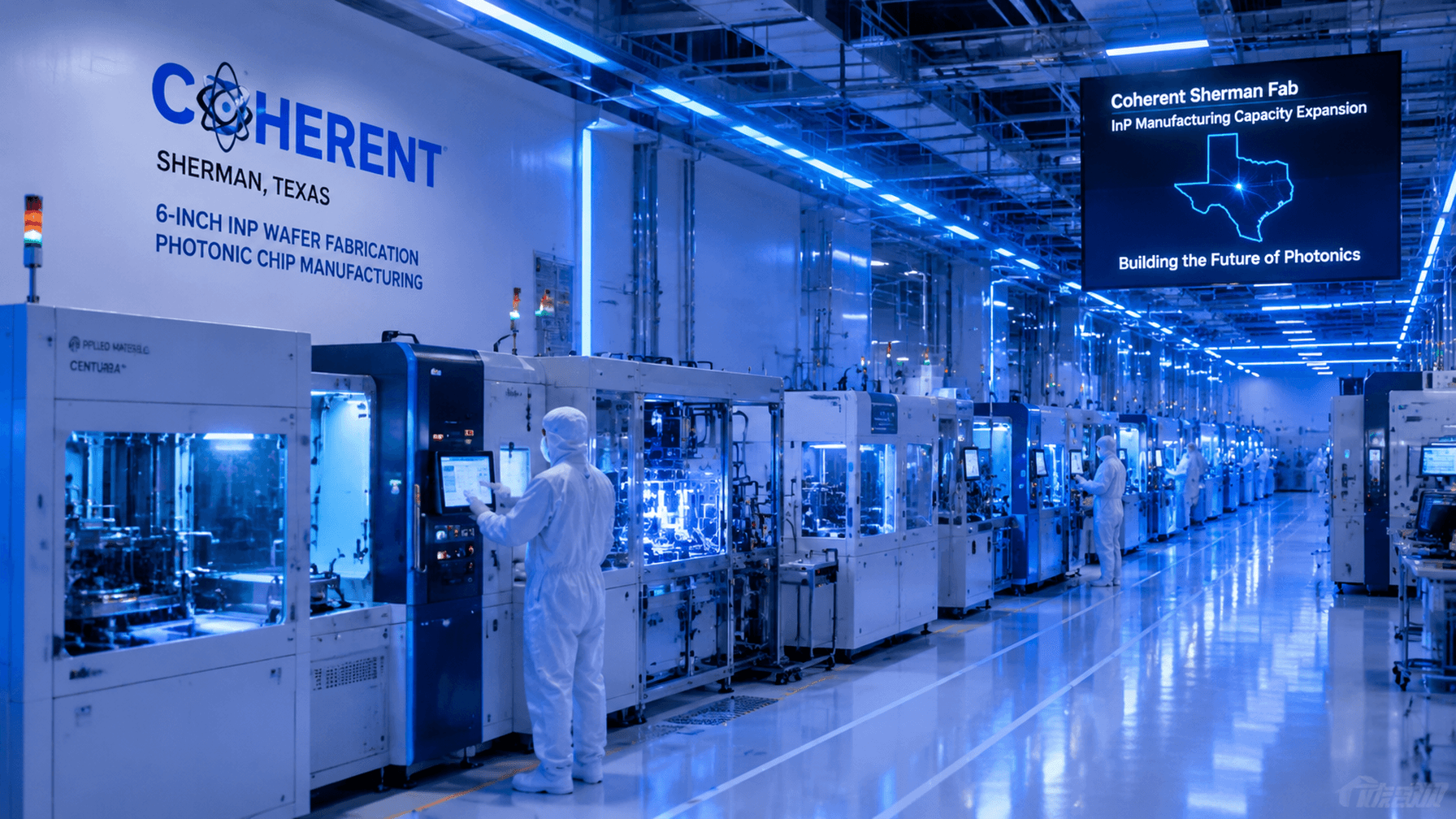
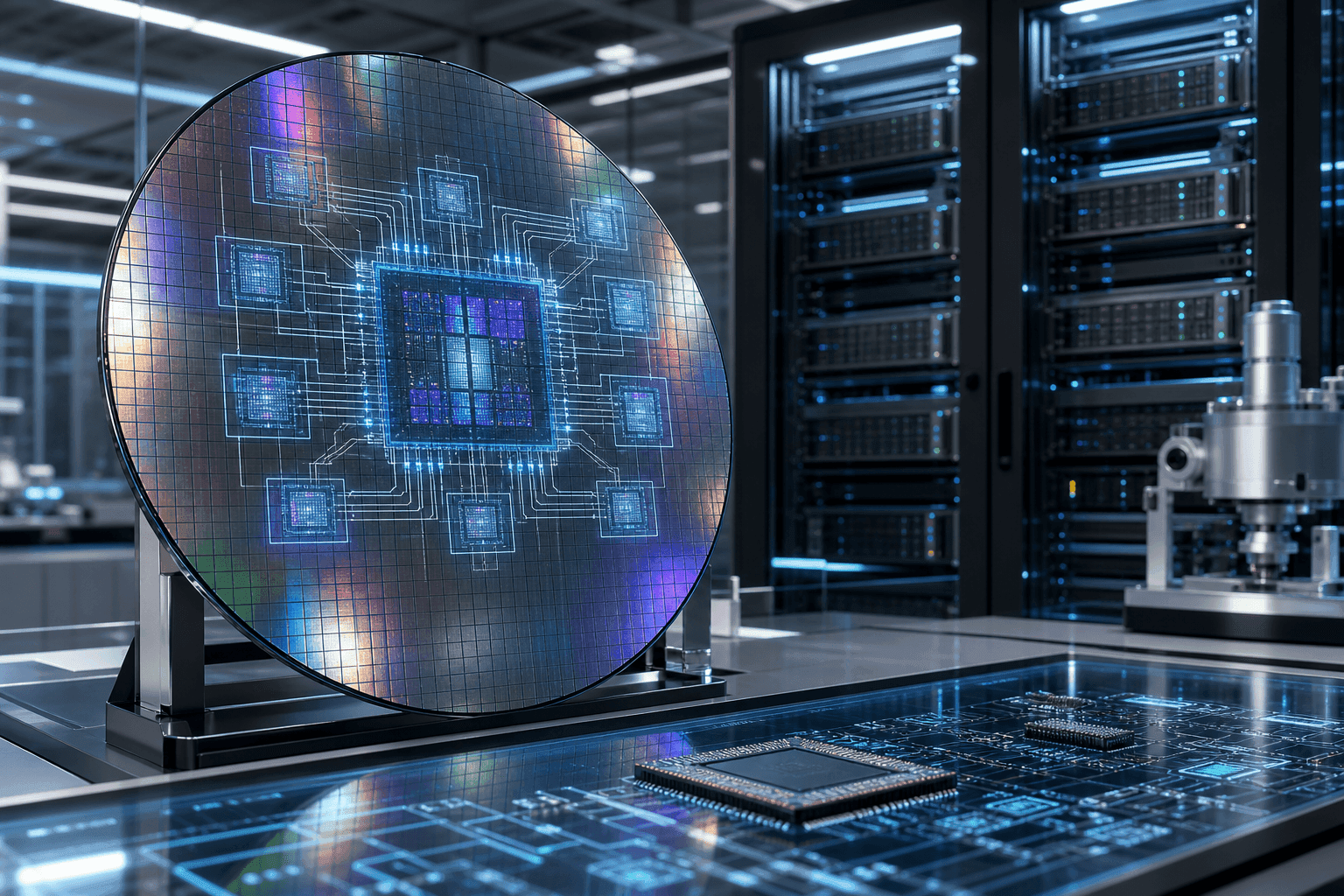
In a strategic move that underscores the physical limitations of current AI infrastructure, Nvidia announced on Monday that it's investing $2 billion each into photonics companies Lumentum and Coherent. This $4 billion total investment targets the development of optical technologies—including optical transceivers, circuit switches, and lasers—specifically designed to move data at unprecedented speeds across AI data centers.
The Photonics Imperative for AI Scaling
As AI models grow from billions to trillions of parameters, the traditional copper-based interconnects that have powered computing for decades are becoming a critical bottleneck. Photonics—the science of generating, detecting, and manipulating light particles (photons)—offers a fundamentally different approach to data transmission that could revolutionize how AI systems communicate internally.
Nvidia's investment comes at a pivotal moment. The company recently reported Q4 revenue up 73 percent to $68.1 billion, driven overwhelmingly by AI hardware demand. However, this explosive growth has exposed fundamental limitations in current infrastructure. Even Nvidia's most advanced Blackwell GPUs face constraints when moving massive datasets between processors, memory, and storage.
"Their tech could improve energy efficiency, data transfer speeds, and bandwidth in future AI data centers," notes the original reporting, highlighting the triple benefit Nvidia seeks. This follows Nvidia's 2020 acquisition of network hardware company Mellanox, which provided the foundation for NVLink technology but now requires photonic enhancement to reach its full potential.
Beyond Silicon: The Optical Revolution
Photonics represents a paradigm shift from electron-based to photon-based data transmission. Optical transceivers convert electrical signals to light and back again, allowing data to travel at near-light speeds with minimal energy loss over long distances. For AI data centers spanning football-field-sized facilities, this could mean:
- Radically reduced latency between GPU clusters
- Dramatically lower power consumption compared to electrical signaling
- Massively increased bandwidth to feed increasingly data-hungry AI models
- Greater physical distance between components without performance degradation
Lumentum specializes in optical communications and commercial lasers, while Coherent focuses on materials and components for photonics applications. Together, they represent complementary pieces of the photonics puzzle Nvidia needs to solve.
The AI-RAN Connection: A Broader Infrastructure Vision
This photonics investment aligns with Nvidia's broader infrastructure strategy, including its AI-RAN (Radio Access Network) initiatives announced ahead of Mobile World Congress. According to Nvidia's blog, "AI-RAN is moving from lab to field, showing that a software-defined approach is the only viable way to build future AI-native wireless networks."
The connection is significant: as AI moves from centralized data centers to edge networks, the need for high-speed, low-latency connections becomes even more critical. Photonics could enable the seamless integration of AI processing across cloud, edge, and end-user devices—creating what Nvidia describes as "AI-native wireless networks."
Competitive Landscape and Industry Implications
Nvidia's photonics push comes amid increasing competition in the AI hardware space. While companies like AMD and Intel chase Nvidia's GPU dominance, and cloud providers develop custom AI chips, Nvidia is addressing a more fundamental constraint: the physical limitations of data movement.
This investment suggests Nvidia recognizes that future AI leadership won't be determined solely by processing power, but by holistic system performance—how efficiently data flows through increasingly complex AI architectures. By controlling more of the data pathway, from processing to transmission, Nvidia strengthens its position as an end-to-end AI infrastructure provider.
The timing is particularly notable given recent challenges to US export controls affecting Nvidia's business in China. By investing in photonics—a technology with both commercial and potential national security implications—Nvidia may be diversifying its technological portfolio while addressing a critical bottleneck affecting all AI development globally.
Energy Efficiency: The Unsung Benefit
Perhaps the most significant long-term implication of photonics adoption is energy efficiency. Current estimates suggest data centers consume about 1-1.5% of global electricity, with AI workloads driving rapid increases. Photonic interconnects could reduce this consumption substantially by:
- Eliminating heat generation from electrical resistance
- Reducing need for active cooling systems
- Enabling more efficient data center layouts with greater component separation
As AI scales toward artificial general intelligence (AGI), energy constraints may become the primary limiting factor. Nvidia's photonics investment positions the company to address this challenge proactively.
Looking Ahead: The Photonic-AI Convergence
Nvidia's $4 billion bet represents more than just another corporate investment—it signals a fundamental shift in how we think about computing infrastructure for the AI era. Just as the transition from vacuum tubes to transistors enabled the computing revolution of the 20th century, the transition from electrical to photonic signaling may enable the AI revolution of the 21st.
The success of this investment will be measured not just in financial returns, but in whether it enables the next leap in AI capabilities. Can photonics help overcome the current plateau in AI scaling? Can it make massive AI models economically and environmentally sustainable? These are the questions Nvidia is betting $4 billion to answer affirmatively.
As Jensen Huang, Nvidia's CEO, has repeatedly emphasized: "Accelerated computing is the only path forward." With this photonics investment, Nvidia is ensuring that acceleration extends beyond processing to encompass the entire data pathway—lighting the way toward next-generation AI infrastructure.