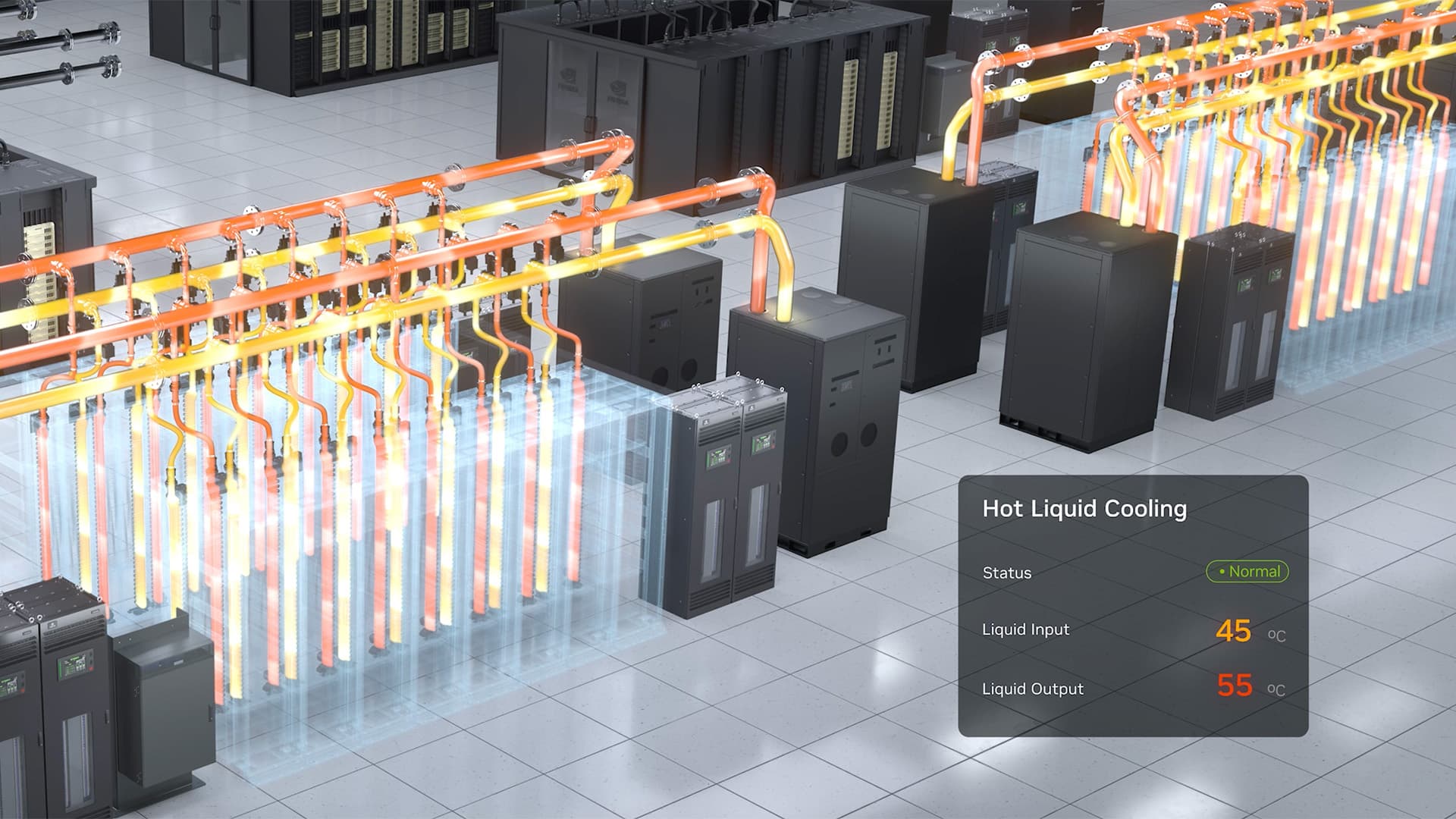
Nvidia's Rubin-generation servers run cooling liquid at 45°C, enabling 100% liquid cooling with zero fans. The higher temperature allows chiller-less operation, cutting facility water consumption from 2.6 million gallons per megawatt per year to near zero according to the NVIDIA blog post.
Key facts
- Coolant temperature: 45°C (113°F).
- Water consumption cut from 2.6M gal/MW/year to near zero.
- Cooling accounts for up to 40% of data center electricity.
- 50MW facility saves over $4M annually in cooling costs.
- Rubin is first 100% liquid-cooled generation with zero fans.
Hot tubs sit at about 38 to 40 degrees Celsius. Nvidia's newest AI servers run their cooling liquid even hotter — up to 45 degrees Celsius, or 113 degrees Fahrenheit. That higher temperature limit is precisely what makes them more energy efficient.
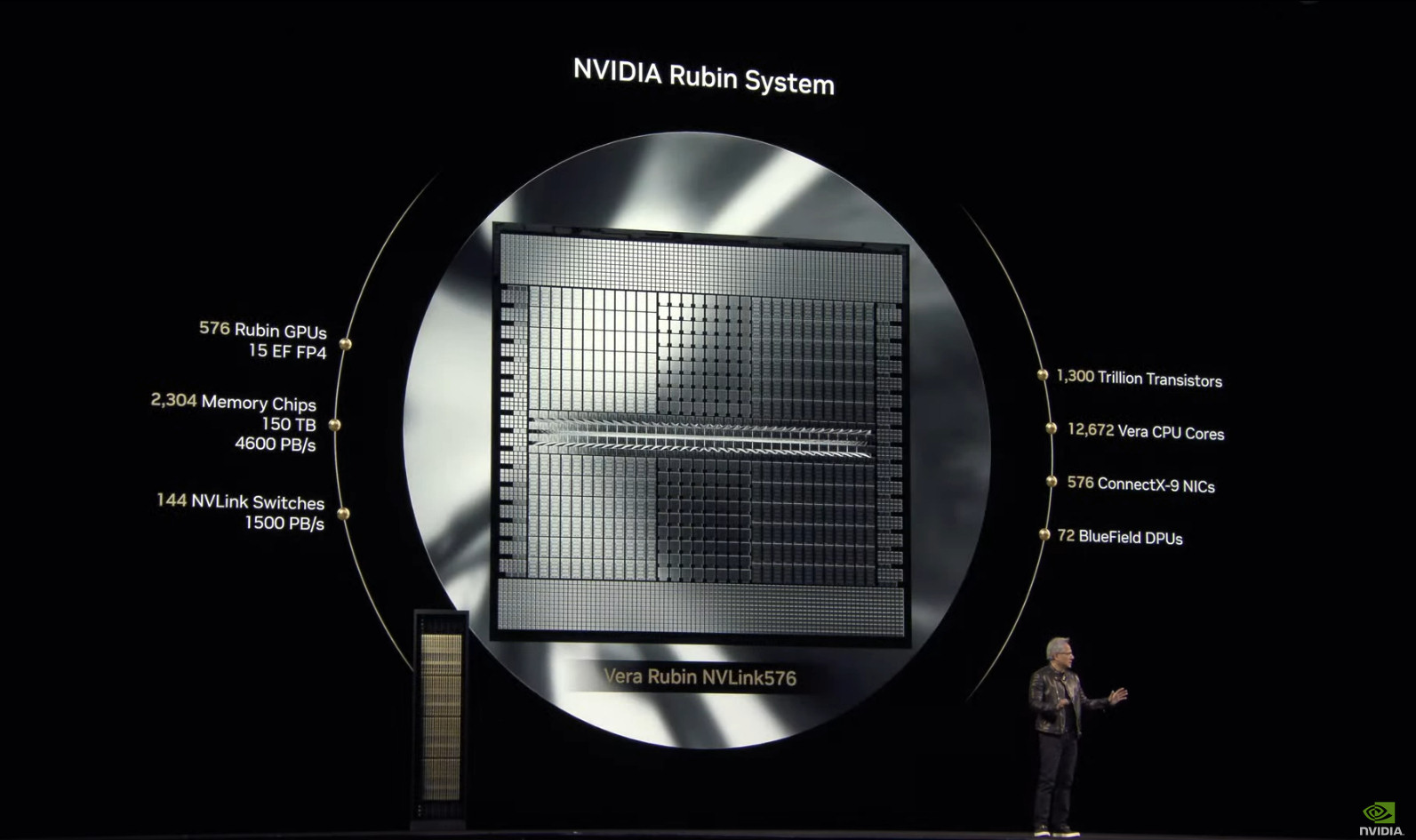
The Rubin generation of Nvidia AI infrastructure is the world's first to achieve 100% liquid cooling — every chip, every networking component, cooled entirely by liquid in a closed loop with no fans anywhere in the system. This liquid cooling methodology is outlined in the Nvidia DSX AI factory reference design, a guide that outlines best practices to design, build and operate the entire AI factory infrastructure stack.
The Efficiency Math
Cooling alone has historically accounted for up to 40% of a data center's electricity consumption. Industry estimates suggest that raising chiller plant temperatures by just one degree can cut cooling energy costs by about 4%. At scale, those savings add up quickly. A 50-megawatt hyperscale facility can save over $4 million annually in cooling-related energy and water costs by moving to liquid-cooled infrastructure.
In favorable climates, Nvidia's 45-degree liquid-cooling architecture can enable chiller-less operation with dry coolers, reducing facility cooling water consumption from roughly 2.6 million gallons per megawatt per year for conventional cooling-tower-based systems to near zero — up to a 100% reduction in water use.
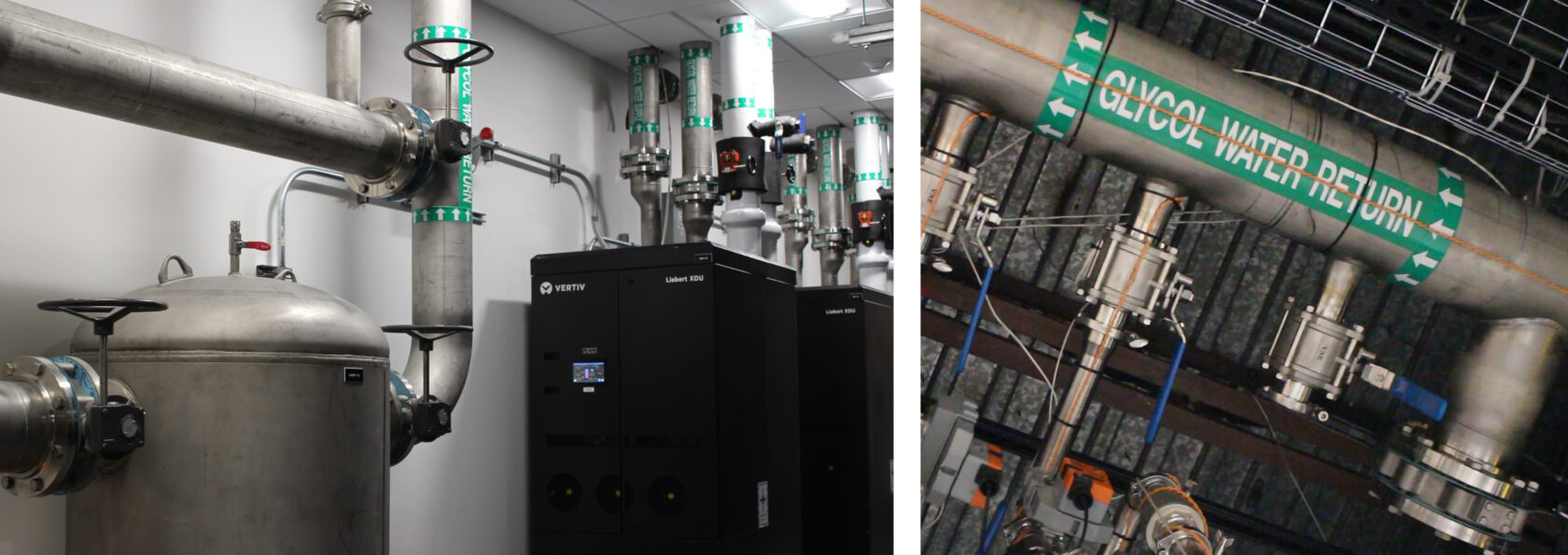
"The Nvidia DSX reference design for AI factories has zero water consumption — we have eliminated massive amounts of power usage and pretty much all water usage," said Ali Heydari, director of data center cooling and infrastructure at Nvidia. "With dry-cooler-based designs, it's a closed-loop system with no evaporative water cooling — outside of maybe 1% of the year when we might need chillers in some climates."
The reason: traditional air-cooled data centers depend on large volumes of cooled air to remove heat from IT equipment, often requiring energy-intensive cooling infrastructure during hot weather. With Nvidia's 45-degree liquid cooling, heat is captured directly at the chip and transported through liquid loops operating at much higher temperatures, allowing outdoor dry coolers to reject heat efficiently for much of the year while significantly reducing mechanical cooling requirements and facility water consumption.
The data center ambient temperature is flexible — warm summer air is fine — because nothing in the server depends on cool air. The liquid does all the work.
Unique Take: The Thermal Headroom Trade-Off
Nvidia's move to 45°C coolant is not just an incremental efficiency gain — it's a structural bet that future GPU generations will run hotter than today's air-cooled designs can manage. By committing to 100% liquid cooling with the Rubin generation, Nvidia is effectively signaling that air cooling is dead for hyperscale AI compute. This contrasts with competitors like Intel and AMD, whose chip designs still assume air-cooled data center compatibility. The 45°C limit also creates a thermal headroom buffer: as future GPUs push power densities higher, the liquid loop can absorb more heat before hitting the coolant temperature ceiling, delaying the need for more exotic cooling methods like immersion or two-phase.
What to watch
Watch for Nvidia's GTC 2027 disclosures on Rubin GPU power density and whether hyperscalers like AWS and Azure adopt the DSX reference design for their next-gen AI factories. Also track whether AMD's Instinct MI400 series matches the 45°C coolant threshold.
Source: blogs.nvidia.com