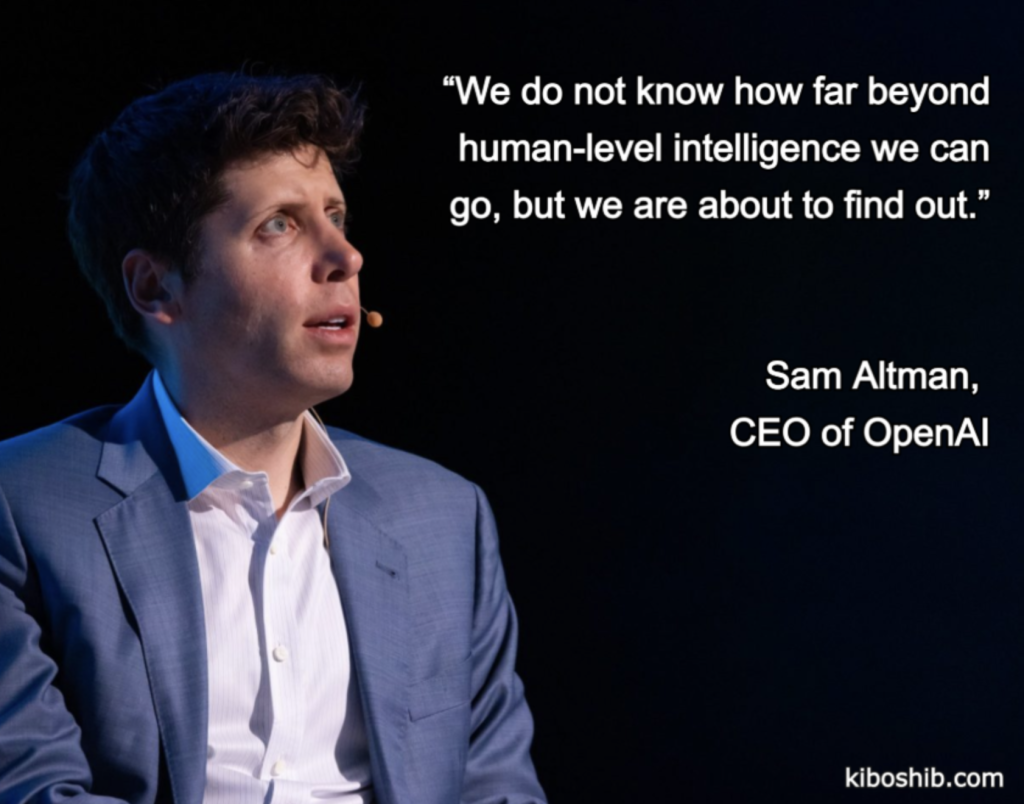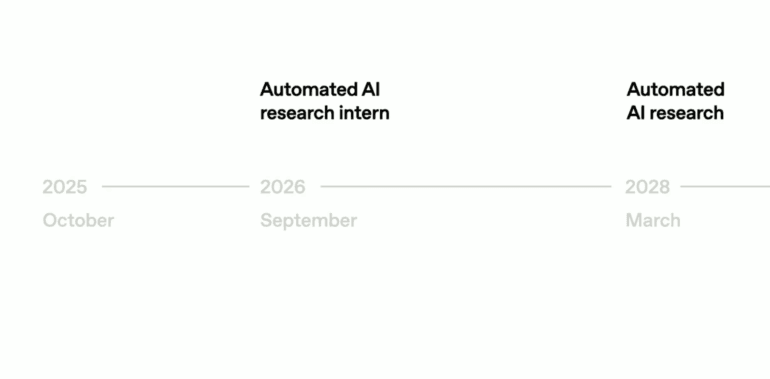
Sam Altman's new blog says by March 2028, a significant fraction of OpenAI's own research will be done by AI. The claim sets a concrete two-year timeline for autonomous AI-driven research.
Key facts
- March 2028: target date for AI to perform significant research.
- Sam Altman published the prediction in a new blog post.
- OpenAI's o3 model scored 79.8 on SWE-Bench in 2025.
- No specific metrics disclosed for measuring the milestone.
OpenAI CEO Sam Altman published a blog post outlining the company's future path, stating that by March 2028, a significant fraction of its own research will be done by AI. According to @rohanpaul_ai, the post marks a rare explicit prediction from Altman about AI's timeline for autonomous scientific work.
The claim is notable for its specificity—tying the milestone to a concrete date rather than vague language. It suggests OpenAI is betting on rapid progress in AI research capabilities, potentially through iterative self-improvement loops.
Context and Implications

Altman's prediction aligns with broader industry trends toward self-improving AI models. In 2025, OpenAI launched o3, a reasoning model that showed improved performance on benchmarks like SWE-Bench, scoring 79.8, up from 71.2. The company has also invested heavily in scaling compute infrastructure, including data center commitments.
If realized by 2028, this would represent a step change in AI autonomy, moving from tools that assist humans to systems that conduct original research independently. The timeline is aggressive but consistent with Altman's past statements about AI progress accelerating.
Skepticism and Unknowns

OpenAI did not disclose the specific metrics or benchmarks for measuring when a 'significant fraction' of research is AI-conducted. The company's blog post, as reported, did not detail how it would verify this milestone or what safeguards would be in place. Critics might argue that such predictions are aspirational rather than grounded in current capabilities.
Altman's blog also did not address potential compute costs or energy requirements for autonomous research AI. Given that training frontier models already costs hundreds of millions of dollars, the economics of this timeline remain unclear.
What to watch
Watch for OpenAI's next blog post or earnings call to define 'significant fraction' with quantitative metrics. Also monitor research output from OpenAI—if AI-authored papers appear in arXiv by 2027, the timeline may be accelerating.