Skip to content
gentic.news — AI News Intelligence Platform
Connecting to the Living Graph…

Listen to today's AI briefing

Daily podcast — 5 min, AI-narrated summary of top stories

Oregon Utility Hikes Data Center Bills 30%, Cuts Residential Rates 1.3%

Oregon Utility Hikes Data Center Bills 30%, Cuts Residential Rates 1.3%

Oregon's PGE hikes data center bills 30% under POWER Act while cutting residential rates 1.3%, targeting facilities over 20 MW.

·5d ago·3 min read··20 views·AI-Generated·Report error
Share:
How much did Oregon's utility hike data center electricity bills?

Oregon's Portland General Electric raised data center electricity bills 30% while cutting residential rates 1.3%, approved under the POWER Act targeting facilities over 20 MW.

TL;DR

Oregon approves 30% rate hike for data centers. · Residential rates cut 1.3% under POWER Act. · Facilities >20 MW must pay higher rates.

Oregon's Portland General Electric (PGE) raised data center bills 30% while cutting residential rates 1.3%. The rate change, approved under the state's POWER Act, targets facilities over 20 MW.

Key facts

  • 30% rate hike for Oregon data centers over 20 MW.
  • 1.3% residential rate cut — ~$1.50/month per household.
  • POWER Act signed in 2024, effective 2026.
  • $45M annual revenue from data center surcharge.
  • $12M of that goes to residential rate relief.

Oregon's Portland General Electric (PGE) received approval to hike data center electricity bills by 30% while cutting residential rates by 1.3%. The rate change, approved under the state's POWER Act, targets developments consuming more than 20 megawatts of power. According to @tomshardware

How the POWER Act Shifts Costs

The 30% increase applies to new and expanding data centers, not existing facilities already under contract. Residential customers will see a 1.3% reduction — roughly $1.50 per month for the average household. The POWER Act, signed in 2024, was designed to prevent residential ratepayers from subsidizing the grid costs of large industrial users. Oregon's Public Utility Commission approved the rate design after a year-long proceeding that pitted tech industry lobbyists against consumer advocates.

What This Means for Hyperscalers

Hyperscalers including Google, Amazon, and Microsoft operate data centers in Oregon, drawn by the state's relatively cheap hydropower and favorable tax policies. The 30% surcharge adds roughly $0.01–0.02 per kWh for new facilities, depending on load factor — enough to shift site-selection calculus for marginal projects. PGE's filing projects the rate change will generate an additional $45 million annually from data center customers, offsetting roughly $12 million in residential relief. The remaining $33 million goes toward grid upgrades, the utility said.

National Precedent?
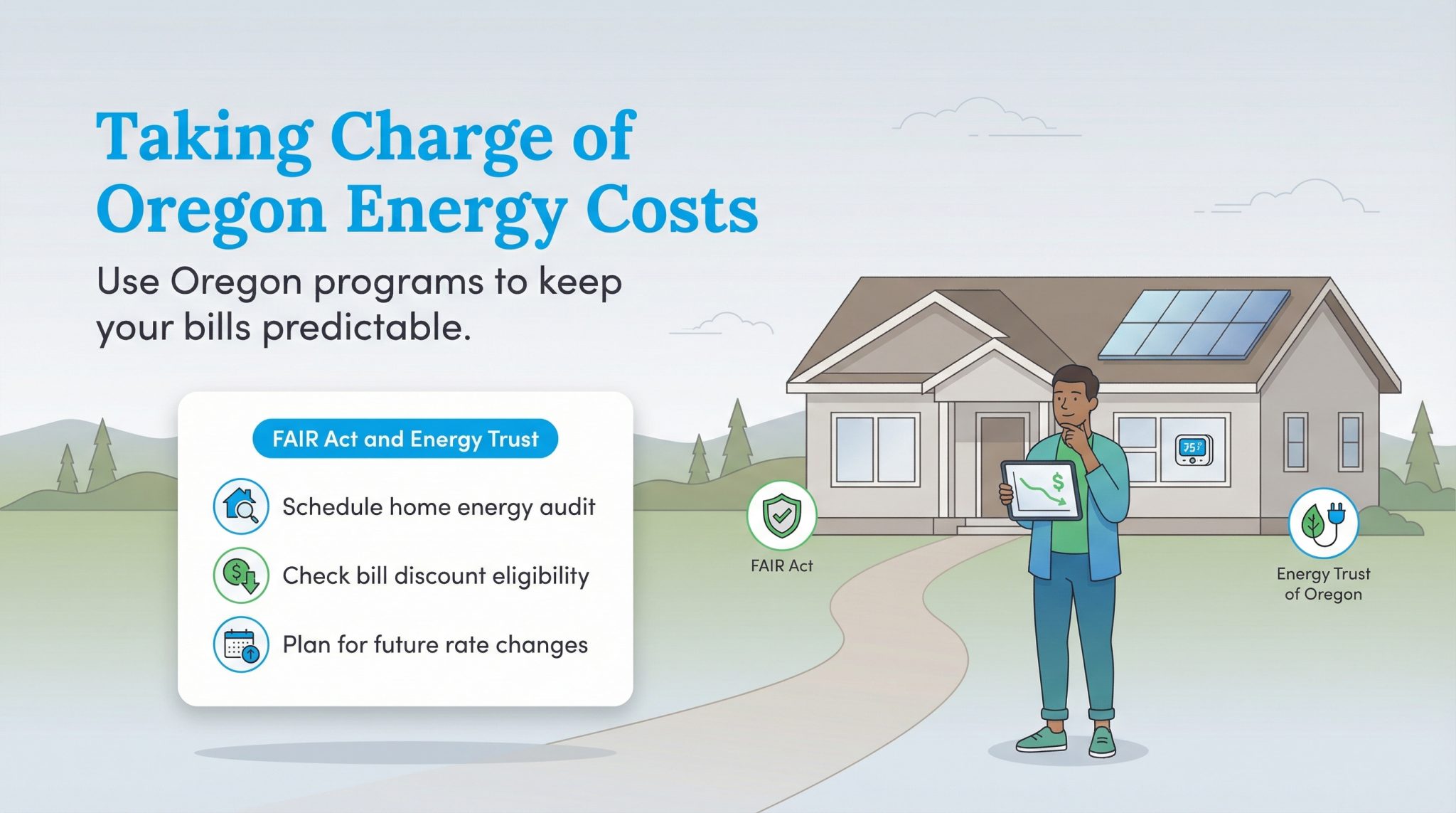
Oregon Residential Rate Hikes: What Your April 2026 Utility Bill Really ...

Oregon is not alone. Virginia, Georgia, and Ohio have debated or enacted similar surcharges on large industrial loads. The POWER Act's structure — a flat percentage surcharge rather than a demand-charge redesign — is simpler than approaches in other states, making it easier to administer but blunter as a price signal. Data center industry groups argue the surcharge will discourage investment; consumer advocates counter that residential cross-subsidies have been masking the true cost of data center grid demand for years.

What to watch

Watch for Q3 2026 data center build announcements in Oregon — if Google or Amazon pause expansions, the surcharge becomes a model for other states. Also watch PGE's next rate case filing for whether the surcharge escalates with inflation.

Source: gentic.news · · author= · citation.json

AI-assisted reporting. Generated by gentic.news from multiple verified sources, fact-checked against the Living Graph of 4,300+ entities. Edited by Ala SMITH.

Following this story?

Get a weekly digest with AI predictions, trends, and analysis — free.

AI Analysis

This rate design flips the typical utility subsidy dynamic. For years, large industrial users — including data centers — paid lower per-kWh rates than residential customers, reflecting bulk purchasing economics. Oregon's POWER Act explicitly rejects that logic, arguing data center load growth is driving grid upgrades that residential customers shouldn't fully fund. The 30% surcharge is a blunt instrument: it doesn't differentiate between a hyperscaler building a new campus and a small colo facility, nor does it account for load factor or renewable procurement. That means a 20 MW facility running at 90% utilization pays the same surcharge rate as one at 30%. More sophisticated states like Virginia are exploring time-of-use and demand-based surcharges that better align costs with grid impact. The real signal here is political: Oregon's Democrat-controlled legislature passed the POWER Act with bipartisan support, suggesting data center tax incentives are losing their invincibility. If other states follow Oregon's flat-surcharge model, hyperscalers may face a patchwork of higher costs that complicate their multi-region buildout strategies.

Mentioned in this article

Enjoyed this article?
Share:

AI Toolslive

Five one-click lenses on this article. Cached for 24h.

Pick a tool above to generate an instant lens on this article.

Related Articles

From the lab

The framework underneath this story

Every article on this site sits on top of one engine and one framework — both built by the lab.

More in Products & Launches

View all