The Innovation — What the Source Reports
A new research paper, "Personalized Federated Sequential Recommender (PFSR)," has been posted to arXiv, proposing a novel architecture designed to solve two persistent problems in modern recommendation systems: computational inefficiency and the difficulty of adapting to highly personalized user needs across different scenarios.
The core challenge identified is that many state-of-the-art sequential recommendation models, which predict a user's next action based on their past behavior sequence, suffer from quadratic computational complexity. This makes them slow and resource-intensive, hindering their deployment in real-time, latency-sensitive environments. Furthermore, while these models perform well on aggregate, they struggle to adapt their parameters finely enough to meet the unique, evolving preferences of individual users, especially when those users interact with a platform across multiple contexts (e.g., mobile app vs. desktop, browsing vs. purchasing).
To address these dual issues, the authors introduce the Personalized Federated Sequential Recommender (PFSR) framework, built around three key components:
Associative Mamba Block: This is the core efficiency engine. It is designed to capture user profiles and sequential patterns from a "global perspective" but does so with significantly lower computational overhead than traditional attention-based mechanisms. The term "Mamba" suggests it may be related to or inspired by the recent Mamba state-space models, which offer linear-time sequence modeling as an alternative to transformers, though the paper's abstract does not specify the exact architecture.
Variable Response Mechanism: This component enables personalized adaptation. It allows the model to perform fine-tuning of its parameters in response to the specific needs and behavior patterns of individual users. This moves beyond a one-size-fits-all model to a system that can dynamically adjust its "reasoning" for each user.
Dynamic Magnitude Loss: A novel training objective devised to preserve localized, personalized information throughout the federated learning process. In federated learning, where model training occurs on decentralized user devices, there is a risk that local user nuances are averaged out during the global model aggregation step. This loss function aims to counteract that, ensuring the final model retains a strong capacity for personalization.
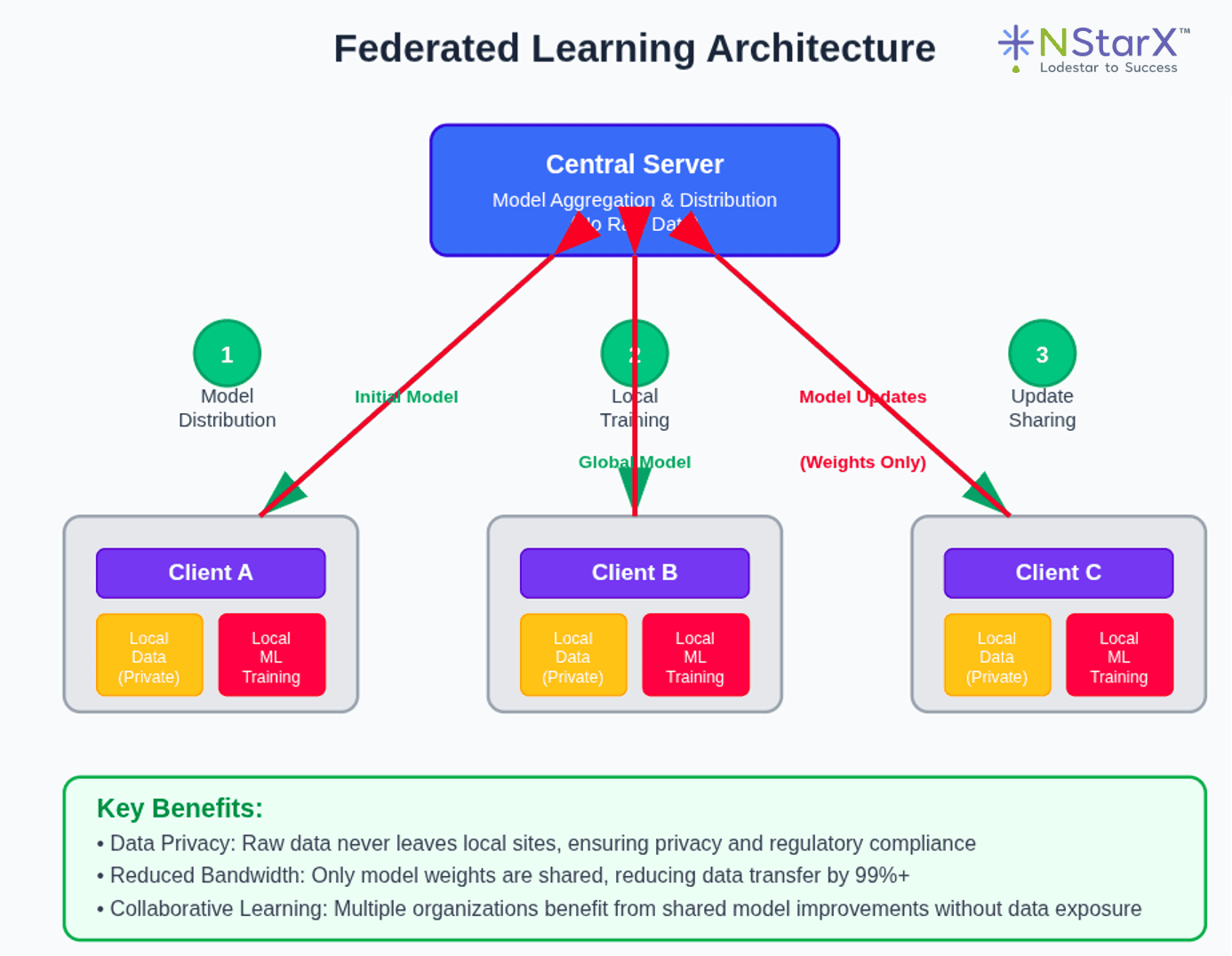
In essence, PFSR is a federated learning system where a lightweight, efficient sequential model (the Associative Mamba Block) runs locally on user devices. The Variable Response Mechanism and Dynamic Magnitude Loss work in tandem during local training to create highly personalized model updates, which are then securely aggregated to improve a global model without centralizing raw user data.
Why This Matters for Retail & Luxury
For luxury and retail brands, where customer relationships are paramount and every interaction must feel curated, the implications of PFSR are direct and significant.
Real-Time, Hyper-Personalized Discovery: The promise of sub-quadratic complexity means recommendation engines could operate with much lower latency. Imagine a high-net-worth individual browsing a brand's app: the next product suggestion (a handbag that complements a recently viewed dress, a limited-edition watch based on past collection interest) could be generated instantly and with a degree of personalization that feels bespoke, not algorithmic. This is critical for converting browsing sessions into sales, especially for high-consideration items.
Cross-Scenario Personalization Without Data Silos: Luxury customers interact with brands across touchpoints—flagship stores, e-commerce sites, mobile apps, clienteling tools, and social media. PFSR's ability to adapt to "diverse scenarios" suggests a model that could maintain a coherent, personalized understanding of a customer whether they are browsing lookbooks online or speaking with a sales associate via a CRM tablet in-store. The Variable Response Mechanism could theoretically tune recommendations based on the context of the interaction.
Privacy-Preserving Personalization at Scale: Federated learning is inherently privacy-advantaged. User data (browsing history, purchase sequences, dwell times) never leaves the user's device. For luxury brands handling extremely sensitive client data, this offers a path to building powerful, personalized AI models while mitigating data privacy risks and complying with stringent regulations like GDPR. The model learns from the data, but the data itself is not collected.
Efficiency for Global Operations: Reducing computational complexity translates directly to lower infrastructure costs. Deploying a lightweight PFSR model on edge devices (in-store tablets, client apps) or scaling it across global e-commerce platforms becomes more feasible and cost-effective than running massive transformer-based recommenders in the cloud.
Business Impact
The business impact hinges on the successful translation of the paper's claims into a production system. If realized, the potential impacts are:
- Increased Conversion Rates: More accurate, instantaneous, and context-aware recommendations directly drive sales by reducing friction in the discovery process.
- Enhanced Customer Lifetime Value (CLV): Hyper-personalization fosters a sense of being understood and valued, increasing brand loyalty and repeat purchase rates.
- Reduced Infrastructure Cost: Lower computational needs for inference can decrease cloud spend for recommendation services.
- Stronger Data Governance & Trust: A federated approach minimizes centralized data liability and can be a key point in customer trust messaging.
However, it is crucial to note that this is a research preprint. The paper does not provide quantified business metrics or case studies. The "impact" remains theoretical until validated through rigorous benchmarking and real-world A/B testing in a retail environment.
Implementation Approach
Implementing a system like PFSR would be a significant, multi-disciplinary engineering undertaking, suitable only for organizations with mature ML operations.
- Technical Prerequisites: A robust federated learning platform (e.g., using frameworks like TensorFlow Federated or PyTorch's Substra) is non-negotiable. This requires infrastructure for secure aggregation, model versioning, and device orchestration.
- Model Development & Retraining: The existing recommendation stack would need to be re-architected. Teams would need to implement the Associative Mamba Block, design the Variable Response Mechanism for their specific product catalog and user scenarios, and integrate the Dynamic Magnitude Loss into the training pipeline. This requires deep expertise in sequential modeling and federated optimization.
- Client-Side Deployment: The lightweight model must be packaged and deployed to user devices (mobile apps). This introduces challenges around model size, update frequency, and battery/performance impact.
- Data Pipeline Adaptation: While raw data doesn't leave the device, defining the sequential features (item IDs, categories, timestamps, interaction types) and ensuring their consistent availability across all client platforms is critical.
The complexity is high, likely requiring a 12-18 month timeline for a large retailer to go from research to a limited pilot, with substantial investment in ML engineering and infrastructure.
Governance & Risk Assessment
- Maturity Level: Low (Research). This is an arXiv preprint, not a peer-reviewed publication or a production-tested framework. The concepts are promising but unproven at scale in retail.
- Privacy & Security: Federated learning inherently reduces central data privacy risk. The primary risks shift to the security of the aggregation process (preventing model poisoning attacks) and ensuring the on-device model and data are properly secured.
- Bias & Fairness: Federated learning can exacerbate bias if the participating user devices are not representative of the entire customer base. The Dynamic Magnitude Loss aims to preserve local information, but careful monitoring is needed to ensure the global model does not become biased toward dominant user segments.
- Explainability: The "black box" nature of complex sequential models is compounded by personalization mechanisms. Explaining why a specific recommendation was made to a customer (or a merchant) remains a challenge.
- Regulatory Compliance: The architecture aids GDPR/CCPA compliance by design (data minimization, purpose limitation). However, organizations must still ensure all processing has a lawful basis and that user rights (like the right to erasure) can be fulfilled within the federated system.
gentic.news Analysis
This paper arrives amidst a clear and accelerating trend in recommender systems research toward greater efficiency and personalization, as evidenced by its posting on arXiv, a platform that has been the source for 45 articles this week alone. It directly follows another relevant arXiv study from March 17th on mitigating "Individual User Unfairness in recommender systems," highlighting the research community's intense focus on the ethics and granularity of personalization.
The proposed PFSR framework intersects with several key trends we monitor. First, it challenges the transformer dominance in sequence tasks, potentially aligning with the efficiency gains seen in other areas, like the MIT-developed method for 19x faster AI video processing (March 13th). Second, it engages deeply with the paradigm of fine-tuning, a technology mentioned in 7 prior articles. However, it does so in a decentralized manner, contrasting with the argument we noted on March 19th that centralized fine-tuning is "losing its potency as a unique differentiator." PFSR suggests the next differentiator may be federated, continuous fine-tuning at the individual user level.
For retail AI leaders, this paper is a strategic signal. It points to a future where competitive advantage in recommendation will come not just from better algorithms, but from architectures that reconcile three conflicting demands: extreme personalization, real-time performance, and ironclad data privacy. The brands that begin experimenting with federated learning frameworks today—even with simpler models—will be best positioned to leverage breakthroughs like PFSR when they mature from research to robust open-source implementations or commercial solutions.