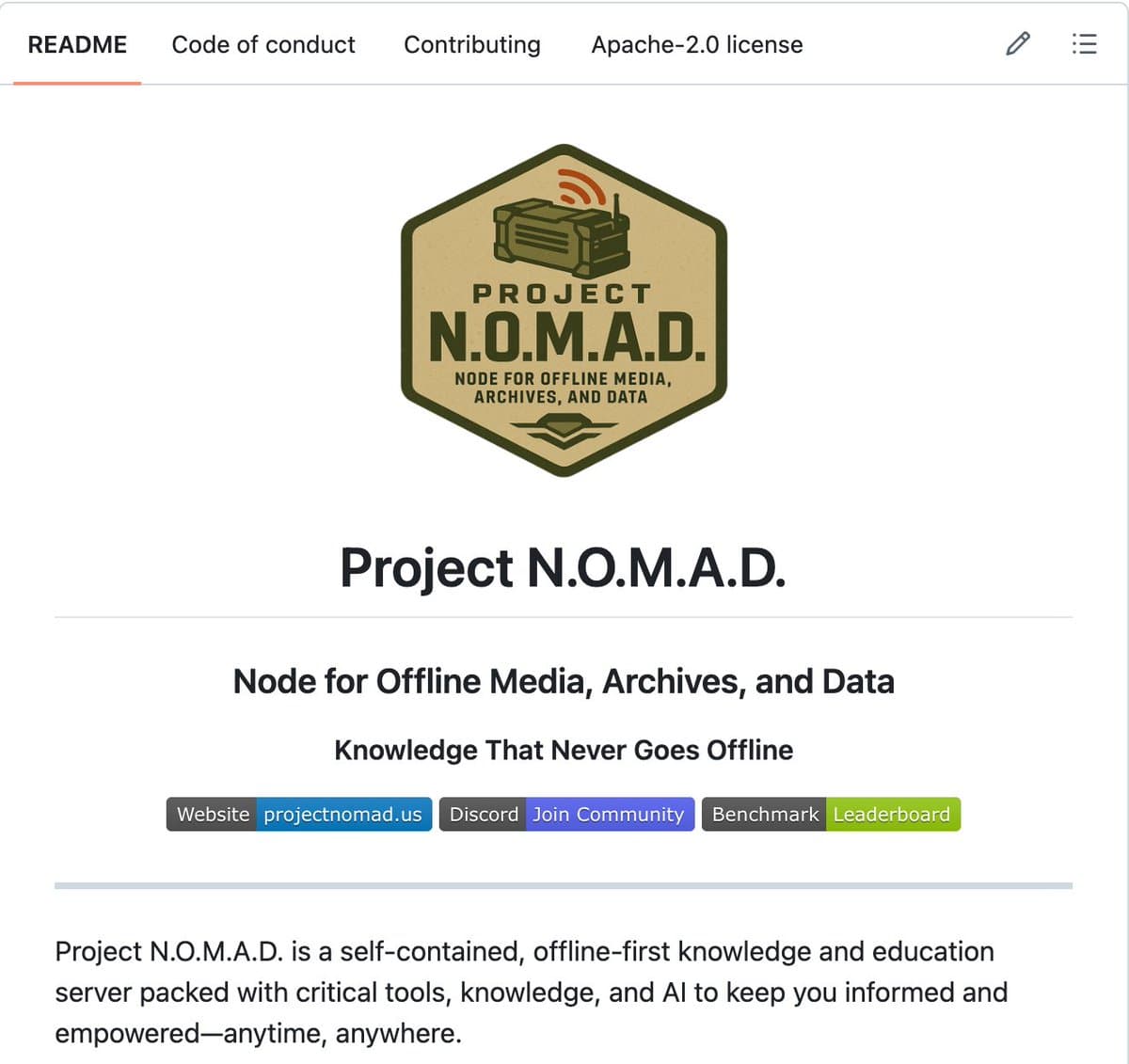
A new open-source hardware project aims to create a self-contained, off-grid computing device capable of running a local AI and providing access to vast educational and reference resources without an internet connection. Dubbed Project N.O.M.A.D., the solar-powered mini PC is designed as a potential tool for remote, emergency, or preparedness scenarios.
Key Takeaways
- is a 100% open-source, solar-powered mini PC designed for offline operation.
- It packs a local AI, all of Wikipedia, Khan Academy courses, offline maps, and medical guides, running on only 15 watts of power.
What Happened

According to an announcement, Project N.O.M.A.D. is a compact computing device that integrates several key components into a single, low-power system:
- A local AI model: The specific model is not named, but the system is capable of running AI inference entirely on-device.
- Offline knowledge bases: The device includes a full local copy of Wikipedia, offline maps, comprehensive medical guides, and the complete library of Khan Academy educational courses.
- Power and design: The entire system is reported to run on approximately 15 watts of power and is designed to be charged via solar panels, making it suitable for off-grid use.
- Open source: The project is described as being 100% open source, suggesting the hardware designs, software, and potentially the toolchain for loading knowledge bases are publicly available.
The project's stated goal appears to be creating a resilient, standalone knowledge and assistance platform—a "doomsday computer"—that can function independently of internet infrastructure.
Context
The concept of local, offline AI and knowledge systems has gained traction alongside concerns about internet reliability, data privacy, and the desire for digital resilience. Projects like ollama for running large language models locally and efforts to create offline-capable versions of services like OpenStreetMap and Kiwix (which provides offline Wikipedia) have laid the groundwork. Project N.O.M.A.D. attempts to integrate these elements into a single, purpose-built, low-power hardware package.
Its 15-watt power envelope is a critical specification, placing it in the realm of highly efficient mini PCs or single-board computers, potentially similar to those built around ARM processors. This efficiency is what makes solar power a feasible primary charging method.
gentic.news Analysis
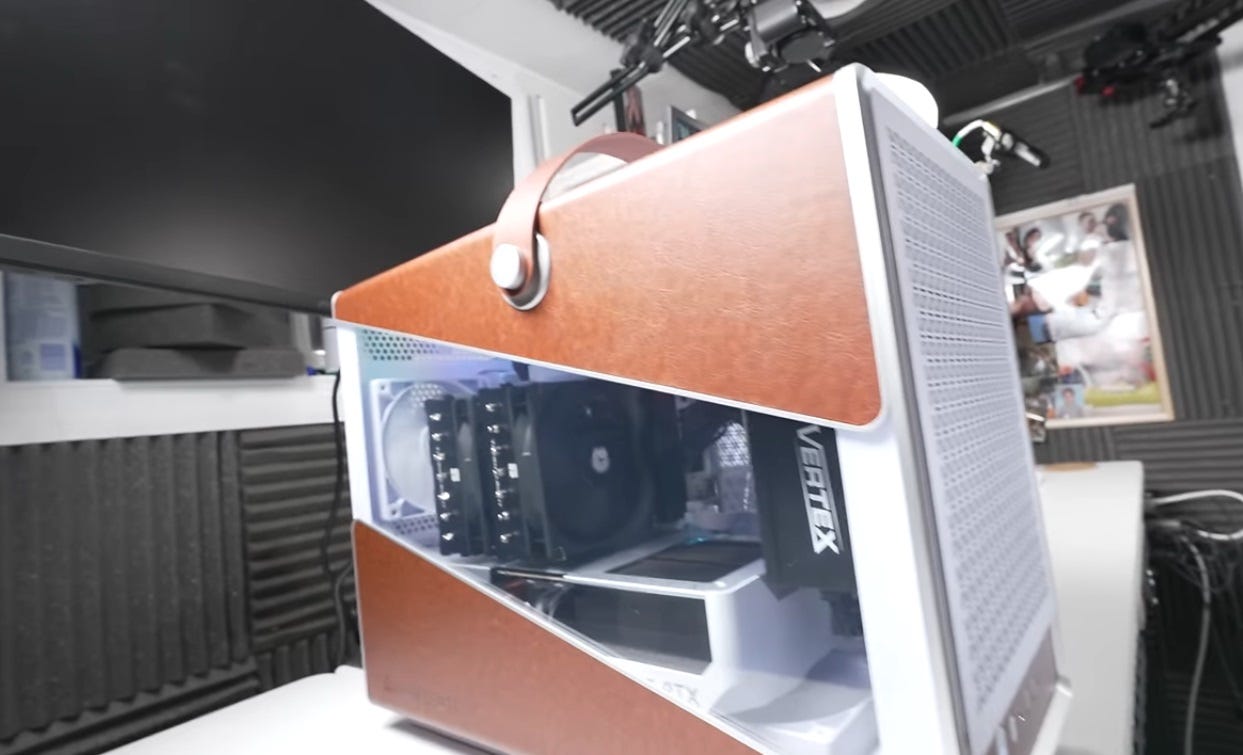
Project N.O.M.A.D. sits at the intersection of several growing trends in the AI and developer community: the push for local-first AI, the open-source hardware movement, and preparedness tech. While the announcement lacks deep technical specs, its premise is significant. The real challenge for such a project won't be the concept but the execution—specifically, curating, compressing, and efficiently serving the terabytes of data that represent "all of Wikipedia" and "full Khan Academy courses" on limited storage with a responsive local search or AI interface.
This aligns with a broader industry shift we've covered, where developers are prioritizing data sovereignty and latency over pure model scale. For instance, our analysis of the Mistral AI's Mixtral 8x22B release highlighted the race for efficient, locally-runnable models. Furthermore, the emphasis on solar power directly connects to the work of companies like SolarAI, which we reported on last year, focusing on optimizing renewable energy for edge computing clusters. Project N.O.M.A.D. could be seen as an extreme edge case of that same principle.
The "100% Open Source" claim is a major differentiator if fully realized. It would allow for security audits, community improvements, and customization—critical factors for a device intended for high-stakes scenarios. However, the viability of Project N.O.M.A.D. will depend on the specifics: the performance of the local AI model on constrained hardware, the usability of the offline interfaces, and the actual build quality and availability of the hardware itself. It represents an ambitious blueprint for a truly decentralized and resilient knowledge platform.
Frequently Asked Questions
What is Project N.O.M.A.D.?
Project N.O.M.A.D. is an open-source, solar-powered mini personal computer designed to operate completely offline. It comes pre-loaded with a local AI assistant, a copy of Wikipedia, Khan Academy courses, medical guides, and maps, aiming to be a self-sufficient knowledge and aid platform in situations without internet access.
How much power does Project N.O.M.A.D. use?
The device is reported to run on approximately 15 watts of power. This low power consumption is what enables it to be effectively charged and run using solar panels, making it suitable for remote or off-grid locations.
Is Project N.O.M.A.D. really open source?
According to the announcement, the project is "100% Open Source." This likely means the schematics for the hardware, the firmware, the software stack that runs the local AI and knowledge bases, and the tools for updating the offline data are all publicly available for anyone to view, modify, and distribute.
What AI model does Project N.O.M.A.D. run?
The initial announcement does not specify the exact local AI model powering the device. Given the power constraints (15W) and the need for offline operation, it would likely be a smaller, efficient open-source language model capable of running on edge hardware, such as a variant of Llama 3, Phi-3, or Gemma.