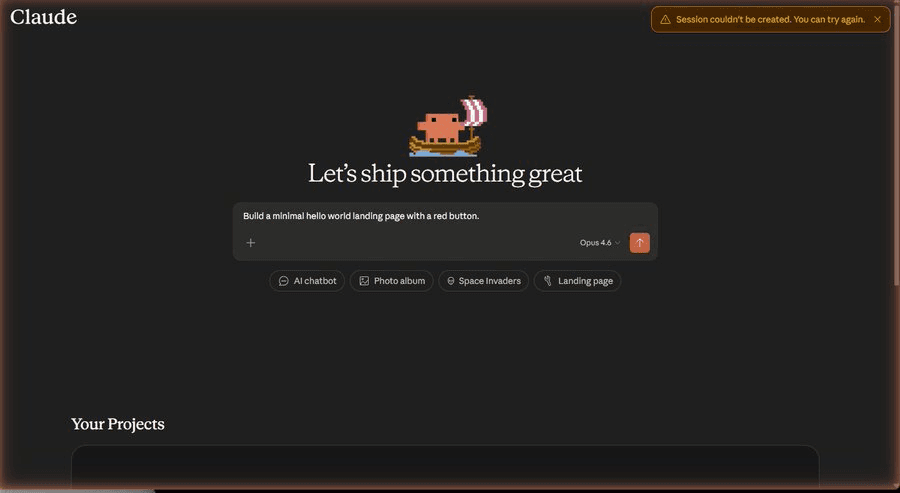
A rumor circulating on X (formerly Twitter) suggests that Anthropic is preparing a significant update for its Claude AI assistant that will include a built-in application builder. The claim, posted by user @kimmonismus, posits that this feature could enable rapid, conversational app creation—termed "vibe-coding"—and potentially flood app marketplaces with new AI-generated applications.
The source material is a single, speculative tweet with no official confirmation from Anthropic. It states: "Claude is going to be the everything app. Rumor has it, and it seems the next update will include an app builder. Apps are now vibe-coded. The App Store is going to see a flood of new apps."
Key Takeaways
- A rumor on X claims the next Claude update will include an app builder, allowing users to create applications through conversational AI.
- This could significantly lower the barrier to app development.
What the Rumor Claims
The core of the rumor is that Anthropic's Claude will evolve beyond a conversational chatbot into a platform for creating functional software applications through natural language instructions. The term "vibe-coded" implies a development process driven by high-level intent and description rather than manual programming, aligning with the industry trend toward AI-powered code generation and low-code/no-code platforms.
The tweet suggests this could lead to a surge in new applications submitted to official app stores, as the technical barrier to entry plummets.
Context: The AI-Powered Development Landscape
This rumor, while unverified, fits into a clear and aggressive trend. The race to build AI "agents" or "copilots" that can not only answer questions but also execute tasks and build things is the current frontier. Major players have already staked claims:
- OpenAI: Launched GPTs in November 2023, allowing users to create custom, task-specific versions of ChatGPT with instructions, knowledge, and actions. In 2024, they introduced the GPT Store for distribution. Their o1 model family and Project Strawberry have been focused on advanced reasoning and complex task execution.
- Google: Integrated Gemini across its Workspace suite and has advanced its Gemini Code Assist for developers.
- Microsoft: Has deeply integrated Copilot across Windows, GitHub (GitHub Copilot), and Microsoft 365.
- Startups: Companies like Cognition Labs (Devon) and Magic.dev are pushing the boundaries of AI software engineering agents.
Anthropic's Claude has been a leader in reasoning and safety but has not yet launched a comparable, widely accessible platform for creating and distributing user-defined AI tools. A move into app building would be a direct competitive response to OpenAI's GPT ecosystem and a bid to make Claude a central hub for creation, not just consultation.
Technical & Strategic Implications
If true, such a feature would require significant advancements in several areas:
- Code Generation & Synthesis: Claude's existing code generation capabilities (powered by models like Claude 3.5 Sonnet) would need to be extended to handle full-stack application logic, UI/UX design, and data management based on vague prompts ("vibes").
- Tool Use & API Integration: For apps to be useful, they would need to connect to external data and services. This requires robust, secure handling of API keys, authentication, and external function calls.
- Packaging & Deployment: The system would need to abstract away the complexity of build processes, dependency management, and app store submission guidelines to deliver on the "flood of new apps" promise.
- Safety & Moderation: An explosion of AI-generated apps presents massive content moderation, security, and safety challenges. Anthropic's core focus on constitutional AI would be critically tested in this scenario.
Strategically, it would mark Anthropic's shift from being a model provider to being a platform company. The "everything app" moniker suggests an ambition to create a super-app where users chat, search, create, and distribute tools within a single Claude interface.
gentic.news Analysis
This rumor, while thin, points directly at the most significant strategic gap in Anthropic's public-facing product suite. As we covered in our analysis of OpenAI's GPT Store launch, the platform play is crucial for locking in users and developers. Anthropic has excelled at model capabilities—Claude 3.5 Sonnet's performance on coding benchmarks like SWE-Bench is a testament to that—but has lacked a native, user-friendly framework for turning those capabilities into distributable products.
This follows Anthropic's pattern of measured, strategic response. They did not immediately chase OpenAI's custom GPTs with a clone. Instead, they focused on core model improvements and enterprise integrations. A potential app builder now would not be a reactive copy but a move made from a position of model strength (Claude 3.5 Sonnet and the anticipated Claude 3.7) and with the benefit of observing the pitfalls of earlier platforms.
The entity relationship is clear: Anthropic is in direct competition with OpenAI for the future of the AI assistant interface. OpenAI's bet is on a storefront of specialized agents (GPTs). If this rumor holds, Anthropic's bet would be on empowering any user to build their own specialized agent on-demand, potentially a more flexible and powerful paradigm. However, it also brings them into a more complex competitive arena with low-code platforms like Retool, Bubble, and FlutterFlow.
We should treat this as a strong signal of market direction. Whether this specific feature appears in the "next update" or not, the trajectory for all leading AI companies is toward enabling creation and action. The era of the passive, chat-only AI assistant is closing.
Frequently Asked Questions
Is Claude getting an app builder for sure?
No. This is currently an unverified rumor from a single social media post. Anthropic has made no official announcement regarding an app builder feature. The information should be treated as speculative industry chatter until confirmed by the company.
What does "vibe-coded" mean?
"Vibe-coded" is an informal term used in the rumor to describe the process of creating an application through high-level, natural language description (the "vibe") rather than writing detailed code specifications. It suggests an AI would interpret the user's intent and automatically generate the necessary code, UI, and logic to realize it, significantly lowering the technical skill required for app development.
How would an AI app builder differ from OpenAI's GPTs?
OpenAI's GPTs are primarily custom chatbots with specific instructions, knowledge files, and the ability to call defined actions (APIs). An app builder, as suggested for Claude, implies the creation of more standalone, potentially multi-page applications with custom user interfaces and complex workflows. It would be a step beyond a conversational agent toward a full low-code development environment powered by AI.
What are the biggest challenges for an AI app builder?
The main challenges are technical complexity and safety. The AI must reliably generate secure, functional, and efficient code across different platforms (web, mobile). It must also handle data privacy, prevent the creation of malicious apps, and navigate the stringent review guidelines of app stores like Apple's App Store and Google Play. Scaling moderation for a potential "flood" of AI-generated apps would be a monumental task.