Key Takeaways
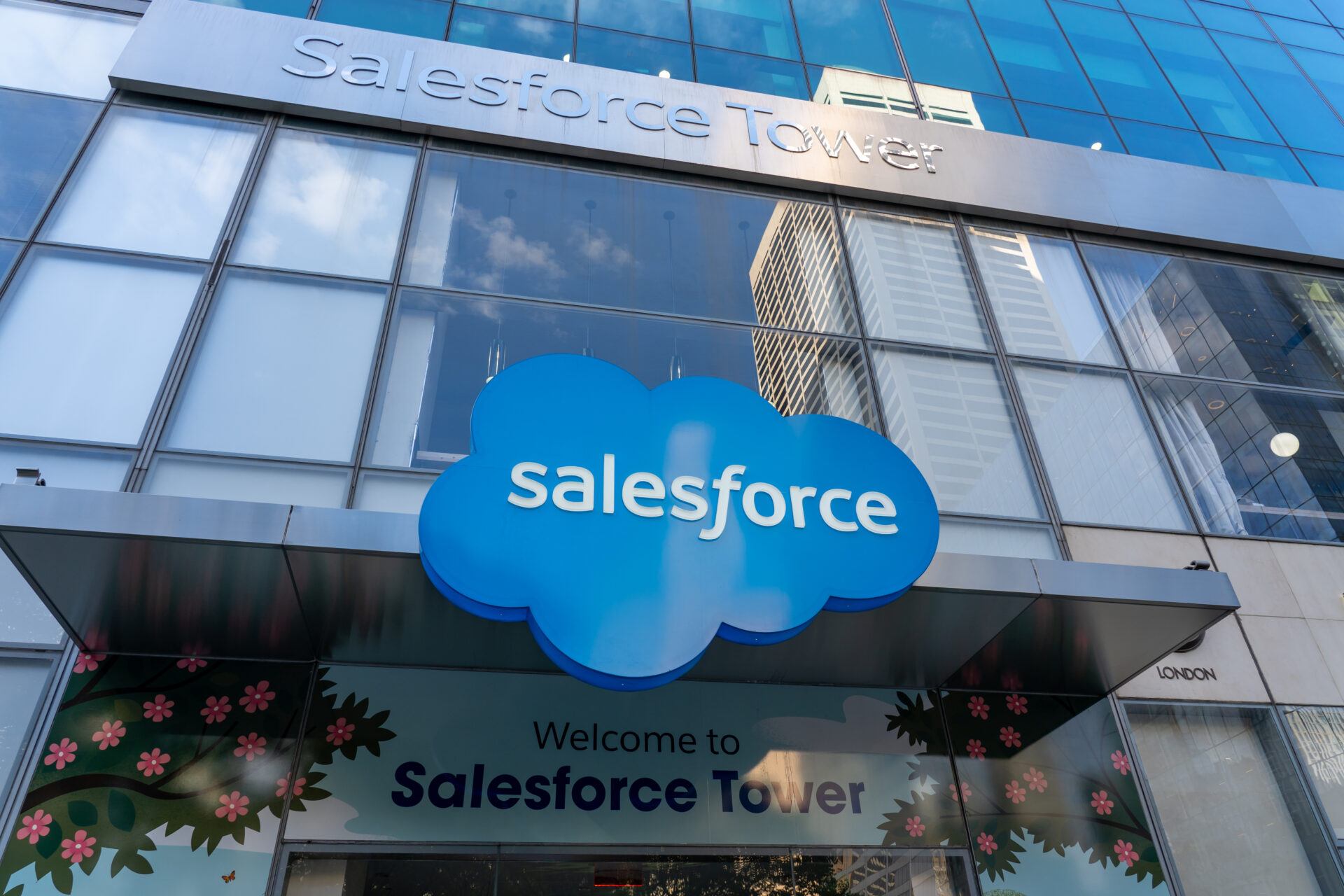
- Salesforce reports agentic AI workforce more than doubling YoY, with Pacsun deploying agentic commerce to win Gen Z.
- The trend signals enterprise AI moving from copilots to autonomous agents.
What Happened
Salesforce has released data indicating that the agentic AI workforce — AI systems that operate autonomously to complete tasks — more than doubled year-on-year. The findings, reported by Chain Store Age, point to accelerating enterprise adoption of autonomous AI agents across industries, with retail emerging as a key battleground.
In tandem, Salesforce published a case study on Pacsun, the Gen Z-focused fashion retailer, detailing how the brand is winning customers through "agentic commerce and omnichannel fluidity." The dual announcements underscore a shift: retailers are moving beyond conversational chatbots toward AI agents that can execute transactions, manage inventory queries, and coordinate across channels without human intervention.
Technical Details
Agentic AI differs from traditional generative AI in a critical way: instead of merely generating text or recommendations, agentic systems can take action. According to Salesforce's framing, these agents operate autonomously in complex environments — they can search product catalogs, check stock levels, compare options, and even complete purchases, all while maintaining context across sessions.
For retailers, this means the search experience is evolving. Rather than typing a query and receiving a list of links, customers can now engage in a back-and-forth dialogue where an AI agent handles the legwork. The agent understands intent, filters options, answers follow-up questions, and can execute a transaction — effectively compressing the entire funnel from discovery to purchase into a single interaction.
Pacsun's implementation highlights the omnichannel dimension. The retailer is using agentic commerce to create a fluid experience across web, mobile, and physical stores. A customer might start a conversation with an AI agent on their phone, get product recommendations, check in-store availability, and reserve an item for pickup — all within one agentic session.
Retail & Luxury Implications
The implications for retail and luxury are significant, though maturity varies by segment.
For fashion and Gen Z-focused brands like Pacsun: Agentic commerce offers a way to meet younger consumers where they are. Gen Z shoppers expect speed, personalization, and seamless cross-channel experiences. An AI agent that can handle the full journey — from discovery to checkout — reduces friction and can increase conversion rates.
For luxury houses: The application is more nuanced. Luxury retail relies on brand experience, curation, and human touch. Agentic AI in this context is less about autonomous purchasing and more about elevated concierge services — an AI agent that understands a client's preferences, coordinates with a human sales associate, and handles logistics like appointments and alterations. The opportunity is in augmenting, not replacing, the human relationship.
For enterprise retailers: The doubling of the agentic workforce signals that standalone pilots are giving way to production deployments. Retailers who delay risk falling behind on customer experience expectations, particularly as competitors like Pacsun build their brands around agentic interactions.
Business Impact
Salesforce's data — while not breaking out specific retailer metrics — points to a structural shift. An agentic workforce that doubles year-on-year is not a pilot; it is a platform shift. For retailers, the business impact manifests in three areas:
- Customer acquisition and conversion: Agentic search can shorten the path to purchase, reducing abandonment and increasing average order value through better recommendations.
- Operational efficiency: Autonomous agents can handle routine customer service queries, inventory checks, and order status updates, freeing human staff for higher-value interactions.
- Omnichannel coordination: Agentic systems can unify data across web, mobile, and store channels, enabling a single view of the customer that drives more coherent experiences.
Pacsun's approach demonstrates that agentic commerce is not theoretical — it is being deployed by a major retailer to win a specific demographic. The brand's focus on Gen Z is strategic: this demographic is the first to have grown up with AI assistants and expects conversational, agentic interactions as the default.
Governance & Risk Assessment
Agentic AI in retail is not without risk. Key considerations include:
- Autonomy boundaries: Retailers must define clear limits on what agents can do autonomously — especially regarding transactions, refunds, and customer data access.
- Data privacy: Agentic systems that handle customer data across channels must comply with GDPR, CCPA, and other regulations. The more autonomous the agent, the more critical robust data governance becomes.
- Brand consistency: For luxury brands, an AI agent that makes mistakes or acts out of brand voice can damage equity. Human oversight remains essential, particularly for high-value interactions.
- Maturity gap: The gap between research and production remains real. Agentic systems can fail in unexpected ways, and retailers need robust testing, monitoring, and fallback mechanisms.
Salesforce's data suggests the technology is maturing, but retailers should approach deployment with clear governance frameworks.
gentic.news Analysis
The doubling of the agentic AI workforce, reported by Salesforce, aligns with our broader coverage of autonomous AI systems. We have previously noted that retailers need agency partners ready for agentic AI — and Pacsun's deployment validates that thesis. The brand is not just experimenting; it is building its customer acquisition strategy around agentic commerce.
The competitive context matters. Google, which commands nearly 90% of global search, is investing heavily in AI infrastructure — committing $75 billion in capex and reporting triple-digit GCP growth. This signals that AI-powered search and agentic experiences will become the default interface for consumers. Retailers who build agentic capabilities now will have a first-mover advantage as search behavior shifts.
However, we would caution against over-reading a single case study. Pacsun is a digitally native brand with a Gen Z focus — an ideal early adopter. For heritage luxury houses, the path is more complex. The technology is applicable, but the brand and governance considerations are different. The honest assessment is that agentic commerce is real, it is growing, but its application to luxury requires careful adaptation — not wholesale adoption.
For AI practitioners in retail, the actionable takeaway is clear: begin building agentic capabilities now, but do so with clear boundaries, robust governance, and a focus on augmenting — not replacing — the human elements that define brand experience.
Source: news.google.com