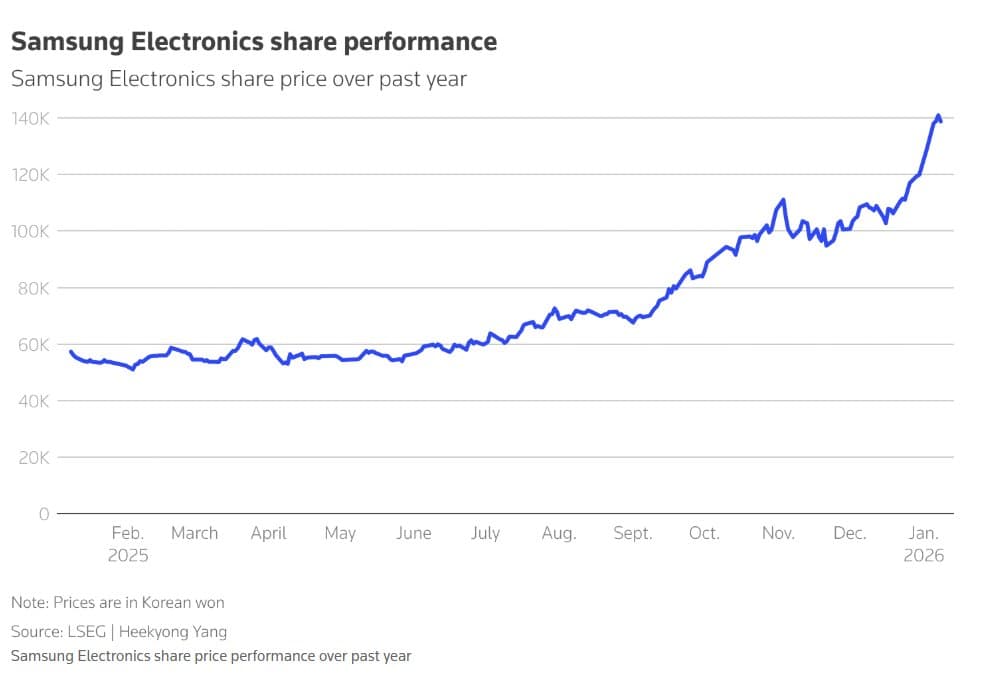
Samsung Electronics has provided a blockbuster earnings preview, projecting a record quarterly operating profit of approximately 20 trillion won (about $14.6 billion) for the first quarter of 2026. This figure represents a nearly threefold increase year-over-year, a surge directly attributed to a booming, AI-driven demand for high-performance memory chips and a severely constrained global supply.
The company's semiconductor division, specifically its memory business, is carrying the overwhelming bulk of these earnings. The catalyst is a dramatic price escalation for DRAM (Dynamic Random-Access Memory) chips, which have seen prices skyrocket by over 300% from recent lows. This specific type of memory is critical for AI workloads, serving as the high-bandwidth workspace for training and running large language models (LLMs) and other advanced AI systems.
While the memory windfall is historic, the company noted that rising component and manufacturing costs could pressure margins in its mobile and consumer electronics divisions. The profit guidance underscores a stark bifurcation in the tech hardware market: semiconductor manufacturers catering to the AI infrastructure boom are reaping unprecedented rewards, while consumer-facing hardware businesses face a more challenging cost environment.
The AI Memory Bottleneck
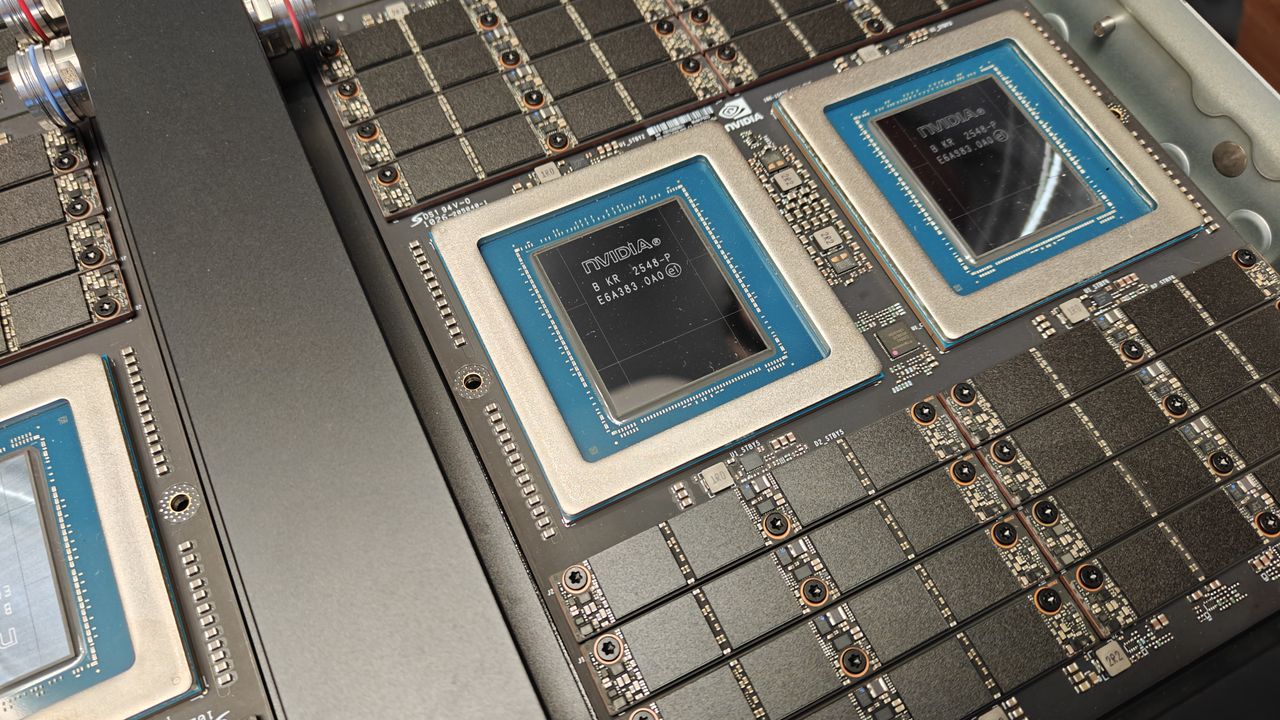
The record profit is not the result of a sudden, isolated spike but the culmination of a prolonged supply-demand imbalance in the high-bandwidth memory (HBM) and premium DRAM market. As AI model sizes and training datasets have exploded, the requirement for fast, dense, and power-efficient memory has become the primary bottleneck in AI server design. Each new generation of AI accelerator, from NVIDIA's Blackwell GPUs to custom ASICs, demands more and faster memory to feed its computational cores.
Samsung, alongside rivals SK Hynix and Micron, has been racing to increase production of advanced HBM3E and next-generation HBM4 memory. However, the complex manufacturing process and lengthy qualification cycles with AI chipmakers have created a supply lag. This lag, set against a backdrop of hyperscalers like Google, Amazon, and Microsoft committing hundreds of billions to AI data centers, has created the conditions for a historic price rally.
Market Implications and Competitive Landscape
This financial result solidifies Samsung's recovery and dominant position in the memory sector after a cyclical downturn. It places immense pressure on competitors and downstream customers. For AI hardware startups and cloud providers, the soaring cost of memory directly increases the capital expenditure (CapEx) for each AI server, potentially slowing deployment or forcing a reevaluation of architectural choices to improve memory efficiency.
For the broader semiconductor industry, Samsung's windfall validates the strategic pivot toward AI-specific silicon. It signals that investments in HBM and other advanced packaging technologies are now yielding the highest margins in the sector.
gentic.news Analysis

This record forecast from Samsung is the most concrete financial signal yet of the AI infrastructure gold rush translating directly to semiconductor bottom lines. It follows a pattern we highlighted in our December 2025 coverage of SK Hynix's exclusive HBM supply deal with NVIDIA, which signaled the beginning of a supplier's market. The 300% DRAM price surge contextualizes the ongoing cost challenges faced by AI hardware builders, a topic we explored in-depth in our February 2026 article, "AI Server Costs Soar as HBM Supply Fails to Meet Demand."
The earnings preview also creates an interesting tension with Samsung's broader corporate strategy. While its semiconductor division is thriving, its foundry business continues to trail TSMC in the race to fabricate the most advanced AI logic chips (like GPUs and TPUs). This result may accelerate internal investment to bridge that gap, especially as competitors like Intel Foundry Services make aggressive plays. Furthermore, the pressure on mobile margins mentioned by Samsung aligns with recent reports from Apple and Xiaomi about rising BoM (Bill of Materials) costs, suggesting a industry-wide squeeze on consumer electronics profitability even as B2B semiconductor margins explode.
Frequently Asked Questions
What is causing the massive price increase for DRAM chips?
The price surge is driven by a perfect storm of AI-driven demand and constrained supply. Training and running large AI models requires enormous amounts of high-bandwidth memory (HBM), a premium type of DRAM. Cloud providers and tech giants are buying this memory in unprecedented volumes to build AI data centers, while manufacturers like Samsung, SK Hynix, and Micron cannot ramp production fast enough due to complex manufacturing processes, creating a severe shortage.
How does Samsung's profit compare to its competitors like SK Hynix and Micron?
While specific Q1 2026 figures for SK Hynix and Micron are not yet available, all three major memory makers are benefiting from the same market dynamics. SK Hynix has been the reported lead supplier of HBM to NVIDIA, likely putting it in a similarly strong position. Samsung's record forecast indicates it is capturing a major share of the demand surge. The coming weeks, as other companies report, will reveal the full competitive landscape.
Will these high memory prices slow down AI development?
Potentially, yes. The skyrocketing cost of DRAM and HBM increases the total cost of ownership for AI servers. This could lead to slower-than-expected deployment of AI infrastructure by cloud providers, increased costs for AI startups renting cloud compute, and a stronger economic incentive for AI researchers and engineers to develop more memory-efficient model architectures and training techniques to reduce dependency on expensive hardware.
Is this profit sustainable for Samsung?
The memory market is famously cyclical. While the AI demand driver appears structural and long-term, current prices at 300% above lows are likely unsustainable in the long run. As Samsung, SK Hynix, and Micron bring new HBM production capacity online in the next 12-18 months, supply will catch up, likely moderating prices and profit margins from these record peaks. However, the baseline demand and pricing for advanced memory are now reset at a permanently higher level due to AI.