What Changed — Autonomous Delivery Loop for Claude Code
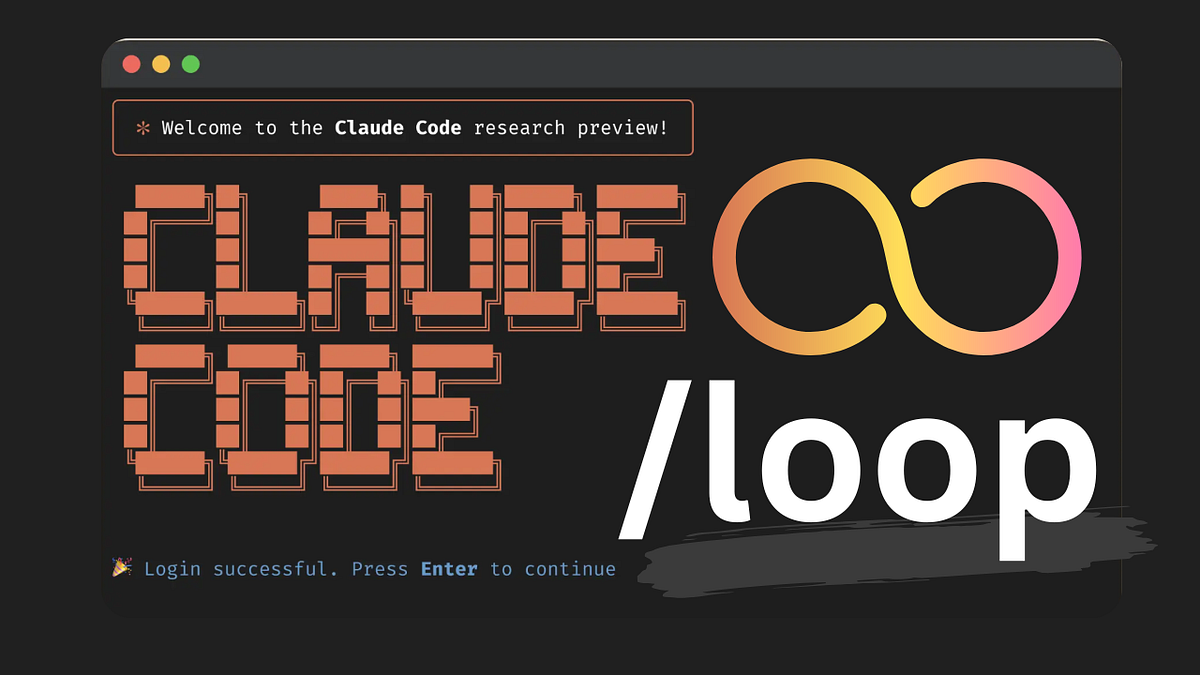
Shiploop is a new open-source skill suite for Claude Code that turns a single idea pitch into a fully autonomous MVP delivery loop. Instead of manually steering Claude Code through every step, you pitch your idea once, answer a brief onboarding interview, and the suite handles everything from research to parallel development to a gated MVP.
The project is available at github.com/BechsteinDigital/claude-shiploop and installs as a Claude Code plugin via /plugin marketplace add BechsteinDigital/claude-shiploop.
What It Means For You — From Toolbox to Operating Model
Most Claude Code skill collections are toolboxes — they give you tools, but you still drive. Shiploop is an operating model. It introduces:
- Autonomy with a contract: Escalation to you only via explicitly agreed criteria. Everything else is decided and logged.
- Focus as mechanics, not appeals: Value filter, cooling-off, idea-chain rule, extension budget — prohibitions alone don't keep an autonomous loop on course.
- Claims need evidence: Documentation may never claim more than code + tests prove.
- Parallelism via claim zones: Disjoint file zones per package; worktree isolation when in doubt.
This is a significant shift for teams who want Claude Code to operate more like a junior dev team than a coding assistant. The demo replays a real run: pitch → interview → setup → 3 loop cycles (2 DEV agents in parallel) → MVP gate (standup CLI, 36/36 tests).
Try It Now — Install and Run Your First Autonomous Loop
Installation (Recommended: Plugin Method)
Inside Claude Code, run:
/plugin marketplace add BechsteinDigital/claude-shiploop
/plugin install claude-shiploop@bechstein-digital
Or via install script:
git clone https://github.com/BechsteinDigital/claude-shiploop.git
cd claude-shiploop
./install.sh /path/to/your/project
Running Your First Loop
- Start a Claude Code session inside your target project.
- Pitch your idea —
project-onboardingpicks it up from there. - Answer the onboarding interview once (research, stack, scaffold, backlog).
- The suite runs autonomously: it researches, picks a stack, scaffolds the project, cuts work packages, and orchestrates role agents in parallel until the MVP gate.
Project Structure (What Gets Created)
Shiploop creates a structured project with contracts and evidence rules:
project/
  BRIEF.md          # product brief + core contract + autonomy contract
  PROFILE.md        # stack, verified commands, quality rules (single source for commands)
  STATE.md          # single state store (WIP, milestone, budget, cycle)
  DECISIONS.md      # ADR-light log of autonomous decisions
  IDEAS.md          # idea funnel with triage rules
  LEARNINGS.md      # retro distillate of this project (gate requirement)
  backlog/          # WORK cards (incl. claim zone + complexity)
  log/              # research, audit, and cycle logs
Key Principles to Understand
- One source per truth: Commands only in
PROFILE.md, state only inSTATE.md— no snapshot duplicates that drift. - Parallelism: Agents work on disjoint claim zones to avoid conflicts. Use worktree isolation when in doubt.
- Escalation gates: The suite only escalates to you on criteria you explicitly agreed to in the onboarding contract.
Source: github.com