Key Takeaways
- Shopify Engineering unveiled Gisting, a context compression method for LLM agents that boosts throughput and cuts costs.
- The technique addresses the rising token expenses and latency in long-running agentic workflows.
What Happened
Shopify Engineering has published details on Gisting, a novel technique designed to compress the context of LLM-powered agents. The core goal is straightforward: increase throughput and decrease cost by reducing the number of tokens processed during long-running agent interactions.
As AI agents become more complex and handle multi-step tasks—like managing an e-commerce backend or orchestrating a supply chain—their context windows fill up with conversation history, tool outputs, and intermediate reasoning. This not only slows down inference but also racks up significant token costs, especially when using frontier models.
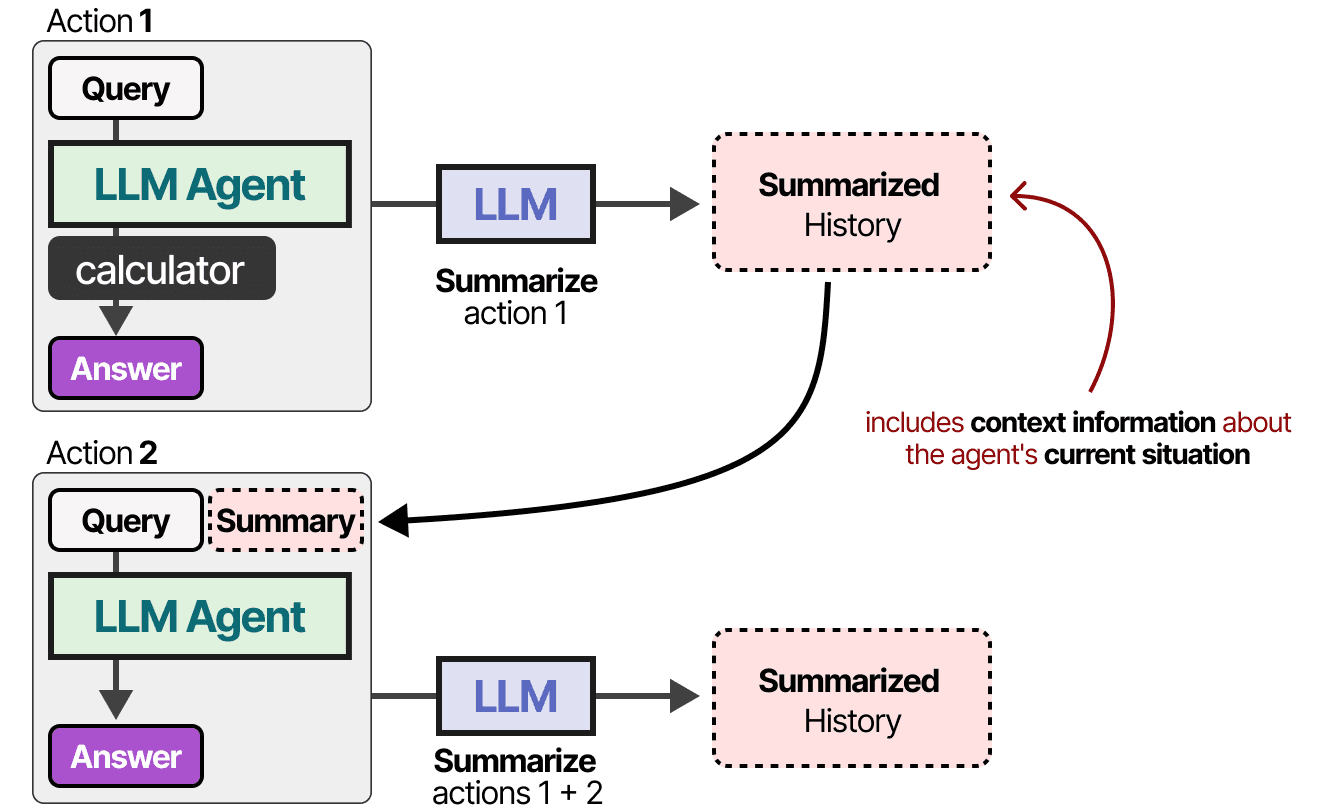
Gisting addresses this by creating a compressed representation of the context, allowing the model to retain essential information without processing the full, verbose history on every turn. While the original source material provides the high-level concept, the technical specifics of the compression algorithm—whether it uses a learned encoder, a summarization model, or a hybrid approach—remain under wraps in the public summary.
Technical Details
The fundamental problem Gisting solves is the linear (or worse) scaling of compute and cost with context length. For an agent that has been running for 100 steps, every subsequent step requires processing the entire 100-step history. This is a major bottleneck for production agentic systems.
By compressing the context into a smaller, dense representation (a 'gist'), Shopify's approach aims to decouple the cost of a single step from the total history length. This is conceptually similar to prompt compression techniques, but applied specifically to the dynamic, evolving context of an autonomous agent. The result is that agents can run for longer, handle more complex tasks, and do so at a fraction of the cost.
Retail & Luxury Implications
For retailers and luxury brands deploying AI agents, the cost and latency of long-horizon tasks are existential blockers. A customer service agent that needs to check inventory, verify a loyalty account, process a return, and offer a personalized recommendation might require dozens of tool calls. Without context compression, the cost of that single interaction can spiral.
Gisting-type techniques could make these agents economically viable at scale. Consider a luxury brand's concierge agent: it must remember a client's past purchases, style preferences, and ongoing service requests across a long conversation. With context compression, the agent can maintain this state efficiently, delivering a premium, personalized experience without a prohibitive cost per session.
Similarly, in supply chain and merchandising, agents that analyze sales data, predict trends, and auto-replenish stock across thousands of SKUs generate massive context. Compressing that context is not a nice-to-have; it is a prerequisite for real-time, autonomous decision-making.
Business Impact
While Shopify has not released specific performance metrics in this public summary, the directional impact is clear. Any reduction in token usage directly translates into lower inference costs. For a large enterprise running millions of agentic transactions, a 50% reduction in context tokens could mean millions of dollars in annual savings.
Furthermore, increased throughput means agents can serve more requests per second, improving customer experience through faster response times. This is particularly critical for real-time use cases like in-store assistance or live chat support.
Implementation Approach
Adopting a technique like Gisting requires a mature ML infrastructure. Teams would need to:
- Instrument Agent Traces: Log all context data to understand the token breakdown.
- Train or Fine-tune a Compressor: This may involve a smaller model or a custom layer that learns to summarize the context effectively.
- Integrate with the Agent Loop: Modify the agent orchestration to compress context at defined intervals (e.g., every N steps) and feed the compressed representation back to the main LLM.
- Evaluate for Quality: Rigorously test to ensure that compression does not lead to a loss of critical information, which could cause the agent to make errors.
The complexity is high, but the payoff is substantial for organizations already running agentic systems in production.
Governance & Risk Assessment
The primary risk of any context compression technique is information loss. If the compression is lossy and the agent forgets a critical constraint—like a customer's request to not ship to a certain address—it could lead to a poor customer experience or a compliance violation.
Companies must implement robust evaluation suites that test compressed agents against uncompressed baselines on key tasks. The maturity of this technology is still evolving; it is not yet a plug-and-play feature in most commercial LLM platforms, so significant engineering effort is required.
gentic.news Analysis
Shopify's move to tackle the context bottleneck is a signal that the industry is shifting from 'demo-ware' agents to production-grade systems. For the retail sector, which is often characterized by complex, multi-step workflows and high-volume customer interactions, this is a crucial development. The ability to run long-horizon agents cost-effectively will determine which brands can scale personalization and automation without breaking their cloud budgets.
The competitive landscape is clear: Google, with its Gemini models and TPU infrastructure, is pushing hard on efficiency, as evidenced by its massive TPU bookings. OpenAI and Anthropic are also racing to reduce inference costs. Shopify, as a major e-commerce platform, is building its own efficiency layer, which could eventually become a differentiator for its merchant ecosystem. For luxury brands building bespoke AI solutions, keeping an eye on these compression techniques is essential—they are the key to unlocking the next generation of autonomous commerce.
Source: news.google.com