The Innovation — What the Source Reports
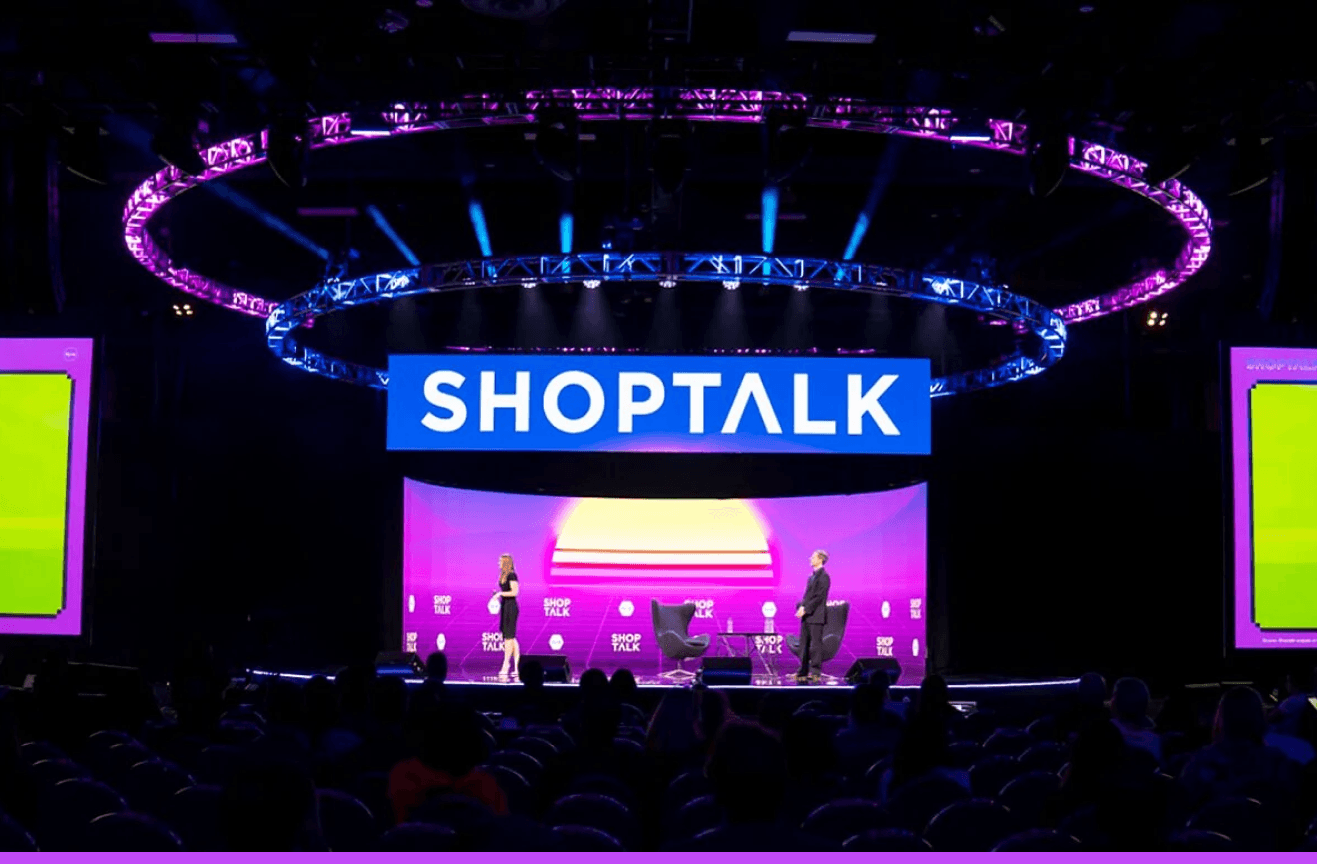
Coresight Research has published event coverage from Shoptalk 2026, one of the retail industry's premier gatherings for innovation. While the full article details are not provided in the source snippet, the title "AI in Retail Innovation" indicates the core focus. Shoptalk is traditionally a platform where major technology providers, retailers, and analysts converge to showcase new tools, discuss implementation strategies, and forecast trends. Coverage from a firm like Coresight Research would typically analyze key announcements, demo sessions, and panel discussions, providing a synthesized view of the state of AI adoption in retail for the coming year.
Why This Matters for Retail & Luxury
For luxury and retail AI leaders, event coverage like this is critical for several reasons:
- Strategic Intelligence: It reveals which technologies (e.g., computer vision for in-store analytics, generative AI for personalized content, agentic systems for operations) are moving from prototype to production. This helps leaders prioritize their own R&D and vendor evaluation budgets.
- Vendor Landscape: Shoptalk is where major cloud providers (Google, Microsoft, AWS) and specialized AI startups compete for retail mindshare. Understanding their positioning and new product launches is essential for making informed partnership decisions.
- Peer Benchmarking: The discussions and case studies presented offer a rare window into how competitors and adjacent retailers are tackling common challenges like inventory forecasting, hyper-personalization, and supply chain resilience with AI.
Business Impact
The business impact of trends highlighted at Shoptalk is typically about acceleration and validation. When a technology or approach features prominently at such an event, it signals to the market that early experiments are yielding positive ROI, encouraging broader investment. For instance, if Retrieval-Augmented Generation (RAG) was a major topic—as our knowledge graph indicates it is a trending technology—it would validate its move from a novel AI technique to a foundational component for building accurate, brand-consistent conversational AI (e.g., for customer service and styling assistants) without the cost and risk of full model fine-tuning.
This follows a clear trend we've been tracking: Retrieval-Augmented Generation appeared in 29 articles this week alone, indicating intense industry focus. Furthermore, Google's recent launch of an Agentic Sizing Protocol for retail AI on March 25, 2026, is a direct example of the kind of specialized, retail-focused AI infrastructure that would likely be showcased and discussed at Shoptalk.
Implementation Approach
Implementation insights from such events often center on pragmatic integration. The conversation shifts from "can we build it?" to "how do we deploy it safely and at scale?" Key themes likely include:
- Connecting AI to Core Systems: The emphasis would be on APIs, middleware, and protocols (like Google's recently launched Official Workspace MCP Endpoint) that connect generative AI agents to existing ERP, CRM, and PIM systems.
- Data Governance: For luxury brands, implementing AI while protecting brand equity and customer privacy is paramount. Discussions would focus on architectures that keep sensitive data secure while enabling AI-powered insights.
- Phased Rollouts: Strategies for piloting AI in controlled environments (e.g., a single product category or region) before global deployment, minimizing risk and allowing for iterative refinement.
Governance & Risk Assessment
A mature discussion at the 2026 level would inevitably address the growing pains of production AI. Our knowledge graph notes that just a day before this coverage, on March 25, a developer shared a cautionary tale about RAG system failure at production scale. This underscores a critical theme: as AI systems become more central to operations, their reliability, monitoring, and failure modes become a top-tier governance issue. For luxury retail, the risks extend beyond technical failure to include brand dilution (from off-brand AI-generated content), algorithmic bias in product recommendations, and the security of customer data used to fuel these systems. The discourse at Shoptalk would likely highlight tools and frameworks for explainability, auditing, and compliance.
gentic.news Analysis
This event coverage, while light on specifics, sits at the confluence of several major trends we are monitoring. The prominent role of Google (appearing in 39 articles this week) and the heated focus on Retrieval-Augmented Generation are not coincidental. Google is aggressively positioning its AI stack (Gemini models, Vertex AI, embedding APIs) for the enterprise retail sector, as seen with its Agentic Sizing Protocol launch. This directly competes with efforts from Microsoft (via OpenAI integrations) and Amazon, and aligns with broader industry movements like UiPath's launch of AI agents for retail pricing and stock management which we covered on March 25.
The key takeaway for luxury AI leaders is that the ecosystem is rapidly formalizing. The building blocks—high-quality embedding models for product search, RAG frameworks for knowledge-grounded assistants, and agentic protocols for action—are moving from research labs to commercial platforms. The strategic imperative is now less about foundational AI research and more about the elegant, brand-safe, and reliable integration of these components into the unique customer journey and operational fabric of a luxury house. The discussions at Shoptalk 2026 likely provided the roadmap for that next phase of implementation.