What Happened
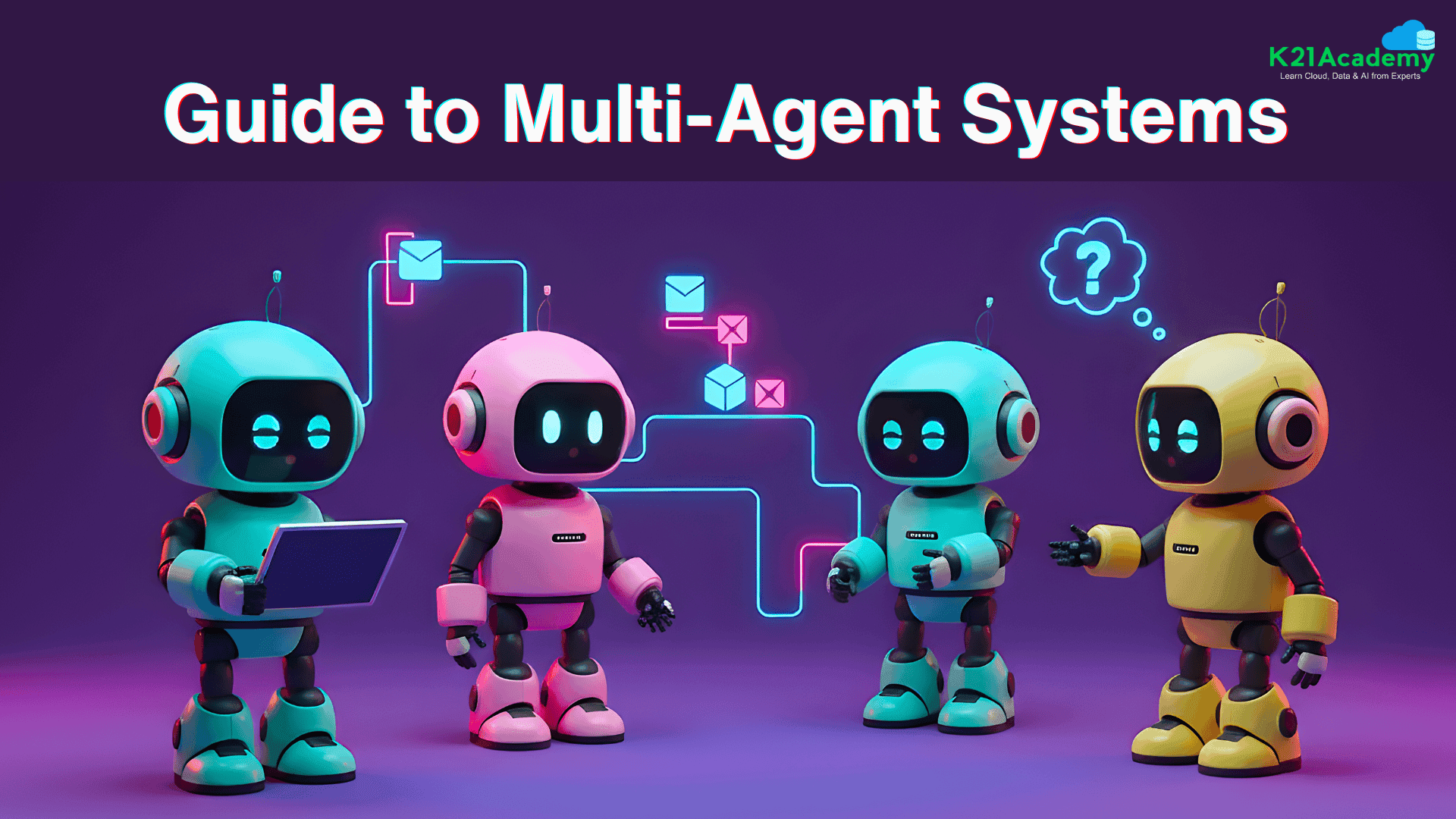
A recent technical analysis published on Medium highlights a fundamental reliability problem in production AI systems: the agent coordination trap. The article argues that multi-agent AI pipelines—increasingly common in enterprise applications—fail unpredictably in production, often during off-hours when monitoring is minimal. The core insight is mathematical: as you add more autonomous agents to a workflow, the probability of system failure doesn't increase linearly—it grows exponentially.
Most system architects don't calculate this failure probability until after their pipeline has already crashed, typically discovering the issue when paged at 3am. The article presents this as an "embarrassingly simple" mathematical reality that's frequently overlooked during design phases.
Technical Details: The Math Behind Multi-Agent Failure
The coordination trap stems from dependency chains in multi-agent systems. Consider a workflow where:
- Agent A processes customer input
- Agent B validates the output
- Agent C enriches with additional context
- Agent D formats the final response
If each agent has an individual reliability of 99% (which is optimistic for complex LLM-based agents), the system reliability becomes:
0.99 × 0.99 × 0.99 × 0.99 = 0.96
That's a 4% failure rate for just four agents. But the reality is worse—agent failures aren't independent. When Agent B receives malformed output from Agent A, it might fail in unexpected ways that cascade through the system. The article suggests actual failure rates in production often exceed these simple calculations by an order of magnitude.
The coordination problem manifests in several ways:
- State Synchronization Issues: Agents operating on stale or inconsistent data
- Error Propagation: One agent's failure causing downstream agents to fail in unpredictable ways
- Resource Contention: Multiple agents competing for limited GPU memory or API rate limits
- Timeout Cascades: One slow agent causing timeouts throughout the dependency chain
Retail & Luxury Implications
Why This Matters for AI-Driven Retail
Luxury and retail companies are increasingly deploying multi-agent AI systems for critical functions:
Customer Service Orchestration:
- Agent 1: Classifies customer intent from chat
- Agent 2: Retrieves relevant policy documents
- Agent 3: Generates personalized response
- Agent 4: Applies brand voice and compliance filters
Product Description Generation:
- Agent 1: Extracts features from design specs
- Agent 2: Writes marketing copy
- Agent 3: Translates for regional markets
- Agent 4: Optimizes for SEO
Personalized Recommendation Systems:
- Agent 1: Analyzes purchase history
- Agent 2: Considers real-time browsing behavior
- Agent 3: Incorporates inventory constraints
- Agent 4: Balances business objectives (margin vs. conversion)
Each of these workflows represents exactly the type of multi-agent pipeline vulnerable to the coordination trap. When these systems fail at 3am—during off-hours when European luxury brands might be processing Asian market data or preparing for morning launches—the business impact can be significant.
Concrete Scenarios
Launch Day Disaster: A luxury fashion house launches a new collection with AI-generated personalized emails. The multi-agent system fails silently, sending generic emails to VIP customers or, worse, incorrect pricing information.
Inventory Mismatch: An AI system coordinating between demand forecasting agents and inventory management agents produces inconsistent recommendations, leading to stockouts of high-margin items or overstock of seasonal products.
Customer Experience Breakdown: A concierge-style shopping assistant built with specialized agents (style advisor, size recommender, availability checker) fails mid-conversation during a high-value customer interaction.
Implementation Approach: Mitigating the Coordination Risk
For technical leaders deploying multi-agent systems in retail, several strategies emerge:
Design Phase Considerations:
- Calculate failure probabilities during architecture design, not post-mortem
- Implement circuit breakers between agents to prevent cascade failures
- Design for graceful degradation rather than all-or-nothing operation
Monitoring and Observability:
- Implement agent-level health checks and performance metrics
- Create dependency maps visualizing agent relationships
- Set up alerting that understands the business impact of agent failures
Testing Strategies:
- Chaos engineering for agent workflows
- Load testing that simulates real-world coordination patterns
- Failure injection testing to verify recovery mechanisms
Governance & Risk Assessment
Maturity Level: Medium-High Risk
Multi-agent AI systems represent advanced AI implementation with significant coordination complexity. While individual agent technology is maturing rapidly (as covered in our previous articles on fine-tuning and RAG), the orchestration layer remains a developing field.
Privacy Considerations:
Agent coordination often requires sharing customer data between specialized components. Each handoff represents a potential data leakage point that must be secured.
Bias Amplification Risk:
Coordination failures can amplify biases—if one agent introduces a bias and downstream agents fail to correct it, the system may produce consistently biased outputs.
gentic.news Analysis
This analysis of multi-agent coordination failures arrives at a critical moment for luxury retail AI adoption. As we've covered in recent articles, enterprises are increasingly favoring RAG over fine-tuning for production systems ([2026-03-23]), and building sophisticated recommendation systems with two-tower embeddings ([2026-03-15]). These architectural choices naturally lead toward multi-agent designs where specialized components handle different aspects of a complex task.
The Medium platform, mentioned in 5 prior articles on gentic.news, continues to serve as a valuable source for deep technical analysis from practitioners facing real production challenges. This particular article highlights a gap between the promise of agentic AI and the reality of production reliability—a concern that should resonate with luxury brands known for their exacting quality standards.
Looking forward, we expect to see increased focus on orchestration frameworks and reliability patterns for multi-agent systems. The companies that solve these coordination challenges will gain competitive advantage in delivering consistently excellent AI-powered customer experiences, while those who ignore the "embarrassingly simple" math may find themselves dealing with 3am failures during critical business moments.
For retail AI leaders, the takeaway is clear: agent coordination isn't just a technical implementation detail—it's a fundamental business risk that requires architectural forethought, rigorous testing, and comprehensive monitoring. The brands that master this coordination layer will deliver the reliable, sophisticated AI experiences that luxury customers expect.