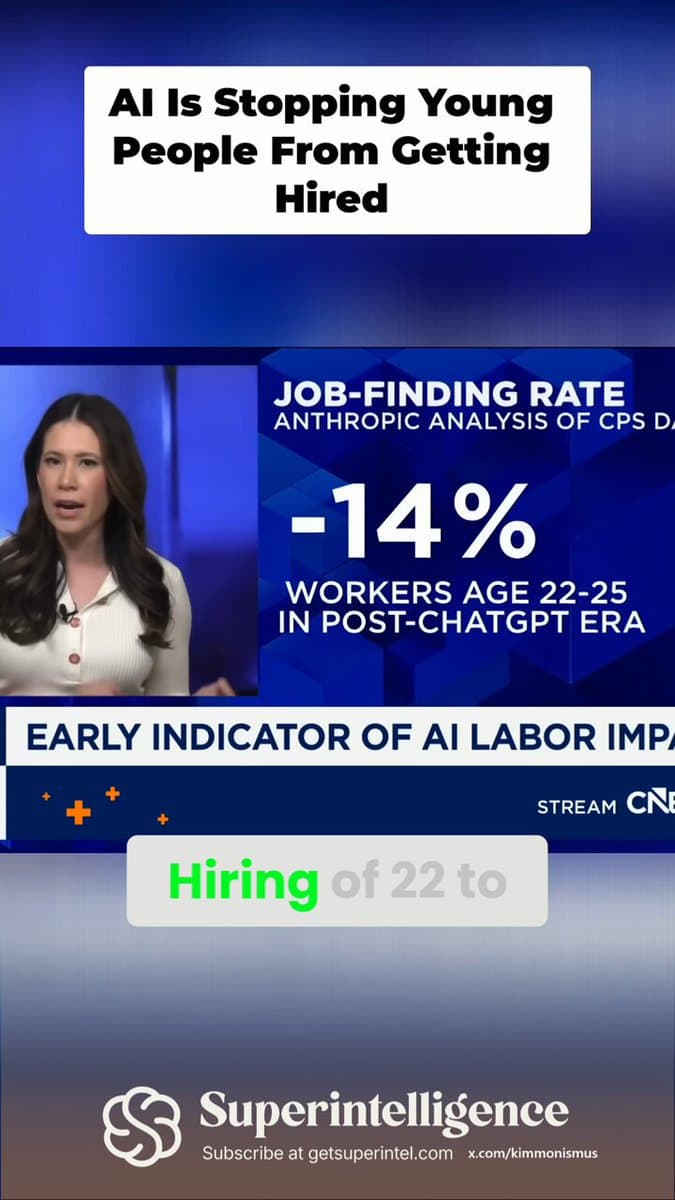
Artificial intelligence is no longer a theoretical workplace disruptor—it's actively reshaping employment dynamics in real time. According to recent analysis highlighted by researcher Kimmo Klemola, AI is creating a paradoxical effect: while boosting productivity for experienced workers, it's simultaneously raising concerns about hiring young talent and future employment patterns.
The Dual Impact of Workplace AI
The emerging data suggests AI tools are serving as powerful productivity multipliers for workers who already possess substantial experience and domain knowledge. These seasoned professionals can leverage AI to automate routine tasks, enhance decision-making, and expand their output without corresponding increases in working hours. For organizations, this represents a significant efficiency gain from their existing workforce.
However, this productivity boost comes with an unexpected consequence: companies appear increasingly hesitant to hire younger, less experienced workers. The traditional entry-level positions that once served as career launching pads are being transformed or eliminated by AI automation. Where junior employees once learned fundamental skills through hands-on experience, AI systems now handle those same tasks with greater speed and consistency.
The Training Gap Dilemma
This development creates what might be termed a "training gap" in the workforce ecosystem. Historically, experienced workers mentored newcomers, transferring institutional knowledge and practical skills through collaborative work. With AI handling many entry-level functions, this organic knowledge transfer is disrupted. Young professionals may enter the workforce with strong theoretical knowledge but limited practical experience in foundational tasks that AI now performs.
Organizations face a strategic dilemma: they can achieve impressive productivity gains with their current AI-enhanced workforce, but they risk creating a future talent shortage by not developing the next generation of experienced professionals. The very tools that make experienced workers more valuable today may undermine the pipeline that creates experienced workers for tomorrow.
Sector-Specific Implications
While comprehensive data across all industries is still emerging, certain sectors appear particularly vulnerable to this dynamic. Fields with standardized entry-level tasks—such as data analysis, content creation, customer service, and administrative support—are seeing the most immediate effects. In these areas, AI can often perform junior-level work with minimal human supervision, reducing the economic rationale for hiring at the bottom of the experience ladder.
Conversely, professions requiring complex human interaction, physical dexterity, or highly contextual judgment remain more insulated—for now. However, as AI systems grow more sophisticated, even these domains may experience similar shifts in hiring patterns and career progression.
The Future of Career Development
This AI-driven transformation necessitates rethinking traditional career pathways. Educational institutions, employers, and policymakers must collaborate to develop new models for skill development and career advancement. Potential responses might include:
- Enhanced apprenticeship programs that focus on AI-augmented work rather than manual task completion
- Revised educational curricula that emphasize AI collaboration skills alongside domain knowledge
- Corporate training initiatives that specifically address the experience gap created by automation
- Policy frameworks that encourage balanced workforce development alongside productivity gains
Economic and Social Considerations
The broader implications extend beyond individual career paths to economic stability and social mobility. If AI systematically disadvantages new workforce entrants, it could exacerbate existing inequalities and reduce social mobility. The traditional promise that education and hard work lead to career advancement may require reexamination in an AI-dominated landscape.
Furthermore, this trend could create demographic imbalances within organizations, with experienced workers becoming increasingly valuable while entry points for new talent narrow. This might lead to knowledge silos, reduced innovation from fresh perspectives, and eventual succession challenges as experienced workers retire.
Navigating the Transition
Forward-thinking organizations are already experimenting with hybrid approaches that balance AI-driven productivity with sustainable talent development. Some companies are creating "AI apprenticeship" positions where newcomers work alongside both human experts and AI systems. Others are developing rotational programs that expose junior employees to multiple AI-augmented functions rather than specialized entry-level roles.
The most successful transitions will likely come from organizations that view AI not as a replacement for human development but as a tool that requires new approaches to talent cultivation. This might mean redefining what "experience" means in an AI-augmented workplace and creating pathways that develop different skill combinations than traditional career ladders.
Source: Analysis based on research highlighted by Kimmo Klemola (@kimmonismus) examining AI's impact on hiring patterns and productivity.
Conclusion
The AI revolution in the workplace is unfolding with complex, sometimes contradictory effects. While experienced workers enjoy unprecedented productivity enhancements, the very tools creating these gains may be constricting opportunities for the next generation. This paradox presents one of the most significant challenges in the AI transition: how to harness productivity benefits while maintaining sustainable pathways for talent development and career advancement.
The organizations and societies that successfully navigate this transition will be those that recognize AI as not just a productivity tool but a transformative force requiring equally transformative approaches to workforce development, education, and economic planning.